Home Blog Page 147

Suitcase by Anne Dykers

0

In the end, you have no suitcase.

The ticket is one-way only, very expensive, caro, precious.

You arrive on the side of a hill which has dared to assert its contours
into the life of endless blue sky
and you sit next to the little shed with its rusted tools,
find the rabbit carcass drying in a gorge of light.

You’ve left home with instructions to love
your body, your ankles crumbling beneath you.

Your suitcase, navy blue, like all the others
is carefully zippered around the loves of your heart,
your neck of arteries and veins folded neatly over your pants and scarves
the ones with the silver thread flowers
and the ones with the outlines of petroglyphs
the freckled bowl you bought somewhere
and nestled into the fabric with your spotted hands.

In the end, you will dream of packing your suitcase.
You will ask someone you love to get it down from the attic
even though you have no attic
and you did not know that you could feel so much love
for a stained undershirt and a chipped necklace

or your own blood warming in the dark.

Anne Dykers is a poet and book artist in Silver Spring, MD.  Her poems have appeared in Green Mountains Review and Ashen Meal.  She has participated in numerous collaborative projects bringing together poets and visual artists at the Takoma Park Community Center, and her work has been exhibited at Pyramid Atlantic Arts Center in Silver Spring.

[2012 Winner] Leibovitz Journeys from Lennon to Landscapes by Julia Lloyd-George

1

If there’s one talent photographer Annie Leibovitz is known for, it’s capturing the essence of celebrity. Her daring portraits of famed figures from John Lennon and Yoko Ono to a very pregnant Demi Moore are nothing short of iconic, imbued with a raw intimacy that lays these stars bare in more ways than one. The living legend has shot countless covers for such magazines as Rolling Stone and Vanity Fair, becoming a household name for her dramatic yet personal portraits.

Her latest body of work, however, features no red carpet regular in sight. Pilgrimage thrusts rather different subjects into the center of Leibovitz’s lens, presenting everything from Georgia O’Keefe’s adobe house to Emily Dickinson’s last surviving dress. Arranged in no particular order, the collection groups together images that combine to evoke each invisible icon at hand.

As its title suggests, the exhibit documents a rather personal journey for Leibovitz as she captures the sites particular to her own heroes. Despite this sharp shift in focus, however, Leibovitz’s signature is all over the collection; the eclectic photos merely explore the nature of icons from a different angle, using objects and places rather than faces to bring famed historical personalities to light.

Accumulated over the course of two years, these photos are the result of extensive travel throughout both America and Europe. With the reverence of a true pilgrim, Leibovitz pays homage to great names by capturing the relics of their legacies. In Freud’s case, this meant photographing his famed reclining couch as well as his personal collection of books on the psyche. Virginia Woolf’s troubled complexity, on the other hand, is portrayed through a shot of her messy writing desk and a particularly haunting image of the river where she ended her life.

The icons of Pilgrimage are represented by an equally atmospheric collection of locations. Leibovitz demonstrates a particular interest in Graceland, Elvis Presley’s mansion in Memphis. The varied photographs of the mansion’s lavish rooms and the television the star had once shot in a fit of anger allude to the grandiosity of the King’s life. Ansel Adams’ Yosemite, Georgia O’Keefe’s Santa Fe, and Thoreau’s Walden Pond also are all places that carried significance for their associated icons. Each empty frame invites the mental picture of a stage that the actor is about to stroll across. With a trained eye, Leibovitz thus captures the spirit of each place and evokes that of its absent occupant.

By far the most personal and striking piece of the collection, however, is Leibovitz’s single shot of Niagara Falls. A souvenir of her trip there with her daughters, the image renders the landmark in all its misty beauty. It is the lone star of the exhibit in the sense that it is unique to its photographer, containing no association with an inspirational figure. In a way, it is Leibovitz’s admission of her own personal legacy. This is not so much a demonstration of possessiveness as an artist’s recognition that every place and object that profoundly strikes one in a way becomes part of one’s identity. In the highest sense, the photo is the crown jewel of a collection that seeks to explore the personal meaning of the places and possessions one leaves behind.

Julia Lloyd-George is a sophomore at Georgetown University, where she is studying English. In her free time, she writes for the Georgetown Voice, assists with theater productions, and volunteers at 826DC.

This piece is the Winner in the 2012 DC Student Arts Journalism Challenge, an annual competition designed to identify and supported talented young arts writers.

Open to All: The Archie Edwards Blues Heritage Foundation by Andrew Doerr

0

The Archie Edwards Blues Heritage Foundation proves that the amateur music presence in DC is powerful, and all are welcome to become a part of their weekly blues jam session.

Archie Edwards was a DC area barber who became enamored with the blues at a young age. He played house parties for tips while in his teens and then found work at odd jobs before joining the military. Finally, he settled down in DC and opened a barbershop.

It was at this barbershop that Edwards began his weekly blues jam sessions. Every Saturday afternoon, he would close down his shop and invite local musicians of all skill levels to play blues for a few hours.

Although Edwards passed away in 1998, his musical legacy lives on. A group of regulars joined together as the Archie Edwards Blues Heritage Foundation to continue the jam sessions at a new location: the old Riverdale Bookstore in Riverdale, MD. Still, they carried over enough artifacts from the old venue to keep the relaxed feel of the old barbershop. There are several barber chairs, pictures of the more prolific members of the group and whatever seating they could find.

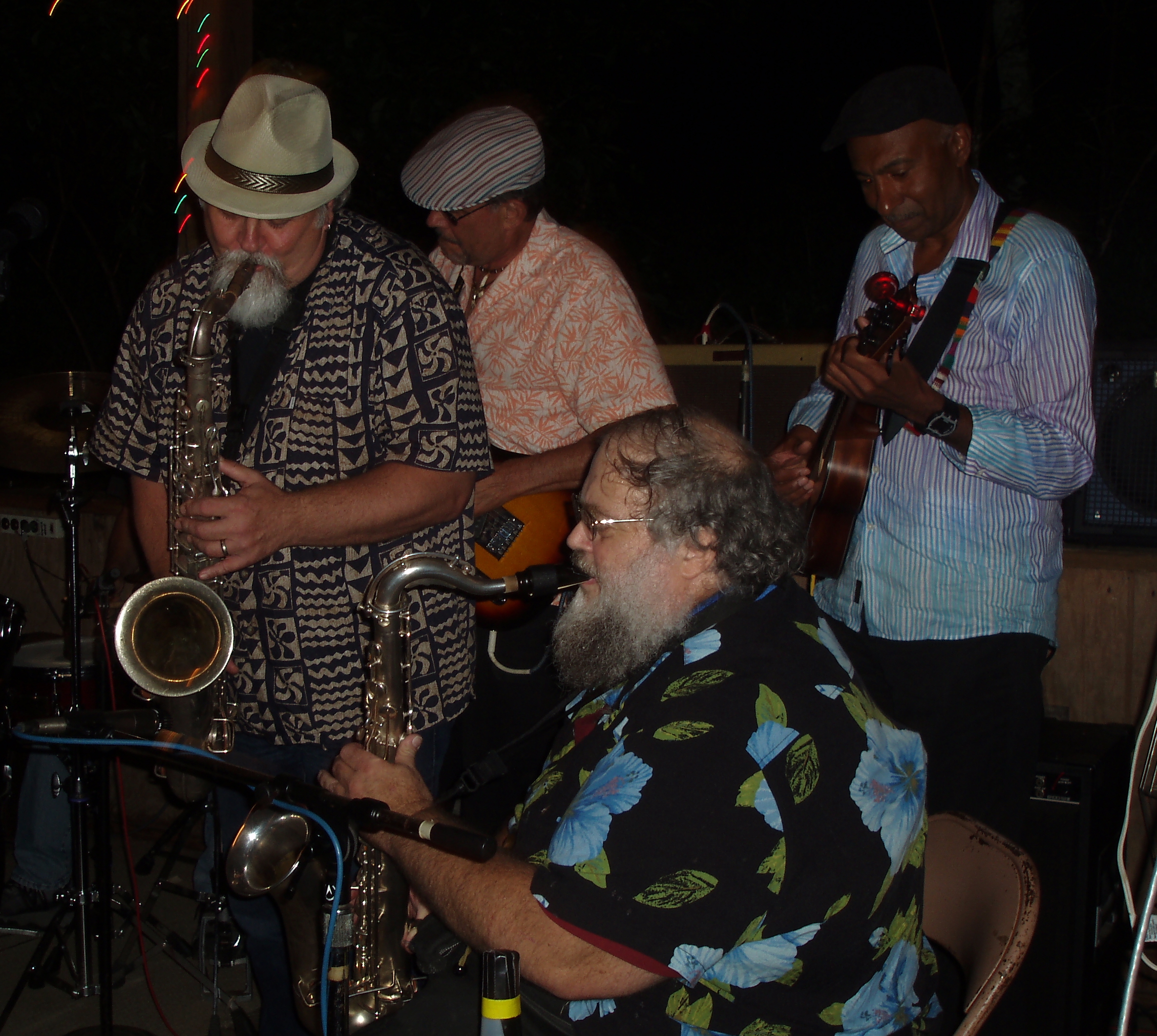
As soon as I entered, board member Jim Lande greeted me and gave me a quick tour and a history lesson. He then explained the two rules of the jam: everything is acoustic and only blues before 5 p.m. He also showed me a set of bones (small wooden rib “bones” played like the spoons), which they use to help offset their lack of a rhythm section.

After the tour, I sat down to listen to a slow rendition of “Nobody Knows You When You’re Down and Out.” I expected to observe for a good amount of the jam, as I had not brought an instrument, but a regular handed me a guitar after only a few minutes. Another guitarist then coached me on the chords for the next song, and I was off.

Most of the fare was comprised of blues standards, and anyone could throw out an idea for what to play next. This often required a quick lesson on the words, chords and key, but the group caught on quickly. In one particular case, a harmonica player spent several minutes trying to teach the chords to Howlin’ Wolf’s “Spoonful.” When we finally got going, it sounded like everyone had been playing it for ages.

The instrumentation included iconic blues instruments (guitar, harmonica, trumpet and saxophone) as well as a few lesser-known ones (fiddle, bones and a wire attached to a tin can with a neck). This added to the relaxed, hodgepodge nature of the venue. It could sound a little off at times, but this only amplified my enjoyment of the music. By playing for no one in particular, everyone could take musical risks without fear of disappointing or looking bad.

What surprised and impressed me most about the jam was how accommodating everyone was to me as a newcomer. They made sure I was following along and gave me plenty of time to solo. I’m sure they would even have followed my lead had I decided to start a song. The barbershop immediately felt comfortable, and they never cared about sounding perfect (which is probably why they let me play). Above all, this is a group of music lovers who just want to get together to relax, swap stories and play the blues.

Andrew Doerr is a recent graduate from Georgetown University and is currently pursing a career in radio journalism. In addition to playing the blues in barbershops, he builds furniture and guitars.

This article was selected for Honorable Mention in the 2012 DC Student Arts Journalism Challenge, an annual competition designed to identify and support talented young arts writers, as an example of arts writing by a participant in an arts experience.

Image credit: Jim Lande

Tearful Photography at the Katzen by Kendall Breitman

0

It’s Laurel Nakadate’s party, and she’ll cry if she wants to.

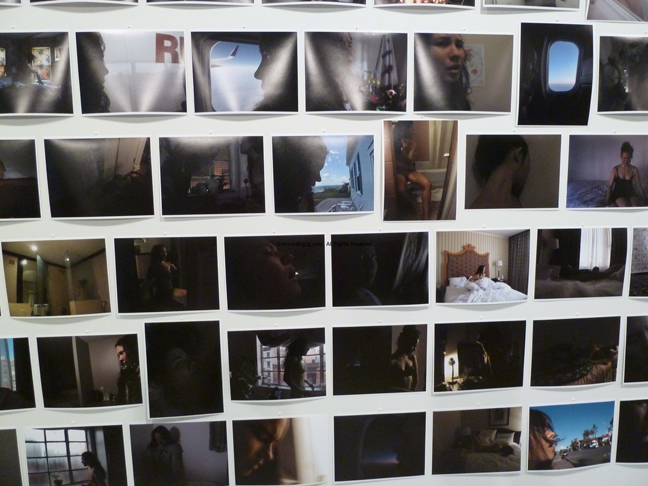
In an acknowledgement to loneliness, Nakadate’s photography exhibition “365 Days: A Catalogue of Tears” chronicles images captured over a one-year span of everyday crying. The Brooklyn, N.Y., native’s pictures are part of the Podestra Collection, which has been touring the States. The Katzen Arts Center at American University will be displaying 283 of the 365 photographs from Sept. 3 to Dec. 14.

The inspiration for the project came from social networking websites such as Facebook, and the constant portrayal of happiness shown through pictures and status updates. Instead, Nakadate took part in one year of constant sadness. The project started Jan. 1, 2010, and was completed Dec. 31, 2010.

For the project, Nakadate rented hotel rooms for one hour at a time where she devoted herself to crying. Most of the pictures in her collection include images taken in these hotel rooms, as well as some taken on airplanes and outdoors as she traveled around the U.S. Characterized by dark shadowed tones and oftentimes nudity, Nakadate’s photos also vividly portray feelings of alienation and the vulnerability of the young human body. Although the entire collection could not fit on the walls of the Katzen Arts Center, the exhibit is still daunting. At first glance the photographs seem overwhelming, as the images line the walls one after another and reach the high ceilings of the museum.

Nakadate’s provocative pictures include the young woman crying in front of a mirror, staring longingly out of a hotel window and even laying naked on the shore of a river. No picture in the collection is the same, but each portrays sorrow in a different and cohesive way. Overall, the exhibit leaves one feeling a little uncomfortable. The images of Nakadate are visually striking, but an entire room packed floor to ceiling with complete sadness is not exactly heartwarming — but that is the point.

Although the exhibit may come off as strange and discomforting, that is the goal of Nakadate’s work. Why should something as natural as nudity and sadness make people so uncomfortable?  These emotions are a major aspect of human life, but social networking sites have evolved to completely ignore these feelings. Nakadate’s photography exhibition takes a stand against all of this. If people refuse to put these kinds of pictures of Facebook, fill a whole room with them.

“365 Days: A Catalogue of Tears” is a creative collection. Although out of the ordinary, Nakadate’s work shows a thought-provoking stance on loneliness. When visitors leave feeling uncomfortable and ask themselves why, it is proof that the exhibition did its job.

Do not go to this exhibit for happiness and laughs. But, if you are looking for a unique and inspiring outlook on the social world, this is a great exhibit to visit.

Kendall Breitman is a current junior at American University.  Originally from Havertown, Pennsylvania, Kendall is in DC studying pre-law and print journalism.  She is also the assistant editor for the University’s newspaper, The Eagle.

This piece was selected as a finalist in the 2012 DC Student Arts Journalism Challenge, an annual competition designed to identify and support talented young arts writers.


 

Arias with a Twist by Alex Leidy

0

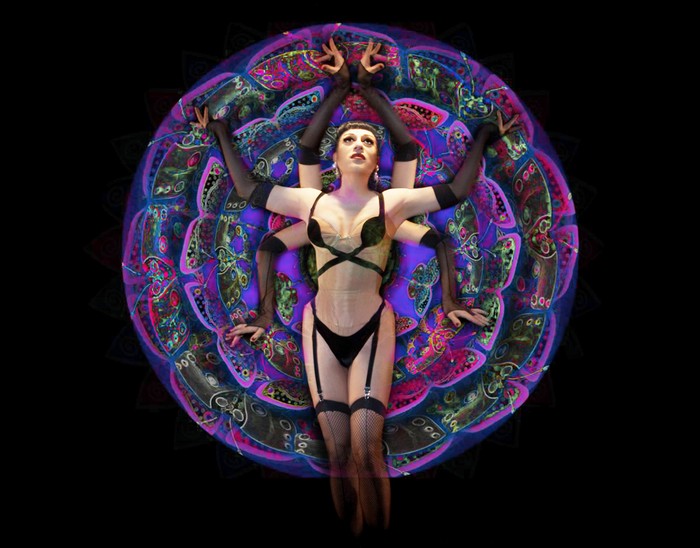
Watching Arias with a Twist, I was reminded of nothing so much as the iconic Looney Toons short “Duck Amuck.” For those unfamiliar with it, the short involves Daffy Duck being tormented by a capricious cartoonist who keeps redrawing the landscape to put him in ever-stranger situations. With a little tweaking, this works as a pretty accurate summation of Arias with a Twist – here, drag queen Joey Arias plays Daffy Duck role, while Obie Award-winning puppeteer Basil Twist is the cartoonist constantly reshaping the world around Arias. Twist, represented by the six puppeteers who bring his vision to life, is never seen until the very end of the production, but his presence is inescapable; it’s evident in every aspect of the imaginative set pieces which Arias is placed into, which incorporate puppets, sets, and projections to create a number of richly visual fantasy worlds on stage. Twist’s bottomless imagination has Joey Arias abducted by aliens, sent to Hell, and rampaging through New York like a glamorous Godzilla, just to name a few of the best set pieces in the show. For Arias’ part, he gamely sings his way through the various transformations of the world around him, doing numbers by Led Zepplin, Billie Holiday, and the Beatles, among others, but despite getting first billing in the title, Arias with a Twist is much more Basil Twist’s show than Joey Arias’.

Arias is being presented at Woolly Mammoth as part of the Basil Twist retrospective playing at theatres across DC, and the show bears all of the hallmarks of his unique brand of puppetry. Over the past ten years, Twist has become one of the best-known puppet artists in the United States with an abstract, non-narrative approach to the art form that can be seen in all of the shows that were a part of the Twist retrospective.

Even Petrushka, his fairly literal interpretation of Stravinsky’s ballet, begins with what Twist describes as “an abstract fantasia” where shapes move and swirl in time to the composer’s “Sonata for Two Pianos.” The phrase “abstract fantasia” does a great job of capturing the feel of one of Twist’s original pieces, which thrive on a rich sense of spectacle and whimsy in a way more commonly associated with films – especially animation – than with theatre. Considered amongst the rest of his shows, Arias With a Twist is absolutely a Basil Twist production. There’s a bit of token narrative through line, but it’s mostly a surreal collage of lush set pieces that seamlessly transition into each other with the aid of shifting fabric backdrops and projections. The puppets are simply incredible in both their beauty and their variety.

Dancing demons, octopus tentacles, and a swing band comprised of gorgeous marionettes from the 1930s are only a few of the visual treats on offer – I don’t want to give away too much, as the reveals of each new puppet provide some of the best surprises of the show. All of the puppeteers in Arias deserve a lot of credit for the work they do in making Basil Twist’s fantasy worlds a reality; their performances, while invisible, are what make Arias with a Twist truly incredible to watch.

What about Joey Arias, the titular star who is the only visible performer for almost the entire show? Unfortunately, he’s the weak link in this collaboration – which is not to say that he’s a bad performer. Joey Arias has a powerful voice, and a lot of the jazzier songs he sings are beautiful. He can whip out a flawless Billie Holliday on a whim, and a slowed-down take on “All By Myself” that he sings midway through the show was close to being a showstopper. However, when his songs drift towards the rock end of the spectrum, the charm of Arias’ singing starts to run out. A Beatles medley he sings during a trip on magic mushrooms ultimately misses the psychedelic charm of the original songs, and the rendition of Led Zepplin’s “Kashmir” he opened the show with was just shy of being uncomfortably screechy. If those two numbers had been all that hindered Arias’ performance it honestly wouldn’t have been that big a deal, but the dialogue also left a lot to be desired. I’m not sure if it’s fair to pin that on Joey Arias – I don’t know if he wrote the dialogue or if it was in collaboration with Basil Twist or another artist – but the show’s weakest moments took place when Joey Arias was just talking to himself. I just didn’t think any of the jokes were funny. The sense of humor seemed to be placed pretty firmly on a middle school level, mostly consisting of Arias doing something sexual while radiating an air of “gosh, I’m just so transgressive.” It’s a lot like the early seasons of South Park before the creators started seeing dick jokes as a means to an end rather than an end in themselves. I personally that sense of humor in small doses, but it was a lot to take for an hour and a half.

Ultimately, this comes down to personal taste more than anything; if your idea of a killer joke consists entirely of someone making a sexual gesture and acting like they’ve blown your mind, then Arias with a Twist just might be a laugh riot.

When all’s said and done, the weak songs and dialogue aren’t enough to weigh down the incredible visual spectacle of Arias with a Twist, and those things are subjective enough that any criticism of them should be taken with a grain of salt. This is a beautiful show that’s absolutely worth seeing, but its problems are just serious enough that they get in the way of it being a really amazing piece. I do hope that Basil Twist and Joey Arias don’t just rest on their laurels with this one, because with some tweaks and edits they could go a long way towards making the piece truly unforgettable instead of just great.

Alex Leidy is a junior theater major at the University of Maryland.

This piece was selected as a finalist in the 2012 DC Student Arts Journalism Challenge, an annual competition designed to identify and support talented young arts writers.