Home Blog Page 159

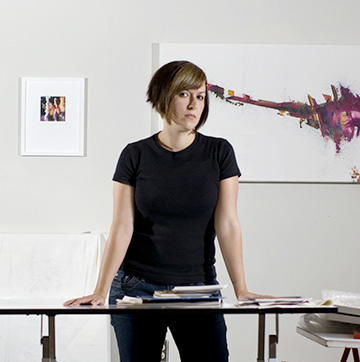
Prudence Bonds on Being Self-Taught

I have a mental cache of conversations exchanged between strangers-turned-friends regarding my artwork. The second or third question folks usually ask is, “Which school did you go to?” When I reply that I’m self-taught, a puzzled expression slowly takes over their face; then they mention their artistic niece, or the neighbor’s kid that just graduated from MICA, Howard, or Parsons.

Self-taught artists are usually defined by what we lack: a formal education from a well-known art institute resulting in a Bachelor of Fine Arts or Master of Fine Arts degree. The extent of my arts “education” consists of a Smithsonian mask-making workshop, a summertime drawing class, and an eight-week photography & film development course at Corcoran during my early teens. Since I discovered my passion for paint and canvas nine years ago, there are a few things I’ve learned about the differences between artists who are self-taught and those who are formally trained.

Finding your technique without direct influence from a professor or mentor is different. I never thought to reference instruction books, though I probably should have. I was clueless regarding sketching before painting, whether darker colors go on first, or what functions certain brushes provided. Sketching before painting reminds me of the saying “Measure twice, cut once”, which I apply to every other aspect of life, but I almost never sketch. Through mixing acrylics with water or cooking oil, I found a way to use less paint while learning, and eventually incorporated that technique into my regular painting regimen. Reusing and layering “dirty” water is how most of my work is achieved. I fell in love with how olive oil made colors richer and watered-down acrylics extended the drying time and created the illusion of watercolor. Though I learned everything the hard way, learning by trial and error has always been most comfortable for me. I believe that there is no right way or wrong way – just my way. I now listen more keenly to intuition.
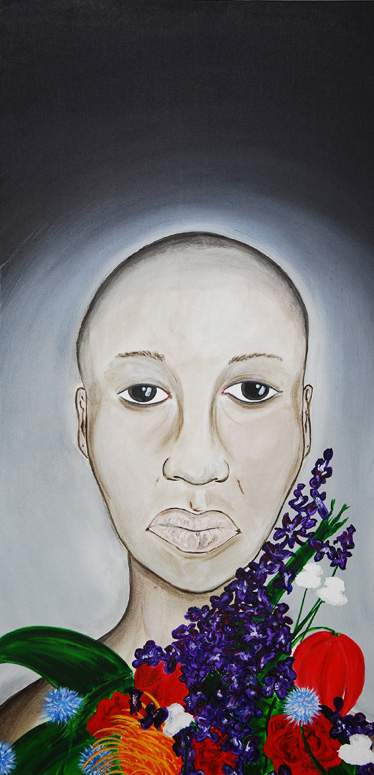
After getting comfortable enough to consider publicizing my artwork, I discovered another daunting aspect of being a self-developed artist: networking. I struggled with questions that degreed artists already know the answer to. Which of the gazillion art orgs out there should I join? Do I need a website since some artists don’t have one? How do I get into shows and build my résumé? Thank goodness for Utrecht Art Supply’s bulletin board and Google… I started reaching out to folks who left business cards or flyers, which led to acceptance into a group exhibit. Interacting with other artists and art-lovers forced me to self-critique my paintings. If someone asked questions about my intentions or color choices, I had to find an answer and stand firmly beside it. This practice turned out to be a tremendous confidence builder.

That warm, fuzzy feeling of meeting new peers sparked a desire to submit to other shows, but I was soon rejected more times than not. Maybe I just didn’t know which shows were the best fit for my work. At times, I sensed a stigma attached to being self-taught. Like a trusted brand, a degree legitimizes an artist’s work in the eyes of prospective buyers, dealers, galleries, grant givers, proposal readers, arts publications, the list goes on. And call it paranoia, but when I submit work for juried shows beyond the DC-Baltimore area, I feel I get rejected because I lack proper training. It’s seems galleries are less likely to take a chance on someone like me. The living self-taught painters that galleries tend to admire – so-called outsider or folk artists – work in abstracts, are expressionists, or convey an obvious socio-political viewpoint through their work. My work doesn’t really fit into these categories. However, rejection serves as a jolt of I-Can-Show-You motivation. I’m excited to exhibit in Lust at ArtDC Gallery in Hyattsville through March 3rd and Soul Revival at The Meroe Art Gallery in Baltimore April 24th to July 31th.

The notion of being a self taught artist might be a question of semantics. Many of the degreed artists I’ve met have shared how art school stifled their creativity, and how they eventually had to discover their own process. Though the frustrations of being self-taught can be overwhelming, the journey of understanding myself through creation, and the friends I’ve made, are deeply rewarding, and exciting.
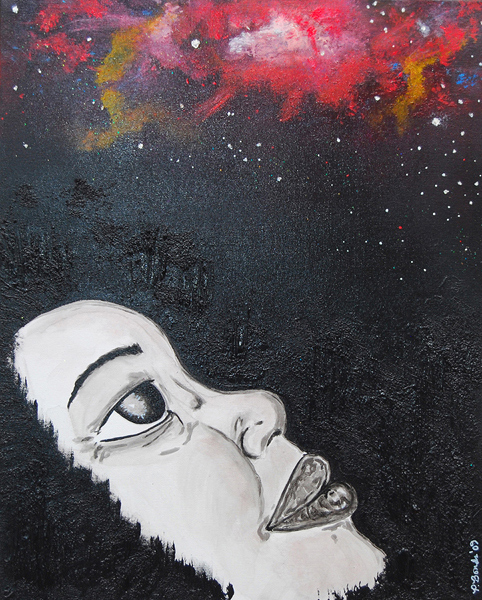
Born in Florida and raised in Washington, DC since infancy, Prudence inherited the “creative gene” and started to draw at age four. Throughout childhood and adolescence, Prudence expressed several methods of creativity including writing, mask making, and photography & film development. She began painting consistently in 2001 and in April 2003 participated in the Smithsonian Early Enrichment Center’s 10th Annual Scholarship Fund benefit auction. Prudence donated “Girl Tantalus”, an original work of acrylic on canvas portraying the fabled origins of the word tantalize. She depicts people living throughout the African Diaspora, and beyond, by using color, texture, and introspection. Since acceptable images of human concepts such as love and beauty are perpetuated through art, literature, music, and the media, her pieces echo the attempt made by people of color to redefine and re-present those concepts in their terms. To learn more about her work, visit www.prubonds.com.
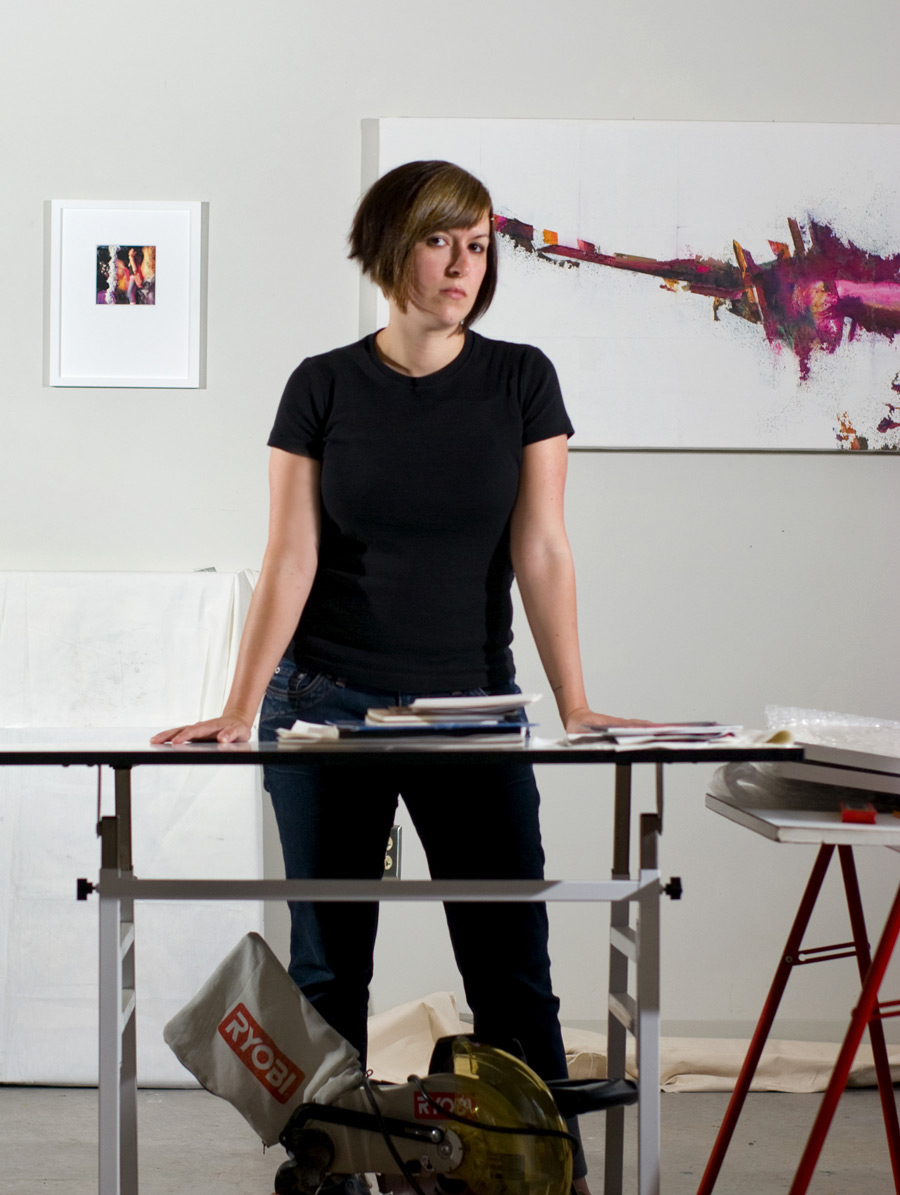
Studio Space Wanted: Large, Well-Lit, and Cheap by Blair Murphy

Talk to ten different visual artists in the DC area and you’re likely to hear about ten different working situations. From former auto body shops and row-house basements to corners of studio apartments and space subsidized by non-profits, local artists practice their profession in places both predictable and unexpected. Finding studio space is a challenge for artists no matter where they live, but the high cost of city real estate and the relative lack of warehouse space combine to make the search particularly knotty for DC-area artists.

Most artists have – at one time or another – created a studio in their living space. For a wide variety of reasons setting up your work space where you live is often the best option. Artist Kira Appel currently works in a studio set up in a corner of her studio apartment in Arlington. Kira knew when she was apartment hunting that she would be setting up a studio in the space, so she focused on finding an apartment with a footprint appropriate for her needs. The apartment has even lighting, and a large corner of the space to use for her studio. While she hopes to have a studio space distinct from her apartment in the future, Kira notes that there are advantages to her current situation: there’s no travel time to get to her studio, which translates into more creating time, and the presence of her work-space in her living space is a reminder of ongoing projects. At the same time, Kira acknowledges that there are limitations to setting up a studio in your living space. Space limitations have prevented Kira from working on the large-scale oil paintings she has done in the past and she is hesitant to experiment with some materials, such as encaustic, because of concerns about ventilation.

For those who aren’t in a position to set up a formal studio space, artist Lisa McCarty recommends looking into residency programs. Prior to getting a studio at Arlington Arts Center, Lisa worked out of a makeshift studio in the basement of her group house, and participated in several short residency programs where she was able to create work she couldn’t have made in her at-home studio. If you are able to spend a few weeks away from your day job and other responsibilities, Lisa says, a residency can provide a period of intense work, access to needed facilities and the chance to carry out projects that aren’t possible in an at-home studio space. (WashingtonArt.com has an extensive list of residency programs, including many for visual artists.)

While Lisa did combine an at-home studio with residency opportunities to successfully produce her work, she feels lucky to now have a space in a group studio at the Arlington Arts Center. AAC is one of several area non-profit arts organizations that provide studio space for local artists. Lisa mentions AAC’s lower than market rents and recently renovated facilities as two of the space’s great advantages. Many artists find that Resident Artist status at an arts center can be a boon for one’s career as well. Resident artists at AAC show every other year in AAC’s Wyatt gallery and, because resident artists are selected by a jury, those selected can point to their affiliation with AAC as a professional accomplishment in and of itself.

With these advantages comes commitment: resident artists participate in five yearly open studios, must spend a certain amount of time in their studio each month and take turns staffing AAC’s information desk on the weekends. For Lisa, the sacrifices are worth it. Having the space at Arlington has made it easier to produce work on a large scale, she enjoys having a formal studio space to host studio visits, and she appreciates the company and community offered by her Arlington studio-mates. Lisa compares getting her outside studio to the feeling of independence associated with “getting out of your parent’s house”; it brings along a host of advantages, as well as a feeling of accomplishment.

If you’re looking for an outside space, but can’t make the commitments required by formal studio programs, consider looking around for a commercial space that has been converted (or could be converted) into studio space. DC artist and crafter Kristina Bilonick currently shares this kind of space with several other artists in Gold Leaf Studios, a former auto body shop near Penn Quarter. Kristina echoes Lisa’s statement that having an outside studio felt like a professional milestone. Getting a formal studio encouraged her practice and eventually pushed her to “make the leap” to becoming more professional. The impetus for the shift was partly financial: shelling out the money every month for a space increased the pressure she felt to devote time to her studio practice and to begin treating her art as a business, deducting the cost of her studio space as a business expense on her taxes and charging DC sales tax on the work she sold. Gold Leaf hosts visual artists, clothing designers and rehearsal space for several bands and Kristina cites the interaction between all these different artists as a favorite perk of the space.

Prior to getting studio space at Gold Leaf, Kristina worked in a small studio in the basement of a furniture store on 14th Street, a space she found in the commercial listings of Washington City Paper. For artists currently looking for space, Kristina recommends keeping an eye on the commercial real estate listings on Craigslist and in the City Paper. If you’re looking for commercial space, keep in mind that landlords who aren’t specifically advertising studio space might still consider renting commercial spaces to artists.

Before setting out to find studio space, you might want to consider if you actually need a dedicated art space. Rather than worrying about having a formal studio, photographer Michael Matason lets each project dictate the space he needs. Michael’s day job at the multimedia center of a local university provides him with access to equipment and, at times, space for shooting. After years of finding creative solutions to meeting his space requirements, he believes that working with limitations makes him more creative. No matter your medium, it’s worth considering whether the resources you would devote to a formal studio are truly worth it.

I’m eager to hear more about the ways DC artists find work space. Do you have a creative solution to the challenge of finding space where you can make your art, or advice for up and coming artists in need of a studio? Leave your stories and advice in comments.

Blair Murphy is a writer, curator and arts administrator based in Washington, DC. In 2009 she earned an MA from Georgetown University’s Communication, Culture and Technology program after two years of study focused on visual culture, critical theory and gender studies. Having successfully emerged from the thick haze of academia, she is pursuing new writing and curatorial projects in DC and beyond. Blair is currently the Office Manager at DC Arts Center and an active member of Sparkplug, an artist collective affiliated with DCAC. She is also an Associate Editor of Bourgeon.

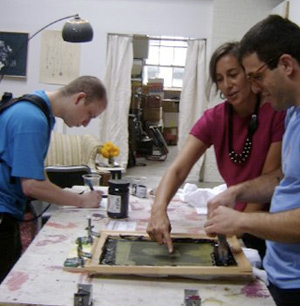
Image top: Lisa McCarty in her studio at Arlington Arts Center
Image bottom: Kristina Bilonick holds a screening-printing demonstration during an open studio at Gold Leaf

Creating ‘The Mountain’ by Jason Garcia Ignacio

Doors have been opening for me since I won The Kennedy Center’s 2009 Local Dance Commissioning Project. With that commission, I created a twenty-five minute dance entitled “The Mountain.” When I applied for the Commission it was just supposed to be a story about a volcano eruption that caused a cataclysm, but I wanted something that would make a difference, so I asked myself, “How can I make this ballet even more compelling? More connected?” As I started preparing I would write down every concept or idea I thought might work, and the idea came to connect the volcanic eruption to the burning mountain of trash that I had also experienced as a child.

Most of the ideas and metaphors for the piece came from growing up in the Philippines. I accessed folklore, folk dances, my experience with the eruption of Mt. Pinatubo in 1991, as well as the image of the late Smokey Mountain (a mountain of trash that served as Manila’s waste disposal for decades.)

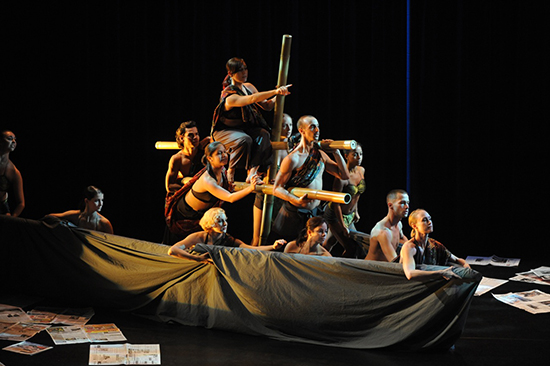
Experimentation was the common thread throughout the construction of this piece – in concepts, in the studio, and in performance. It can be very difficult to just let things happen by accident, but I have come to believe that those unplanned moments are the key to innovation. I had decided that we would have a set – not just a blank stage – and as we progressed in the studio, we experimented with creating different types of physical environments. This involved trying out different groups of materials to create the look and feel of a landfill. In the end, we found that covering the space with newspapers gave the desired effect. Though the cataclysmic volcanic eruption and the landfill in Manila were the starting points for the project, the process of experimentation helped me reveal how these two mountain events are related.

For the music, I collaborated with Domenico Vicinanza, a scientists and composer, who works for Delivery of Advanced Network Technology to Europe (DANTE). At DANTE, they developed a computer program that turns seismic vibrations from volcanoes into a piano score. This seemed like a good thematic match for my piece, because I felt that nature itself composed the music for my dance. Because of the limited funding, the costume design and costume construction also fell to me. I had to design and sew all the costumes on my own, which included the back and forth to the fabric stores. It was tough.

After the premiere last summer, Dance Place expressed interest in presenting “The Mountain”. This became an opportunity for me to produce an entire evening of my choreography – “The Mountain” together with all of the other choreography I’ve created to this point. This show will happen February 20-21 at Dance Place: my first evening completely dedicated to my choreography. I titled it “Jason and Friends” mainly because all of the dedicated dancers are my friends from CityDance. In addition to the Dance Place show, I will also be performing at the National Theater in their Gallery, in the Dance Bethesda Dance Concert, and at the new Intersections Festival at the ATLAS Performing Arts Center. Intensely, all of these performances will happen in February of 2010!

As all of these amazing performance opportunities came my way, I realized that choreography is only one part of the puzzle. The production side of dance has its own challenge. I have a newfound appreciation for Paul Gordon Emerson, my director in CityDance Ensemble. Now I know what he gets to deal with everyday. On top of performing with CityDance Ensemble, I have to juggle meetings, collaboration, marketing, budgeting, creation and rehearsal.

While preparing for a very busy February, I am excited that the processes of choreography and production continue to shape me. Every time I create, I learn things about myself. Choreographing dances gives me a deeper understanding of who I am as an artist, as well as a person. My perspective as a choreographer is very different from my point of view as a dancer.

It’s very hard to judge a dance when you’re in it – like with “The Mountain.” After a year of incubation, I feel like my patience has paid off, and I’ve managed to understand the relationship of the two different mountains. It became apparent to me that somehow these two mountains are the embodiment of what has been happening in our world. Global warming is like a volcano slowly erupting, our negligence to the environment is the heat source that is pushing the magma out that is causing this nation to reshape. I hope that our performances offer some insight, and that you will come see “The Mountain”, and my other work, at Dance Place on February 21st and 22nd.

Jason Garcia Ignacio was born and raised in Manila, Philippines. At age 12 he began training with the Gigi Felix Velarde Ballet Dance Workshop and continued dance with Ballet Philippines, Philippine Ballet Theater, and Steps Dance Studio. In 1997 he was sent by the International Theater Institute of the Philippines to study traditional Korean ritual dance at the University of the Theatre of Nations in Seoul, Korea. As a member of the Earth Savers Dreams Ensemble, Jason traveled across Asia, the United Arab Emirates, Europe, and the United States. In 2001 he moved to New York City to further his studies and expand his experience. He received a scholarship from Ballet Hispanico of NY, a fellowship from the Ailey School, and apprenticed for the Bill T. Jones/Arnie Zane Dance Company. In 2004 he toured nationally with the Martha Graham Ensemble and performed principal roles, including the Penitent in El Penitente and the yellow couple in Diversion of Angels. In 2008 Washingtonian magazine named Jason Garcia Ignacio one of Washington, D.C.’s Top 20 Showstoppers and in 2009 Jason won the Mayor’s Arts Award for Outstanding Emerging Artist, and the 2009 MetroDC Dance Award for “Outstanding Individual Performance.” Also in 2009, Jason also received the “PEARL Cultural Heritage Award” from the Embassy of the Philippines for his outstanding and meritorious contribution to raising awareness of and deepening appreciation for the Philippines and its rich and diverse culture and heritage through excellence in the field of performing arts. He is a member of the critically-acclaimed CityDance Ensemble, a contemporary dance company based in Washington D.C. (www.jasonignacio.com) and teaches at the CityDance Center at Strathmore.

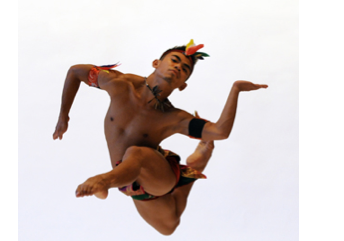
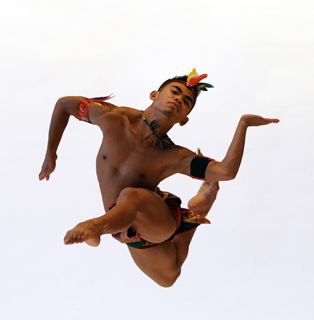
Images from The Mountain by Paul Gordon Emerson.

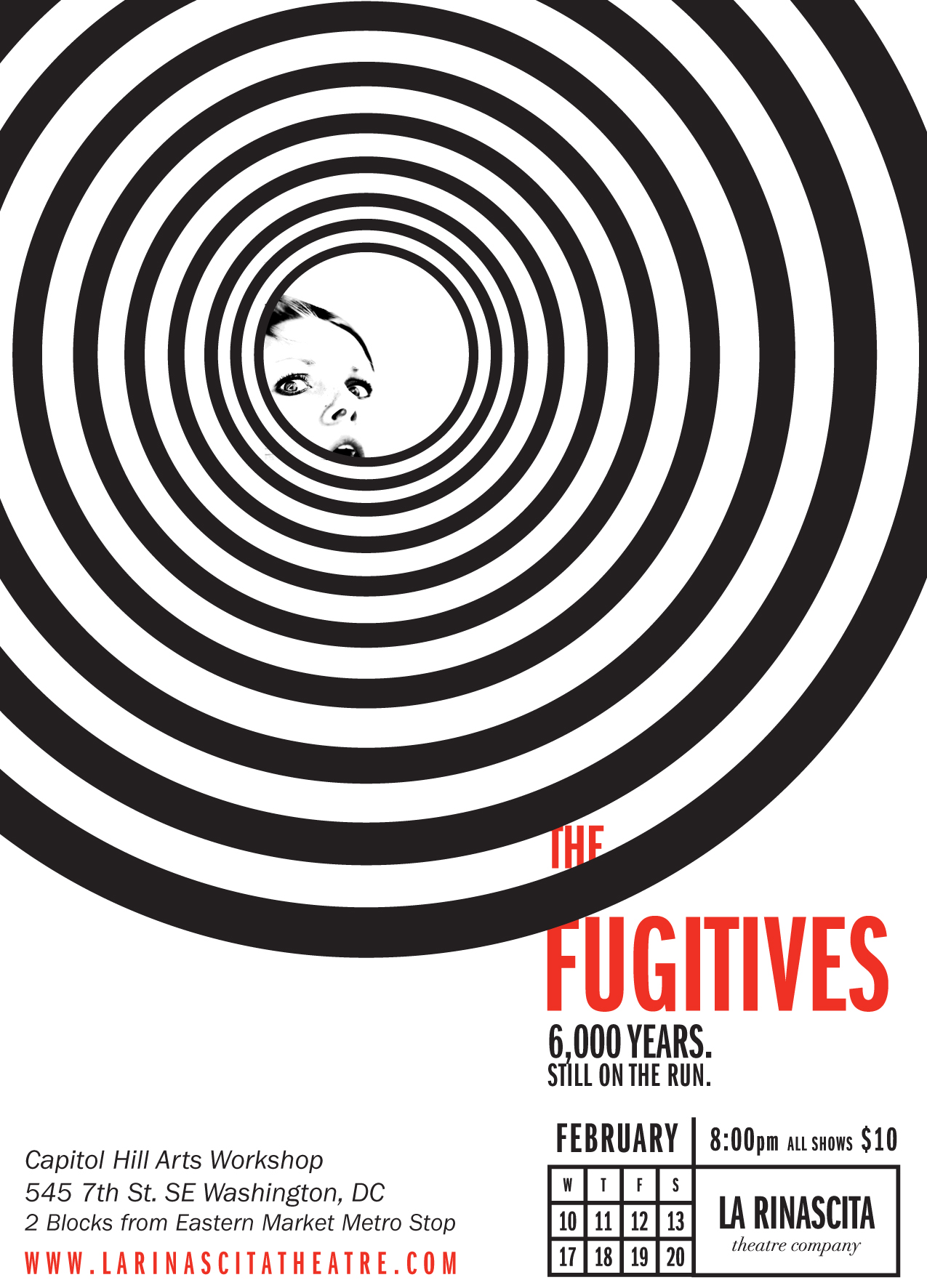
Creating The Fugitives for La Rinascita

I remember the exact moment I first wanted to be an actor, but I can’t recall the day or even nail down a month or season in which I realized that wasn’t enough. My partner David and I formed La Rinascita (ree-NAH-shee-ta) to explore a collaborative model of theatrical development and production. We consider ourselves theatre artists first and our defined roles (director and actor, respectively) second. We craft each piece from top to bottom, not relying on a dictated script. While we know we’re not the first people to work this way, it feels a lot of the time like we are. We make everything up as we go; we are learning our art by doing it. The beauty and the terror of theatre is that you can’t just sit in your basement experimenting, you have to get up and share it with people. Theater isn’t theatre until you have an audience.

The first 5 months of work on our upcoming show, The Fugitives, were spent entirely at the drafting board. A deconstruction of Aeschylus’ Oresteia, our piece follows Orestes and Electra (the siblings who killed mom after she killed dad) 6000 years (give or take a millennium) after the major events of their lives. We planned everything out. It was beautiful. And it got shot to shit as soon as we hit the rehearsal room. Seeing theatre breathe can suddenly make something that was powerful on paper utterly insignificant; a wonderfully conceptualized journey into a dream world involving a glass of milk refused to look anything but silly when people actually did it.

The Québécious artist Robert Lepage, one of our major inspirations, said “Theatre takes shape in flight, when its meaning and direction escape us, when it becomes a rebellious beast that we’re unable to cage.” I engage in theatre because of this, it’s quality of self-generation. Just three days into rehearsal, almost everything about the piece had changed. Something small in rehearsal – the request for a table – lead to imaginative journeys (a running motif of consumption becomes central and the entire structure of the piece happens around eating a banquet).

As often as not, a single image (a girl with ear pressed to a man’s chest, setting a clock to his heartbeat) or sound (the wisp of wings and cries of crows gathering) will inspire an event in the piece. Theatre is about storytelling–and I do believe that is it’s core essence–but it is also about creating visual poetry. This doesn’t imply lyricism, but refers to the poetic notion that is part of the theatrical experience: a group of people pretending together, experiencing a fleeting piece of art which will vanish when complete. I want to create theatre that lives up to that level of poetry. Which means that the language of our work–whether that be literal, spoken language or sound cues or props or gestures–is just as important to the piece as “what it’s about.”

The danger of working this way is finding yourself with a series of fascinating and beautiful moments and a piece that is less than the sum of its parts. We’re looking right now at two issues in rehearsal. We crafted Orestes and Electra fully in our heads – have we given the audience the opportunity to know these people as well as we do? Have we allowed anyone to care about them? Also, is the piece progressing directly to its inevitable conclusion? Since this is a deconstruction of a classical Greek text, we end up cutting some evocative elements we loved (Orestes obsessively writing in white chalk all over the floor of the black box we perform in) because they are no longer serving the piece as a whole. While I find editing myself incredibly challenging (you want me to throw away what????), it rewards in the end. Releasing an idea into the wild forces you to put faith that more will come along, and, happily enough, they usually do.

I’m incredibly excited for the opening run of The Fugitives February 10-13 and 17-20 at Capitol Hill Arts Workshop (547 7th St. SE, Washington, D.C.) Tickets are $10. For more information and reservations email admin@LaRinascitaTheatre.com Hope to see you there!

Anne Veal is a theatre artist currently based in Washington, DC. In addition to building The Fugitives, she is working acting in her second project with Tony-Award-winning Signature Theatre. Previously she has worked with the Actors Theatre of Louisville (33rd Humana Festival of New American Plays), The Kennedy Center, Project 1367, Charter Theatre, Capitol Fringe Festival, among others. This summer she, David and The Fugitives will travel to the Prague Fringe Festival. To learn more about La Rinascita Theater visit: www.LaRinascitaTheatre.com.

Rehearsal photo by Ariana Hodes
Fugitives poster design by Kyle Read

Archiving Dance: The Necessity of Collaboration by Heather Desaulniers

The re-staging of work establishes a genealogy in dance. Many companies reproduce historical compositions, and as new pieces are created these works enter into the collective ouevre of the field. Technology, notation and personal recollection can all help in re-staging dances, but no one means of archiving can capture the totality of a choreography. Past analysis has tended to evaluate the use of archival methods separately. Only a collaborative archival network combining technology, notation and personal knowledge can ensure the future of repertory.

Technology has provided indispensable archival opportunities in the field of dance. In particular, video has transformed the creative, marketing, and archival process. Live performance is fleeting and impermanent by nature, and the power to film these transient moments creates an un-paralleled resource. With good reason, video is usually the first step in re-creating an earlier work, but it is imperative to acknowledge its limitations. First, traditional video obtains only a two-dimensional image. This provides a good first glimpse of the movement, but not enough detail to re-stage with any precision or rigor. It is impossible to remain true to the nuances and intricacies of complex movement styles – such as the choreography of Twyla Tharp, Bill T. Jones or Trisha Brown – with a two-dimensional view. Second, when looking at video, there is a limited perspective. You are at the mercy of who took the video and who was dancing the work when it was taped. Even professional videographers can miss things, and what if they miss something that is a crucial part of the piece? Dance is changeable. No one piece is ever performed the same way twice. There are always slight, or sometimes not so slight, adjustments for different spaces and different dancers. The expectation is that video captures the most accurate depiction of the work, but this is more a hope than a certainty.

Three dimensional image capture is an exciting technological alternative to conventional video because it can convey a more complete representation of movement. This relatively new technology requires multiple cameras positioned at different angles and heights so as to record a three dimensional figure. The archival applications for this technology are incredibly exciting, but sadly, untapped. This type of filming can be very expensive and thus, not an option for many dance companies. In point of fact, a minority of companies dedicate resources toward preparation of archival material. In addition, 3-D technology has become stalled and somewhat stuck in the performance arena. Choreographers today seem to have an obsession with how ‘mixed media’ and ‘corporeal presence’ (the new go-to buzz phrases in dance) can transform a work within active performance. For all of these reasons, 3-D imagery has not penetrated into the field of archiving.

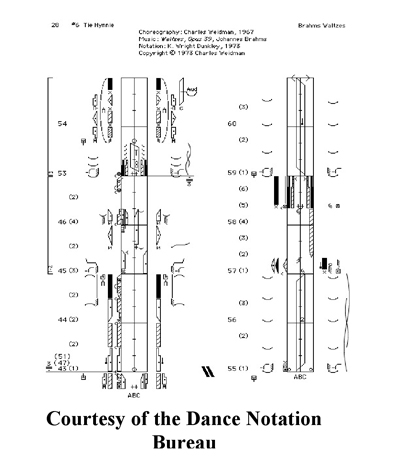
The most under utilized archival method is dance notation. Labanotation and Benesh Movement Notation are the two primary systems that can provide a written record of choreography. Both employ a specific system of markings that indicate which body part is moving, the impetus for the motion, the direction, speed and duration of the choreography. Both Laban and Benesh are like hieroglyphics: they are an entire language, very detailed, extensive, and providing a directional map to unlock the minutiae of movement. In theory, dance notation is a great idea, but because the number of people fluent in dance notation is small, and the time/expense of notating a dance significant, written notation exists for a fraction of the important ouvre of modern dance work, and is accessible to an even smaller number of practitioners.

The importance of personal coaching and personal experience cannot be overlooked when staging previous works. Having individuals with experience of the staged work (whether the choreographer, one of the original dancers, or a dance historian) present during re-creation significantly informs the reconstruction process. These individuals may not be able to ensure an exact replication of the steps, but many essences and ‘isms’ are beyond the capabilities of technology and notation. Admittedly, as with technology and notation, individual memory/personal coaching does have its limitations. One challenge is that this type of knowledge cannot be institutionalized, and so is uncertain from generation to generation.

Every archival process can make a positive contribution, yet on their own, each system is insufficient. To preserve our important cultural heritage, what is needed is the application of a thoughtful, reliable, and collaborative archival practice integrating technology, notation and personal resources to the fullest extent possible. Dance companies generally lack the funds to utilize all available archival systems when re-staging choreography. And, the limited funds that exist to create or stage work tend not to include the funds necessary for integration of archival concerns (money to access the newest technology, arrange for a notation, etc.) Archival policies for the field need to be developed, both to ensure preservation and performance of important works, and to encourage the funding mechanisms necessary to institutionalize appropriate archival/reconstruction policies.

Heather Desaulniers is a freelance dance writer and critic, based in Washington, D.C. She contributes regularly to criticaldance.com, and is currently pursuing historical research on choreographers Sophie Maslow and Pola Nirenska. She is also an associate editor of Bourgeon.