
Home Blog Page 51

dark, lovely, and limitless by Michele Evans

0

These poems are part of a special section of the Mid-Atlantic Review, Celebrating Black History, and selected by editors Khadijah Ali-Coleman, Carolivia Herron, and Rebecca Bishophall. To learn more about this series read a blog post on the Day Eight website here.

dark, and lovely, and limitless

for alice

her story does not begin or end in february,
it cannot be celebrated, appreciated, or narrated
in twenty-eight short days for her beauty
is dark, and lovely, and limitless

she hails from purple mountains majesty
east african fields, her mother’s land
draped in amethyst petals, leaves jaded
in velvet, crowns rooted in smoky quartz

she thrives despite being dormant,
buried underneath tiny granules,
surviving in sediment, parched soil
miseries from centuries of neglect

she paints to remain visible in low light,
splattered hues ranging from ink to iris,
her blackest moments canvassed in iron
and indigo, a portrait of her life in bloom

her story does not begin or end in february,
it cannot be celebrated, appreciated, or narrated
in twenty-eight short days for her name
is saintpaulia ionantha, an african violet

whose beauty is dark, and lovely, and limitless.

Michele Evans, a fifth-generation Washingtonian (D.C.), is a writer, high school English teacher, and adviser for her school’s literary magazine, Unbound. Despite always wearing the color black, she exhibits a certain fondness for blueberries, blue hydrangeas, blues musicians, and Blue Mountain coffee. This 2023 Pushcart Prize nominee and winner of the ASP Bulletin poetry contest has been published in Artemis, Maryland Literary Review, Sky Island Journal, The Write Launch, and elsewhere. purl, her debut collection of poetry, is forthcoming from Finishing Line Press in 2025. You can find her at awordsmithie.com or @awordsmithie on Instagram.

Featured image in this post is: “African Violets Photo Test” by Henrysz, CC BY-SA 4.0, via Wikimedia Commons

One Friday in Winter While We Gentrify Back Bay the Wrecking Crew Stops for Gas by Michael Daley

0

This poem is part of a special section of the Mid-Atlantic Review, Celebrating Black History, and selected by editors Khadijah Ali-Coleman, Carolivia Herron, and Rebecca Bishophall. To learn more about this series read a blog post on the Day Eight website here.

One Friday in Winter While We Gentrify Back Bay the Wrecking Crew Stops for Gas

by Michael Daley

Downtown in Boston, the man at the gas pump is freezing.
I’m in my wolf-fur parka from the secondhand lady’s out in Quincy.

He’s in a windbreaker: this Black man saw through plaster dust on my face
unmasked relief the demo with the suburb boys crammed in my car, is over.

They joked they might do more demolition when they hit the bars.
To paystubs, brain cells—anybody who asks.

In the backseat, they thumb through my creased copy
of Bishop’s Geography III—Can we speak of poetry?

When he locks my gas cap, he asks me to hire him: Got my own tools,
I’m a good worker—you can ask any these fools. Waves at cronies in the store.

Wind rips a scar through snow piles carved by commuter tires,
a grimy half-life as distorted as history.

I offer polite regrets—he looks away, toward new customers.
I imagine my crew seething if he once revs a saw.

On the shortcut home, Black sons shovel their sidewalks.
The boys sulk and stare. I drop them far from this Boulevard

where gentry’s one art demolished lives and homes and we,
we were just the right tools for the job.

Michael Daley is the editor of The Madrona Project (Empty Bowl, WA), an anthology series and the author of Reinhabited: New & Selected Poems (Dos Madres, OH), Telemachus (Pleasure Boast Studio, WA), and True Heresies (Cervna Barva, MA), all published in 2022. A retired teacher, he lives in Anacortes, Washington.

Featured image in this post is: “Boston skyline from Longfellow Bridge September 2017 panorama 2”, by King of Hearts, Creative Commons, via Wikimedia Commons.

That Familiar Comfort by Donald Krieger

0

This poem is part of a special section of the Mid-Atlantic Review, Celebrating Black History, and selected by editors Khadijah Ali-Coleman, Carolivia Herron, and Rebecca Bishophall. To learn more about this series read a blog post on the Day Eight website here. 

A note from the poet: On the night of July 17, 1944, black naval work gangs loaded bombs and live munitions onto two cargo ships at Port Chicago on the Sacramento River. At 10:18, explosions destroyed both vessels and the pier, killing 320 including all of the loaders. The black seamen who had been off-duty were ordered to clean up the decimated base, including their dead colleagues, and then resume loading operations downriver at Mare Island. 252 protested. When threatened with court-martial, 202 returned to work. 50 were convicted of mutiny and sentenced to 15 years in prison. Their white officers were given 30 days hardship leave.
 

That Familiar Comfort

The river at Port Chicago
was pink in the dawn glare,
strangely like that night
they fled for their lives,

biplanes spotlit by burning buildings,
kerosene bombs bursting on the roofs,
clubs and rifles,
white boys and their fathers,
beasts hunting little Africa
for black runners.

Do you know this story,
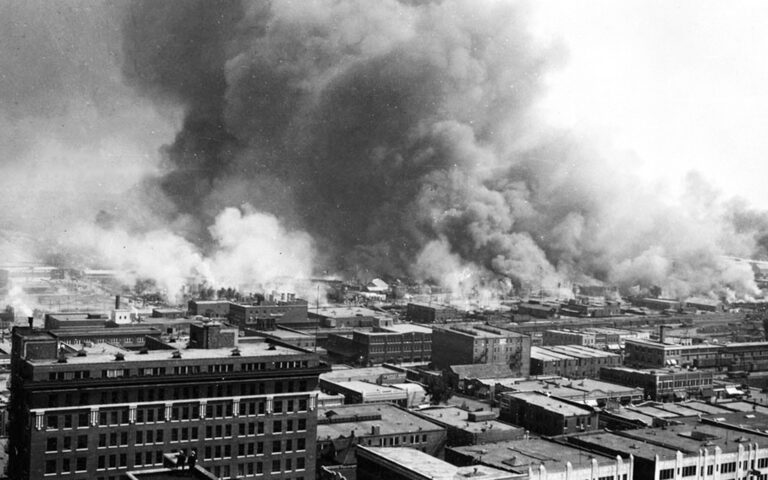
the Tulsa pogrom of 1921,
six thousand black people jailed,
no whites, the Greenwood ghetto
burned to the ground,
no insurance ever paid,
no crime ever charged,
the dead uncounted.

I never knew it
till today; I bear that shame,
small price for my privilege.
From this day I forswear
that familiar comfort,
the cowardice of forgetting.

Don Krieger is a biomedical researcher whose focus is the electric activity within the brain. Don is author of the hybrid collections “Discovery” (Cyberwit, 2020) and “When Danger Is Past, Who Remembers?” (Milk and Cake Press, 2022), a 2020 Pushcart nominee, and a 2020 Creative Nonfiction Foundation Science-as-Story Fellow. Don’s work has appeared in Seneca Review, The Asahi Shimbun, Beltway Quarterly, The Pittsburgh Post-Gazette, The Tallahassee Democrat, American Journal of Nursing, Neurology, and others, and has been translated into Farsi, Greek, Italian, German, Turkish, Romanian, and Portuguese.

Featured image in this post: “Tulsa Race Riot, 1”, United States Library of Congress, Public domain, via Wikimedia Commons

Three poems by Marta Holliday

0

These poems are part of a special section of the Mid-Atlantic Review, Celebrating Black History, and selected by editors Khadijah Ali-Coleman, Carolivia Herron, and Rebecca Bishophall. To learn more about this series read a blog post on the Day Eight website here.

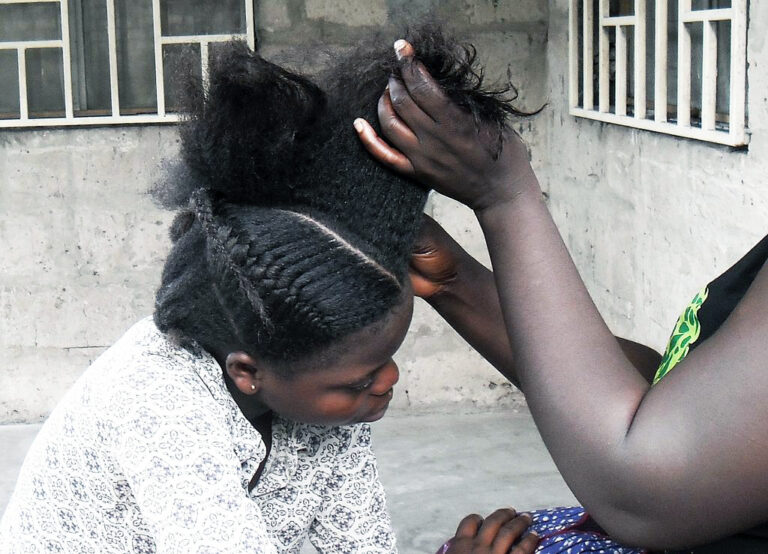
Hair Braiding Salon (The Surrogate Sisterhood)

This knitting, precise
Narratives—woven just so.
Our crowns—queens, transformed.

Break-Dancing (The Boogie-Down Bronx)

Sculpture comes alive
Their moves—sharp, rhythmic, fluid
Poetry sans words.

Harlem Nightclub (1941)

Jazz: phrases, feelings
Sweet, smoke tinged halls. Bodies press
In love, fleeting joy.

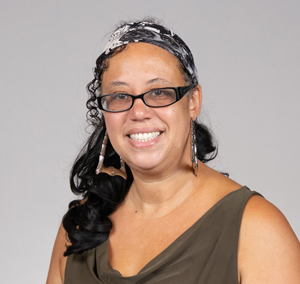
Marta Holliday is an Associate Professor in the Department of Languages and Literatures at Alabama State University, where she has taught since 2011. Dr. Holliday earned her Bachelor of Arts Degree in English (with a concentration in Creative Writing) from Marymount College of Fordham University in 2004. She earned her Master’s and Doctoral Degrees in English and Literary Studies from the University of Iowa in 2009 and 2011, respectively. Her creative writing interest are centered on creating haiku collections that celebrate her experiences of growing up in the multicultural community of Uniondale, Long Island, and the Greater New York City area. She is especially influenced by the haiku of other writers of color, such as Richard Wright and Etheridge Knight. She lives in Montgomery, Alabama. She is originally from Hempstead and Uniondale, New York.

Featured image in this post is, “Hair Braiding Kinshasha 1” by Francis Hannaway, CC BY-SA 3.0, via Wikimedia Commons

Black (prep): To by Sidney Jones Jr.

0

These poems are part of a special section of the Mid-Atlantic Review, Celebrating Black History, and selected by editors Khadijah Ali-Coleman, Carolivia Herron, and Rebecca Bishophall. To learn more about this series read a blog post on the Day Eight website here.<>br> 

Black (prep): To

by Sidney Jones, Jr.

Lost skinfolk: compass
needles still point northward. Come
home when you need to.


Sidney Jones, Jr., Ed. D is an educator and displaced Louisiana native who lives, works, writes, and haunts open mic poetry readings in Columbus, Ohio. He has been an English educator in the Columbus City Schools District for the past 25 years, and has coached high school Poetry Slam teams and conducted writing workshops for young poets.

Featured image in the post is “Jean Batten’s Compass” by Richard Ng, Auckland Museum, CC BY-SA 4.0, via Wikimedia Commons