Home Blog Page 52

Paulie’s War by Matthew E Henry

0

These poems are part of a special section of the Mid-Atlantic Review, Celebrating Black History, and selected by editors Khadijah Ali-Coleman, Carolivia Herron, and Rebecca Bishophall. To learn more about this series read a blog post on the Day Eight website here. 

Paulie’s War

by Matthew E Henry

when Paulie came marching home again the whole town turned out
for the finest thing I’d ever saw. steppin’ off that bus,
the right side of his crisp uniform a hog’s mash of colors.
the left holdin’ only the green-grey sliver bearin’ his name
but puffed just as proud. we women gathered ‘round him like hens
at the farmer’s hand, noticin’ how good and grown he looked.
the men stood shakin’ his hand and slapping his back like it was on fire,
as if war had aged him beyond his twenty-one years.

Rosie was all smiles and pride introducin’ his niece Cynthia,
who looked like God had done snatched two twinklin’ stars
from the night sky to fit her eyes. Paulie stood there holdin’ her,
goo-gooing all that nonsense men spit at little ones. ‘till he stopped.
he turned ‘round and ‘round, finally askin’ where his Mama was.
we all got real quiet then.

you see Mama Williams never wanted her boy to go off
and fight no white man’s war. her daddy had fought the war
that won him his freedom, but from the way she tells it,
he just traded massas and fields. our blood still filled trenches.
Paulie said the army would show he wasn’t no field nigger.
he would gain rank and soon white boys would have to salute him,
show him some respect. his Mama laughed in his face,
said he wasn’t goin’ nowhere. Paulie said he was a grown man
and could do as he pleased. that was the only time Mama Williams
ever laid a hand on one of her children in anger. before the heat left
his cheek, Paulie had packed his things. Mama Williams sat stone-still
at her kitchen table. Paulie kissed her on forehead before he left.
she died six months later, but there was no way to get him word.

Rosie told him how the doctors had no answers. Mama fell
asleep one night and woke up with Jesus. Paulie began walkin’
towards the church yard. said wanted to be alone. everyone nodded
and gave him his space. havin’ somethin’ of a crush on him back then,
I followed at a distance. was the only one to see what happened next.

thirty minutes later, halfway down Main street, the two Parson boys
came down off the barber shop porch and blocked Paulie’s path.

they was a silent white wall staring at his uniform with a hate
I had never seen, like they was fittin’ to tear it off with their eye-teeth.
Paulie just stood there, fists unclenched. your mama ain’t comin’
with no shotgun this time, boy one of them snickered, referin’ to an event
nigh twenty years past, when all three Parson boys were present,
before the youngest had gone off to fight in Paulie’s war and not come home.
some nights Paulie would lie in our bed and tell me ‘bout seein’
friends ripped in two by flying metal, and the smell of burnt flesh
lingerin’ for weeks under his nails. ‘bout killin’ with his gun, his knife,
once with his helmet and fingers. this afternoon, Paulie slowly lowered his bag,
his eyes never leaving their hands. he reached into his left breast pocket
and pulled out a folded scrap of cotton paper. he held it at eye level
and spoke words I was too far away to hear. words he never told me.

it got deathly quiet then. no one spoke. no one moved. my spirit shrieked.
I turned to run back to the station to fetch the men: if there was to be a lynching,
by God they would have to kill us all. I still don’t know what held my feet.

the oldest Parson boy stepped up and snatched the letter from Paulie,
and I swear that white hand was tremblin’ more than my heart.
as those pale-rose lips moved in silence, his blue eyes teared up
like a calf long absent his mama. his hand and head dropped.
suddenly he took a step toward Paulie, then collapsed into hisself.
he turned and pushed his brother aside. Paulie picked up his bag
and walked on. five strides past them there was a holler. Paulie turned.
the eldest Parson boy took a half step and raised his hand to his forehead in salute.
Paulie nodded and walked on to see his Mama. 
Matthew E. Henry is the author of six poetry collections, including the Colored page (Sundress Publications, 2022), The Third Renunciation (New York Quarterly Books, 2023), and said the Frog to the scorpion (Harbor Editions, 2024). He is editor-in-chief of The Weight Journal and an associate poetry editor at Rise Up Review. The 2023 winner of the Solstice Literary Magazine Stephen Dunn Prize, Henry’s poetry appears in The Florida Review, Massachusetts Review, Ninth Letter, Ploughshares, Shenandoah, and The Worcester Review among others. Henry is an educator who received his MFA yet continued to spend money he didn’t have completing an MA in theology and a PhD in education. You can find him at www.MEHPoeting.com writing about education, race, religion, and burning oppressive systems to the ground.

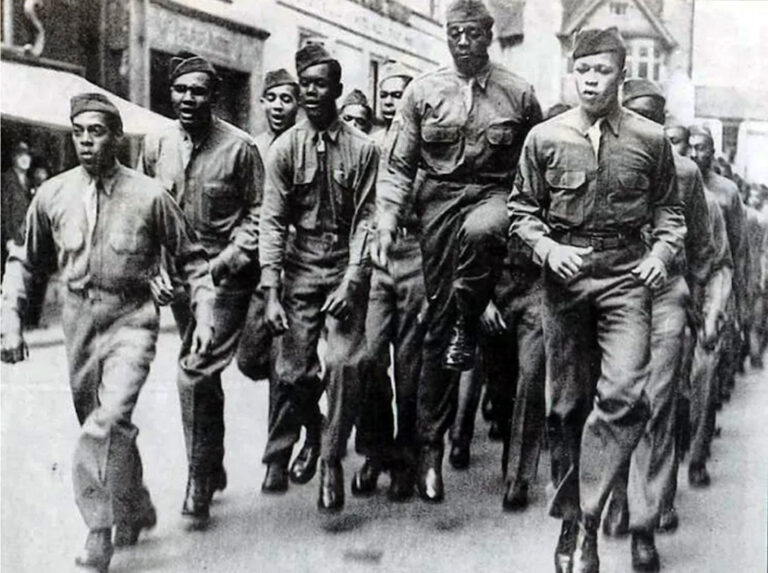
Featured image: “African American Soldiers During World War II”, unattributed author, creative commons via Wikimedia Commons


Three Poems by Susan Mockler

Transformation

Everyday, I deliver
myself to impossibility.
I transform:
Today, a bird,
my slumberous body
giving way to lightweight skeleton,
sturdy muscles, aero foil wings
that lift me, flapping or soaring
keeping me afloat,
keeping the promise
of escape.
How little faith we accord
ourselves most days.
Why not choose
to be nocturnal,
active only in darkness,
or crepuscular, in twilight—
darting and feeding,
or wading in coastal waters,
the warm surf breaking
around us?
Why not become,
believe, embrace
transformation;
why not take flight?

Science

I’m obsessed with darkness as a lessening of light.
Not a thing unto itself but day eroding into night.

It’s simple physics—objects absorb particles of light,
ambiguity of twilight, dusk’s erasure of the night.

If only I could generate my own source of light,
like fire beetles, I’d counter day’s erosion into night,

or glow, like calcite, fluorite, fibrous willemite,
bioluminescence, phosphorescence, abrading the night.

My permanently dilated pupils seek more light,
O Susannite, O rhombohedral crystal, my dazzler of night.

The River

When you walk to work

and the air is green

and smells of cool dirt,

do you remember the crying

or the color of the fish’s

eye? Do you remember

that your line stood

silent in a muddied swirl,

yet his catch stared

wholly from the bank

at blood and you?

But all he would say is, time

Is like the river.

Now, red and grown,

I remember the dying

and the color

of my father’s eye.

Susan Bucci Mockler’s poetry has appeared in peachvelvet, Maximum Tilt, Pilgrimage Press, Crab Orchard Review, Poet Lore, The Northern Virginia Review, Gargoyle, The Delmarva Review, The Beltway Poetry Quarterly, The Cortland Review, The Paterson Literary Review, Lunch Ticket, Voices in Italian Americana, and the anthologies, The Forgotten River, Arlington Writes, and Furious Gravity. She teaches writing at Howard University.

Image: Photo by CEphoto, Uwe Aranas

Four Poems by Greta Ehrig

Interlude

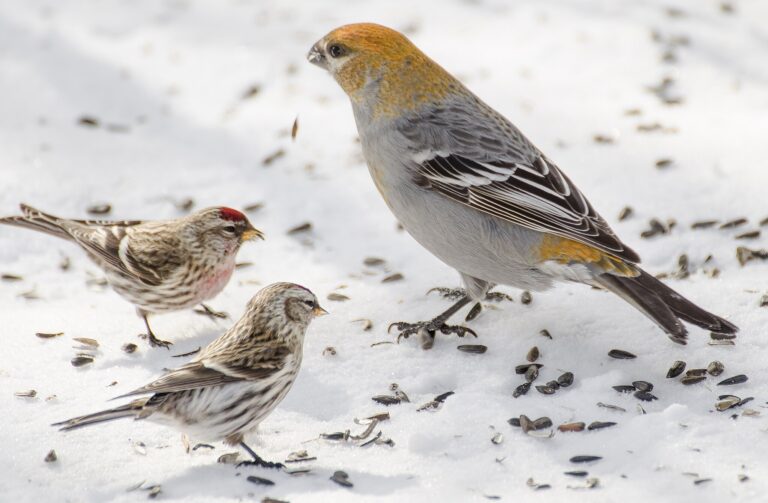
Even the Evening Grosbeaks yearn to move on,
wandering from there to here to somewhere gone,

partying at the feeder for a quarter of an hour
then parting ways like a young bride’s flowers

thrown overhead and into the crowd,
flown away in a gold and gray cloud.

I tried to stay them, tried in my way to say:
I was falling in love with their dancing blaze.

But they could not see me, could not hear,
didn’t seem to know I was even there

beside the curtain, behind the glass
dusted with snow, as the Winter’s grass.

Songbirds without a song, they call them
though their noise among the red Osier stems

is like your voice — sweetest sound to my ear —
and one I am always, (always), longing to hear.

The Eye of the Sea
after a photo on Facebook

The eye of the sea is a blue moon snail
peeking out of the surf.
You may debate whether it really exists,
if in Nature it even occurs.

But I have seen its curves with my very own eyes,
and I have touched its watery lid.
And if you asked God to bring you one,
I bet she would say, I did!

To An Old Friend With Whom I’ve Been Fighting

We speak of the war, you and I,
how both sides are to blame,
how somehow, someway, they
must stop the bombs and flames.

And yet, here we are, us two,
still tender as our bruises,
in a frail unspoken pact
where everybody loses:

We meet, we stand, we scan
the dwindling grocery shelves
and point at a world of others
rather than ourselves.

Stick Figures
For Teadora

It all starts somewhere —
with a word, a bang, a door
slammed shut as another door
opens — at work, at home, at play.

Wayne Thiebaud died this way —
at Wintertide, at the brumal age
of one-hundred-one — leaving
a legacy of color pops, lines, and

spaces for other people to fill.
Sweeping along the streets,
whom should his spirit meet but your
Snow Family, chalked out in

dusty white wheels like sugar cookies
with bright candy eyes: The Mama,
a buxom beauty in a pink floral hat;
her snow-babies like birds with

wide carrot beaks, beautiful sticks
for limbs. Nearby, intricate snowflakes,
a cup of cocoa, and bluebirds
commingle with a river of stones

pastel-rubbed the same bluet sky.
Because why not? Because
of course. Because Thiebaud
didn’t make one-hundred-two,

but rather, set a place for you.

Greta Ehrig earned an MFA in Creative Writing from American University, where she served as Editor of Folio literary journal and was a Lannan Fellow. Her writing has been published in numerous journals and anthologies, including: Beltway Quarterly; Southern Poetry Review; Allegro; Riding Light Review; Delos; Blessed Bi Spirit: Bisexual People of Faith; and Louisiana Literature, where she was named a semi-finalist in their international poetry contest. Her short plays have received staged readings at College Park Arts Exchange and Theater J in DC. Her songwriting has been recognized by the Bernard-Ebb and Mid-Atlantic Song Contests. And she has performed on stages from the Baltimore Book Festival to the Boulder Museum of Art. In addition, Greta’s writing has received support from Montgomery College’s “Arts in Healthcare” program; the Arts & Humanities Council of Montgomery County, MD; the Maryland State Arts Council; and the National League of American Pen Women. She teaches creative writing and piano in Takoma Park, MD.

Image: Per from Kaministiquia, Canada, CC BY-SA 2.0 https://creativecommons.org/licenses/by-sa/2.0, via Wikimedia Commons

Two Poems by Jeffrey Banks

Jeffrey “Big Homey” Banks is a finalist in Day Eight’s annual open-to-all poetry competition, the DC Poet Project. Read more about the DC Poet Project here and attend the culminating reading event Saturday May 4, 2024.

A note from the poet: The poem title “No D” is a reference to the poet’s brother’s name — Ramon — and the television show “Everybody Loves Raymond”.


No D

The 70’s
After Ella & Richard
Had Some “Good Times”

Out of their Banks
A Derivation of “The Jeffersons”
Was Born

And “We’re Movin’ On Up”
“Three’s Company” became
Four

But As We Explored
“One Day at a Time”

We Press Towards
“Happy Days”

But When Ma “Dukes”
Experienced “Hazards”
I Felt “What” was “Happening”.

The 80’s
“Different Strokes” Made Me
Realize I Didn’t Have A
“Silver Spoon” from My
“Family Matters”

The “Growing Pains”
From Not Having A
Dr. Huxtable or an Attorney Clair
Had Me Know
I was Living in
“A Different World”
From My “Family Ties”

When I Thought
My “Full House”
Was Winning
Nepotism Had A
Royal Flush
So I Had to
Keep A Poker Face
Amongst “Perfect Strangers”

When I Wanted Others
To “Gimme a Break”
In My “Wonder Years”
I Had to Face
“The Facts of Life” that
Those are Few and Far Between

Rarely was There “Cheers”
For Me Despite That
“Everybody Knows My Name”.

The 90’s
This Banks Wasn’t A
“Fresh Prince of Bel-Air’.
Who Knew “Living Single”
Would Be My Mandate
To This Point in My Life
When I Thought I’d Be
“The Family Guy”.

“Friends” are Fake
And They Duplicate

“Martin” & “Malcolm
In The Middle”
Became Leaders in
Learning How
To Be Comedic
“By Any Means Necessary”.

The “King” without “Queens”
Becomes A
Jack of All Trades.

Concerning Siblings
No “Sister, Sister”
And “Everybody Loves
Raymon”

As “Boy Meets World”,
I Became a “Smart Guy”
Knowing There’s No Way
I Could Plan for This.

The “Modern Family”
Of the 2000’s
Is More Digital

But Knowing
My Life isn’t a Sitcom

It Doesn’t Have
To Be Televised
But the Revolution Should Be

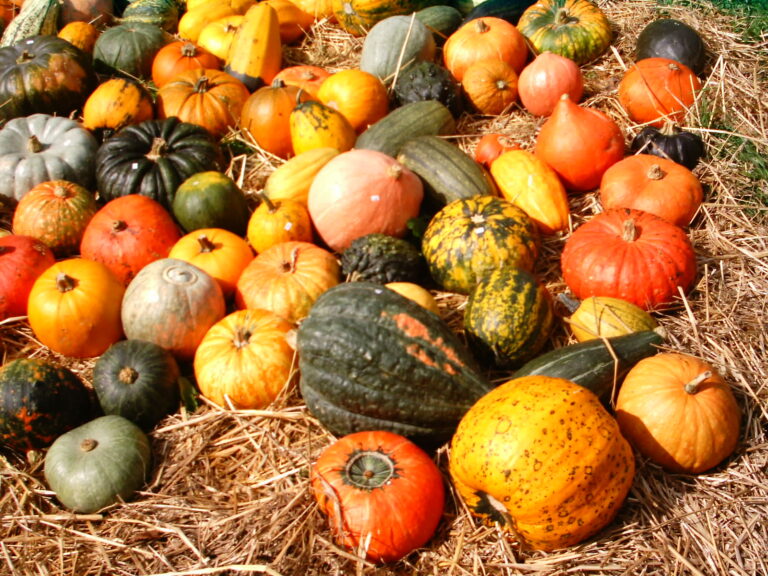
Jeff O’ Lantern

As the Clock Strikes 12

CinderHomey Turns into Pumpkin
Mama’s Pumpkin

Been Carved Out
With a Built-In Smile

And All the While
Praying the Light Inside
Doesn’t Burn Out

The Jeff O’ Lantern
To Stay Lit

Holistically Fit Works
Trying to Embrace
How I’m Shaped

No Two Pumpkins are the Same

Fearfully & Wonderfully Made
Protecting My Peace

So If You Think It’s Shade
*Shrug*

I’m Known By My Fruit

Writing is My Bug
Not You

It Eats from the Something Sweet
Because It’s True

Those Who Bug You
Will Steal Your Seeds

Nourish from You
While They Watch You Bleed

And the Death is Theft
As Winter Approaches

Exterminate the Roaches
That Bug You

The Insect that Should Infect You
Is Poetry

The Spoken Word Light
Burning Inside
Helps Me Fight

So the Poetry Bug
That Bites
This Pumpkin

Will Produce the Prince
Of A Royal Priesthood
Of Spoken Word Psalms
To Calm the Savage Beast

So Like Yeast
Rise to the Occasion

A Raisin in the Sun

I’m Gonna Let the Son Shine
So Others Will Find Light in Darkness

So As I’m Designed By the Divine
To Be the Nutritional Yeast and Bread

So People Can Feast and Be Fed
And Soothe the Savage Beast
In My Head

Me

Jeffrey “Big Homey” Banks has worked with America’s Got Talent champion Brandon Leake, New York Times best-selling author Jason Reynolds, and GRAMMY-Nominated artists Kevin Powell and Ethelbert Miller. He has performed nationwide, including at over 30 college campuses, and served as a Lead Teaching Artist with the DC Arts & Humanities Education Collaborative and Words, Beats and Life. He is co-editor, with Maritza Rivera, of Diaspora Café: D.C., an afro-latin poetry anthology. He was a finalist in the 2018 and 2021 DC Poet Project competitions and hopes this will be an opportunity to produce his first full-length poetry collection.

Image: User:Lusitana, CC BY-SA 3.0 http://creativecommons.org/licenses/by-sa/3.0/, via Wikimedia Commons

Burning Snowflakes by Rebecca Dietrich

Burning Snowflakes

Radiation rains from above

Like burning snowflakes, it falls.

In awe of its beauty,

I reach out my hand.

The ash stains my palm,

Still warm to the touch.

If only I knew this was the end,

I would have done so much more.

Rebecca Dietrich, a writer from Atlantic City, had her debut chapbook Scholar of the Arts and Inhumanities published by Finishing Line Press in November 2023. Her poetry has been showcased in esteemed publications such as Plumwood Mountain Journal, Steam Ticket, and New Plains Review. Rebecca’s poem “Taken,” which sheds light on the MMIW crisis, was featured in the anthology S/He Speaks: Voices of Women and Trans Folx, published by Moonstone Press in 2023. She holds a B.A. in Psychology with a minor in Holocaust & Genocide Studies from Stockton University.

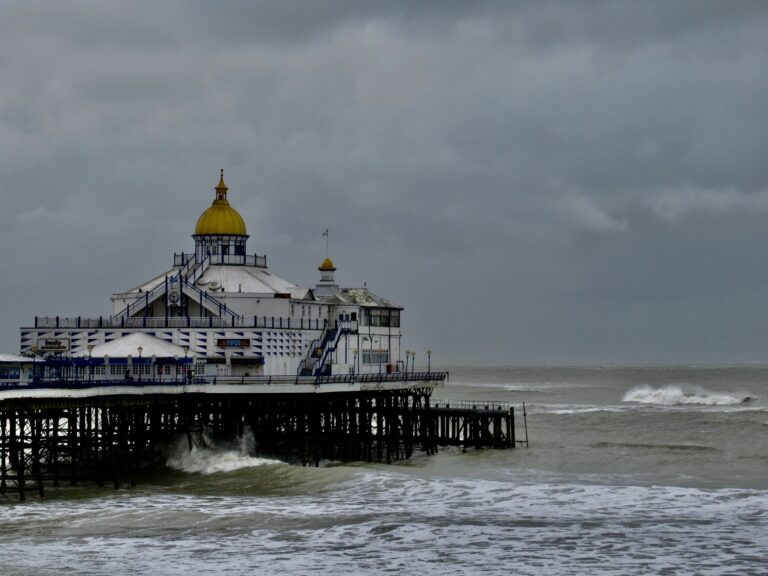
Image: Poliphilo, CC0, via Wikimedia Commons