Home Blog Page 162

“Hooray for Bollywood!” by Laurel Victoria Gray

On June 20th the Silk Road Dance Company (SRDC) will present my new full-length, Bollywood-themed dance concert at Harmony Hall. The term ”Bollywood” refers to India’s enormous Hindi-language film industry that is located in Bombay (now known as ”Mumbai.”) Although Bollywood choreographies originally drew from Indian classical and folk dance, other genres like jazz, hip hop, and even belly dance have recently entered the mix. Bollywood movies have an innocent optimism, an infectious charm, and an unabashed sense of melodrama that paints the world in bright colors — just like the old Hollywood musicals of the Depression years.

When I received the invitation to create this show, just two months ago, it came as a surprise — and a challenge. While SRDC performs throughout the year, we usually spend about 18 months preparing a new evening length concert. And, SRDC usually performs traditional Persian, Turkic, and Arabic dance from the Silk Road and Middle East and only a few Indian or Bollywood dances. But from my point of view this invitation was kismet, or fate, since my infatuation with Indian movies began decades ago when I was immediately enraptured after my first glimpse of dance scenes from the famous film “Pakeezah.”

After watching countless Indian films, I made my first stab at creating Bollywood style movements – for one of my Joy of Motion dance classes – in 2003. This was extremely audacious since I am not an Indian dance specialist, but the Hollywood flavor of the choreographies was familiar ground. My students loved the experiment, and enjoyed the idea of a Bollywood choreography. My first full Bollywood choreography, with over 50 dancers, set to the song “Aa Tayar Hoja” from the movie Asoka, became the finale of my 2003 student concert at the Publick Playhouse in Cheverly, Maryland, and got a great audience response.

Since then I have created nine Bollwood inspired choreographies and most of them will be in our June 20th concert. This concert pays homage to Bollywood by visiting some of the subjects most common in Indian film choreographies. Our selections, set to compelling music from beloved films including Lagaan, Asoka, Bombay, Bride and Prejudice, and Slumdog Millionaire, should strike a familiar chord with Bollywood film fans.

In creating a Bollywood-inspired choreography, my expertise in Central Asian dance is a great help. There is a marked kinship between Indian Kathak and classical Uzbek dance. This stems from the Turkic leader Babur who conquered India in 1526. Through Babur and his descendants, the Central Asian Muslim Turkic culture has intertwined with North Indian Hindu culture to create the great Mogul dynasty. There are many elements in Kathak dance — spins, gestures and poses — that echo classical Uzbek dance. So while many of the dance steps are familiar, mastering the precise styling, facial expressions and hand gestures has been challenging for the dancers (like achieving a native accent in a foreign language.)

Over the years, my company and I have benefited from artistic collaborations with members of the Virginia-based Indian Dance Educators Association (IDEA). IDEA teachers, including Jayantee Paine-Ganguly, Christel Stevens and Asha Vattikuti have been very generous with their time and expertise. In this concert we will be joined by Jayantee Paine-Ganguly and her advanced Kathak students. Jayantee’s participation will introduce the audience to classical Indian dance, taking them beyond Bollywood. It may remind audiences of those great, old film scenes that utilize strong elements from Kathak dance.

Some classical Indian dance professionals actually look down on Bollywood dance because it is a degradation of the elegant, classical styles. (And it is.) I understand their position, because I sometimes feel the same way about the misrepresentation of traditional Arabic dance, including belly dance, by Western performers and the media. At the same time, Bollywood dance has an endearing appeal, and in these times of woe anything that brings people together to dance with shared joy should be celebrated. Some of us will have to wait for our next incarnation to devote our lives to the serious study of classical Indian dance. In the meanwhile, we can enjoy dancing to lively Bollywood tunes in beautiful costumes and maybe, just maybe, learn a little more about Indian culture — like Hindi song lyrics!
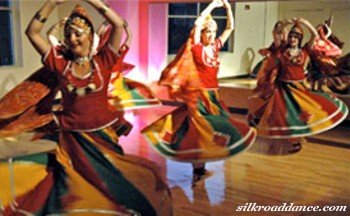
silkroaddancecompanybollywoodghoomarrajastaniwebPerhaps the popularity of Bollywood resonates with our desire for tribal identity, our dreams of a global village where everyone miraculously knows the same songs and dances. After all, Bollywood is a community-oriented phenomenon. In Bollywood films, dance is typically performed with friends, family, neighbors — and even complete strangers.

As a costume designer, my challenge for this concert has been to create different color palettes and costume styles for each piece, aiming overall to recreate the opulence and glamour of Bollywood films. I hope that exposure to an evening of Indian color sense will convince the audience that, of course, purple and red really do go together – just like saffron and magenta, parrot green and scarlet, hot pink and orange….

One of SRDC’s favorite guest artists, Ahmad Maaty, will once again team up with the company, as will members of Ensemble Mumtaz and the Good Karma Bollywood Dance Team. Actress Catherine Frels will serve as the charming Mistress of Ceremonies, guiding the audience through the intricacies of Bollywood plot conventions. Choreographic highlights will include a Rajastani folk dance, a visit to a magical temple, a candlelight ritual and — of course — a wedding party!

But just like in the movies, there are many obstacles along our silken road to Bollywood. Will this concert all come together in time? Will the protagonists find love and happiness — and a red lengha choli set? The only way to find out is to join us on June 20th.

HOORAY FOR BOLLYWOOD! a Bollywood Dance Concert
June 20, 2009 8 PM @ Harmony Hall [10701 Livingston Road Fort Washington, Maryland]
Tickets: $20 general admission; $15 students and seniors
Order by phone: 301-203-6040

An internationally acclaimed dancer, scholar, educator, and choreographer, Laurel Victoria Gray is the Artistic Director of Washington DC’s award-winning Silk Road Dance Company (SRDC). Founded in 1995, SRDC specializes in traditional women’s dance from Silk Road cultures and the Islamic World.

In 2007, Uzbekistan’s Ministry of Culture awarded Gray was awarded an honorary doctorate for her pioneering work in bringing Central Asian dance to the West. She is also the recepient of the Metro DC Dance Award (2006) for Excellence in Costume Design; the Distinguished Service Award from the Embassy of Uzbekistan (2005); the Kennedy Center Local Dance Commissioning Project Award (2003); and the International Academy of Middle Eastern Dance (IAMED) Awards for Best Choreographer (2003) and Best Ethnic Dancer (1999).

Gray’s scholarly articles have appeared in many publications including the Oxford University Press International Encyclopedia of Dance, the World Encyclopedia of Contemporary Theater, the Encyclopedia of Modern Asia, the Encyclopedia of Women in Islamic Culture as well as Dance magazine and foreign journals. In 1984, she founded the Uzbek Dance and Culture Society and in 1994 established the annual Central Asian Dance Camp. Gray has taught “Dances of the Middle East” at George Washington University and George Mason University.
Jackie Hoysted on her Solo Show: Afternoons – Where Drawing Meets Painting

Countdown has begun and I’m wrapping up final decisions for my show “Afternoons – Where Drawing Meets Painting” which will open Friday July 10th in the Fisher Gallery at the Schlesinger Arts Center in Alexandria, VA. You might think it’s a bit early to be finishing a mid-July show, but I used to be an IT project manager and have had more than my share of the horror of praying for miracles at the last moment. There is satisfaction in being a bore, and well prepared (even if it doesn’t seem cool.)

With the insightful guidance of the gallery manager, Megan Peritore, the much dreaded artist statement and press release are written, and the postcards will go to print in the coming week. All I have to do is select the work, make final presentation decisions and stick to them. Sounds like it would be easy…

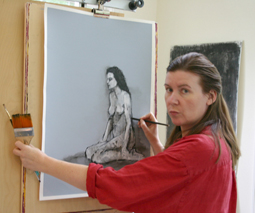
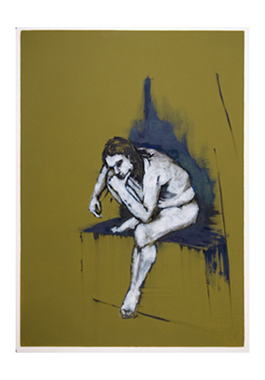
I will be exhibiting from a body of works, upwards of fifty, that I have created over the last eighteen months. These works are a mixture of drawings of the nude and clothed model. Depending on the length of the drawing session, they range from demure illustrative-type works, to works that detail obsessive preoccupation with the sad empty gaze of a model in the long pose. For those who haven’t experienced drawing a model: there’s a particular exquisite human vulnerability in the expressive constant of a model’s sitting.

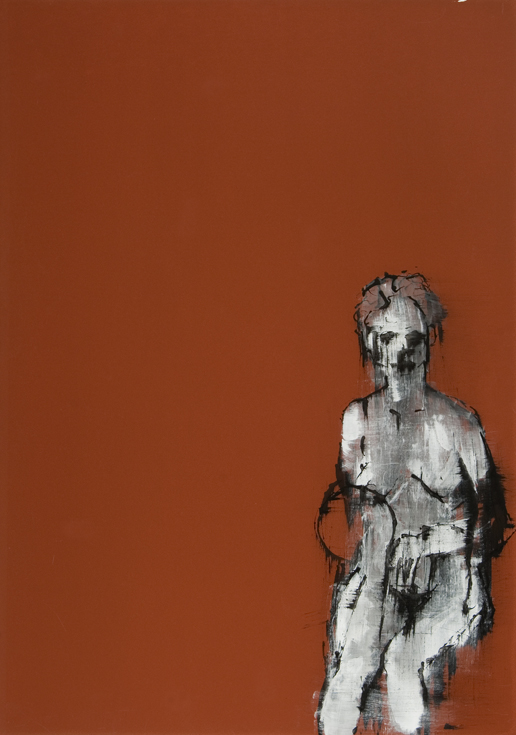
how-men-really-are-by-jackie-hoystead-framed-for-webI have had my husband Prem play judge and jury and select his picks. I have also had my good friend, and fellow artist, Lisa Rosenstein make her selections. But I am the Artistic Director of my shows, and the decision is mine. I will pick the drawings that I think best activate the paper, and evoke a strong human emotion. I expect this show to deliver a visual statement about what I am trying to achieve through my mark making, and to suggest where I am going in the future. Presenting my artwork, even in a solo show, I must control how my work is presented. I’ve complained to friends and colleagues that many exhibitions are more like interior design exhibits than art showcases. (You might know what I mean: the type of exhibit where you enter the space, take in the beautifully appointed wall pieces and feel no compunction to actually view any of the art.) I have to consider the presentation of the artwork, and the organization of the space, in order to appropriately focus attention on the work itself.

I’ve been checking out how other artists are presenting their art to see what works. Within the last month I’ve gone to the Hirshhorn in D.C., and the MOMA and The Museum of Contemporary Art in New York City, to check out what others are doing. What I’ve learned is that I must first decide on the overall impression I want the viewer to have when he/she first enters my exhibition space and then decide how each individual work should be framed. For this exhibition, the entire body of work has been executed with acrylic on pastel paper. The works are vivid, contemporary, and vulnerable. I want the space around them to feel crisp, uptight and precise. I want each individual artwork to achieve a sense of coolness and detachment.

Several months ago I sent out five of my works to be professionally framed. I spent less than a half hour with the framer, as we quickly agreed on floating the artwork, and using a simple black metal frame. When I got the work back I was disappointed – there was nothing wrong with the framing job per se, but it just seemed to barelythere_smdiminish the artwork. This was a costly mistake on my part – I had not been clear about what I wanted and the look I wanted to achieve. I have learned not to assume that a framer will make the right framing decision for me. There is no such a thing as a neutral frame.

Framing is very costly and it can be prohibitively expensive to change a poor framing choice. For this upcoming show at the Fisher Gallery I will be exhibiting around 15 mid sized works, 1 large and several small works. But this will be the first and smallest of three upcoming solo shows of my figure drawings. I have an exhibition in Jan 2010 at the Delaplaine Arts Center, Frederick, MD, followed by a show in Glenview Mansion, Rockville, MD in November 2010. Whatever decisions I make on framing now will influence how my work is presented for the next few years. I’ve invested days in researching picture molding, and archival mounting techniques, and comparing prices for molding and matting options at online framing shops (Framing4Yourself.com, AmericanFrame.com and Framingsupplies.com.) I’m considering buying picture molding online, and combining it with backing and mounting materials (like Acrylite, Gatorfoam and Coroplast) cut from sheets to my specifications by the plastics distributor Piedmont Plastics in Beltsville, MD. I’m currently waiting for the samples to arrive to make final choices, and to decide whether I want to tackle the job by myself or have a framer do it for me. At the moment I’m inclined to do the former – it hurts when you pay a professional to do a job and it is less than what you expected.

I’m very excited for this first show, Afternoons – Where Drawings Meets Painting that will run July 10th – August 7th, 2009. The opening reception is July 10th, 7-9pm. I’ll give a brief artists talk at 8pm on the July 10th. I hope you’ll come enjoy the exhibit, and would love to hear what you think of the work. The Margaret W. and Joseph L. Fisher Art Gallery is located within the Rachel M. Schlesinger Concert Hall and Arts Center at 3001 North Beauregard Street, Alexandria, Virginia. Call (703)845-6156 or visit http://www.nvcc.edu/alexandria/schlesingercenter/ for more details.

jacqueline-portrait-smallJackie Hoysted is a native of Ireland, and currently lives in Gaithersburg, MD. She quit her career as an IT consultant four years ago to pursue a career in the arts. She has since graduated from a fine arts degree program at the Corcoran College of Art & Design, Washington DC. She is a multi media artist and selects materials based on what she wishes to communicate. She has had a number of solo shows in the area and her work has been selected for numerous juried shows at a regional and national level. Her ongoing project Send Me Your Last Cigarette has been featured in The Gazette, the Washington City Paper, The Falls Church News Press and the Westmeath Examiner, Ireland and numerous blogs.

Fair Use Copyright Law for Artists

Creators today may assert copyright ownership of their creations, but this does not necessarily limit the public’s legal access to or usage of their work. Fair Use copyright law is intended to protect usage of a copyrighted work for criticism, comment, new reporting, teaching, scholarship, and research. In application and implication, Fair Use law has significant impact on creators, scholars, and journalists.

Fair Use law is different from some other areas of the law in that legality of an action depends on several factors. Harvard Law School Professor and copyright expert Charles Nesson wrote, “Fairness is a standard, not a rule….No simple definition of fair use can be fashioned, no bright line test exists.” The U.S. Copyright Office outlines four factors in determining whether or not usage of a copyrighted work is fair (legal):

“The purpose and character of the use….the nature of the copyrighted work….the amount and substantiality of the portion used…. and, the effect of the use upon the potential market for or value of the copyrighted work.”

In order to clarify some of the inherent fuzziness in the law, practice communities (such as book publishers, movie producers, and the music industry) are empowered to create Statements of Fair Use. These Statements document common allowable usages, and outline (but do not define) the ways in which a member of the public may use copyrighted material without reasonable threat of legal repercussion.

On Friday May 8th, 2009, the Dance Heritage Coalition presented the results of their multi-year project to develop a new Statement of Fair Use for Dance-related Materials. The mission of the Dance Heritage Coalition is to improve the ability of the dance community to retain and utilize materials documenting the art form. According to Project Director Libby Smigel, through developing and publicizing the new Fair Use Statement, the Dance Heritage Coalition hopes to encourage increased access to and usage of Dance-related materials. Smigel asserted that one reason archival materials remain out of sight to the public and researchers is confusion over copyright, and fear of lawsuits. The press release for the event noted, “it hasn’t been clear how librarians, archivists, and curators can legally use.… images and texts.” The issues addressed in the new Dance-related Materials Statement are common to other art forms. Fair Use access issues apply to images, videos, notes, copies, and recordings of any type.

In an explanation of Fair Use issues on their website, the Copyright Alliance (a trade association dedicated to tracking copyright issues) explains, “An individual does not have the ‘right’ to make use of another’s copyright work…. [Fair Use may apply] when someone already has a copy of a copyrighted work and makes copies, distributes, performs, alters, or displays that work and the copyright owner subsequently challenges that use of the work as being an infringement. In that case, the person could raise a defense of fair use.” Fair Use law is not intended as a defense for people who are simply too lazy to seek copyright permission.

Nixon leaving the White HouseThe impact on the financial value of a copyrighted material is a central issue in settlement of Fair Use-defended law suits. Writing on his website the marketer-cum-journalist Brad Templeton reported, “Famously, copying just 300 words from Gerald Ford’s 200,000 word memoir for a magazine article was ruled as not fair use, in spite of it being very newsworthy, because it was the most important 300 words — why he pardoned Nixon.” Artists would be well-served to empower their own usage and the usage of others by considering how fair use law applies to their work.

The best way to be certain of the legality of one’s usage of a copyrighted material is to seek copyright permission. In the event that copyright permission is not secured, Statements of Fair Use articulated by practice communities provide guidelines for usage, and defense in case of prosecution. To receive a copy of the new Fair Use Statement in Dance-Related Materials produced by the Dance Heritage Coalition, or to learn more about the document, visit www.danceheritage.org.

-Robert Bettmann, Editor

A (informal/unsophisticated) Conversation on Laban’s Efforts by Cheryl Palonis Adams

In 2007 and 2008, I attended The Laban-Bartenieff Institute of Movement Studies weekend studies program, resulting in my Certified Movement Analyst (CMA) degree. While attending this course, friends of mine would sometimes ask, “What do you do there all weekend?”

Many people know nothing about Laban’s work, and even people who have heard of Laban are easily confused by its complex vocabulary. In answering a question on my final exam I produced this informal and somewhat tongue-in-cheek response to the question.

——

So, you want to know about my adventure with Laban? Well, let’s sit on the porch in the sunshine, have a glass of wine or two, and I’ll try to make some sense out of it for you.

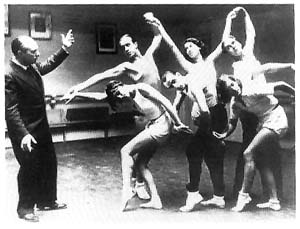
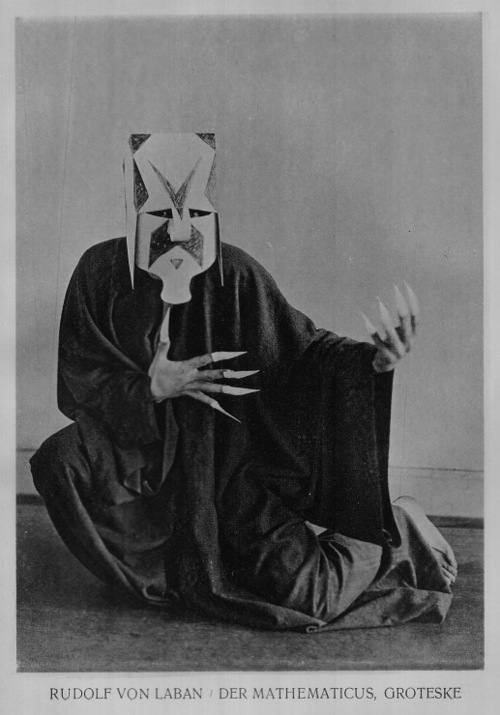
laban_tanzstudieRudolf Laban was a Renaissance Man, a kind of educated dilettante, who dabbled in the arts and mathematics, and a few zillion other areas. He was fascinated with movement and the human body – in not a simply “theoretical” way. (He evidently had quite the way with the ladies.) Laban had a wife, and many affairs, and obviously a lot of free time in which to develop his theories. I think one of the reasons why he focused his erudition on body movement was to get those women – and men – out frolicking in the nude in nature.

In the early 1940s in Europe, Laban was hired to study factory workers in order to help industry find the most economical movements for workers (in terms of their own bodies and their factory output). He saw that repetitive motions could result in muscle dysfunction unless they were balanced with opposite muscle movements to provide Recuperation. He labeled this series of balancing actions, Efforts. The German word he actually used means “driving on” or an impulse that comes from inside, but he translated it into the English word ‘Effort’. He had difficulty with the translation; maybe that’s why some of what he wrote is so dense and confusing.

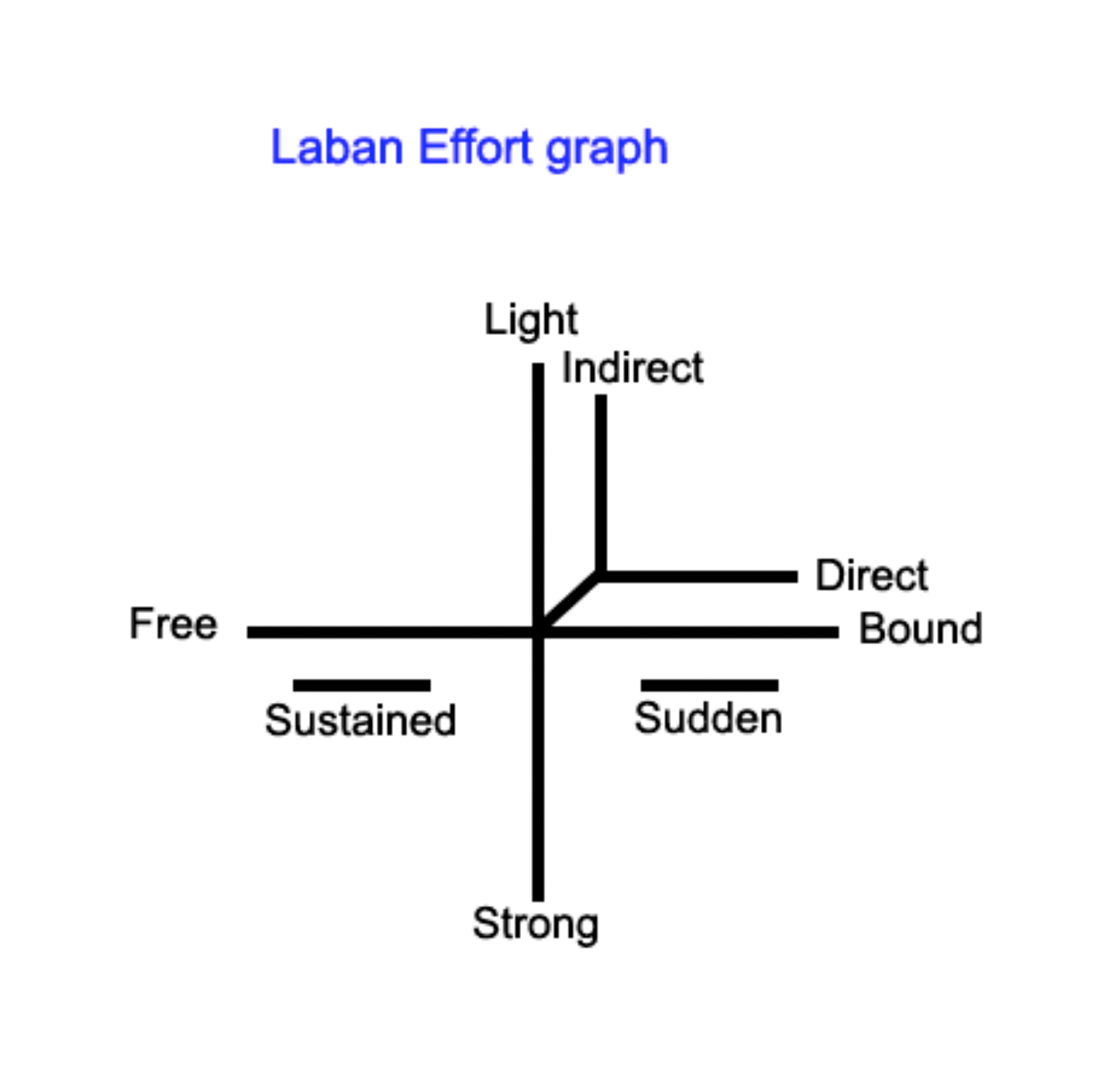
From what he observed, Laban divided Effort into four ‘Factors’: Flow, Weight, Time and Space. Each Factor is comprised of two elements: Free Flow and Bound Flow; Light Weight and Strong Weight; Sustained Time and Quick Time; and Direct Space and Indirect Space.

Flow has to do with whether a movement is fluid or restrained. Free Flow is an action that cannot stop suddenly, while Bound Flow is an action that can be easily arrested. If I’m “holding on” to keep from slipping on ice in my driveway, I’m probably using Bound Flow. If I throw this apple core out into the yard, then I could be using Free Flow.

Direct Space Effort has to do with pinpointing something; so if I point to that cherry tree in the orchard because I want you to look specifically at it, I’d be using Direct Space Effort. But if I want you to get an idea of the scope of our property, I could sweep my arm side-to-side to take in everything, and this would be multi-focused Indirect Space Effort.

Weight Effort seems fairly obvious. I can show you some Strong Weight by pounding on the table. Okay?!?! But, if I brush some of the lint from your shirt, I’m using Light Weight.

laban-effort-graphTime Effort can be tricky because it doesn’t really have to do with time in “length of time” or “chronology,” rather with how you approach time. (Oh, Laban was big on Intent — all the Efforts have some kind of personal, internal Intent. That has to do with what you want your movement to say and mean. In the end, it’s all about meaning and communication.) I can have an hour to get something accomplished and approach it in a rush as if I have only a minute, in Quick Time; or I can have five minutes to get the same thing completed and approach it as if I have all day, in Sustained Time. What is confusing is that Quick Time is not constant speed; Sustained Time is not constant slowness. It’s about the increasing and decreasing of Time. You can’t “see” Time Effort without contrast. In fact, it’s difficult to specifically pinpoint any of the Effort qualities without contrast because you can see the Effort quality only at the moment it is changing.

So, those are just the very basics of the Effort Factors. Laban’s work also has a connection with the study of Jung’s theories. For instance, Flow corresponds to feeling; Space has to do with thinking; Weight relates to sensing; and Time is involved with intuiting. When I observe movements, I’m trying to make connections between the movement and the meaning — a sort of non-verbal communication theory.

Laban saw innumerable connections between spatial forms and movement, and he observed that certain Efforts occurred in certain spatial configurations. He found that we usually move Upward with Lightness and Downward with Strength. If I reach up to grab something from the cupboard, I’d be going Up with Light Weight; but if I’m splitting a piece of wood, I’d be going Down with Strength. This doesn’t mean that you can’t do the opposite; Laban called these opposites, Disaffinities. I know it sounds complicated. The scary part is that I actually make sense of this, and I’ve been able to use these theories in classes and choreography.

No, we’re not finished yet. YOU’RE NEVER FINISHED WITH Laban Movement Analysis!

Every time you think you know something and understand the concept, there’s another question, and you’re back at square one. And a little knowledge is a dangerous thing. I think that’s why Laban was so dangerous — he had a little knowledge about a lot of things and tried to put them all together in an intelligent (cerebral) way. And, he often did not answer questions directly. I guess that’s another reason why so many people kept hanging around him: they were waiting for an answer, so they thought they might as well have a good time while they were waiting.

w22252r2Laban decided that identifying these Efforts just wasn’t enough. He had to add them together and come up with what he called States and Drives. States are combinations of 2 Efforts, and Drives are combinations of 3 Efforts. He named all of these, too–6 States and 4 Drives. No, there aren’t any with 4 Efforts (although this is possible); but if there were, you’d probably be in one now because I can see that you may not have been serious when you asked me to tell you what I did in this course. Maybe we could call 4-Effort combinations — Drive Aways!

Laban analysis provides insight into the emotional and spiritual values of movement. When I couple the Jungian concepts with Laban’s, I can ask myself questions like: “Is my impact on others Strong or Light?” I can work on figuring out how to express Outwardly what I’m Intending Inwardly by considering the Efforts I am projecting.

I’ve probably lost you by now….. Just remember for the future: if you ask me a question, you are likely to get an answer! If this information piques your interest to learn more about Laban and Laban Analysis, I recommend Karen K. Bradley’s book, Rudolf Laban, published by Routledge.

Cheryl Palonis Adams has an M.F.A. in Dance from the University of Utah, a B.A. in Humanities/Dance from Wayne State University, Maryland Teacher Certification in 5-12 English, and is a Certified Movement Analyst (CMA). Cheryl has taught dance at the University of Toledo and St. Mary’s College of Maryland, and k-12 dance in the private and public sectors. Most recently, Cheryl taught English and Dance for Calvert County Public Schools where she directed the student company, CalvertCrossCurrents Dance and served as choreographer for the Theatre Department. She is a member of the Southern Maryland Modern Dance Collective, serves on the National Dance Education Organization’s (NDEO) Board of Directors, and is the Associate Editor of the Journal of Dance Education (JODE).

Isadora Duncan and Vaslav Nijinsky

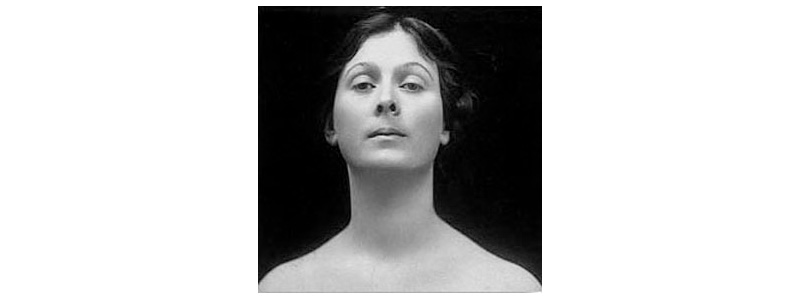
Last week Isadora Duncan (May 26, 1877 – September 14, 1927) would have celebrated her 138th birthday. Two of my dance colleagues forward the following rememberance of Isadora, from Mary Fanton Roberts:

“I recall one memorable time when a little party of us were together at a studio luncheon in New York, and both Isadora and Nijinsky were there. After the table had been cleared away, some one played the piano. I cannot recall who it was, but it was one of the great men playing divinely.

And Isadora and Nijinsky danced together — Isadora creating the dance as the music flowed from the piano, and Nijinksy dancing with her as though he had rehearsed each entirely new measure for weeks. It was an amazing performance — Isadora’s extraordinary power of instantaneous creation and Nijinksy’s sensitive response to her mood and to the music.”

Here is the link to the only known authentic clip of Isadora dancing.