
Home Blog Page 168

Reconstructing Isadora Duncan’s Marseillaise by Valerie Durham

How do you go about recreating the work of a genius? I undertook that daunting and humbling task in remounting one of Isadora Duncan most legendary works, The Marseillaise.

In 1915, Isadora Duncan improvised a dance to the French National Anthem as a “call to the boys of America to stand up, and defend the greatest civilization of our epoch” (meaning France.) The dance was an impromptu offering performed on the stage of the Metropolitan Opera House in New York City. The audience response to Duncan’s dance, according to press accounts, was nothing less than staggering. Standing ovations, un-abashed weeping, singing, cheering, and applause for minutes on end.

In descriptions of the event, Isadora’s movements were described as evoking some of the greatest images in French art and history, including the bas reliefs on the Arc de Triomphe, Marianne in Delacroix’s “Liberty Leading the People,” and the Statue of Liberty. Her dance was described as “imperious, with proud, wide gestures, beckoning to a great unseen army that seemed to fill the stage at her magnetic command.”
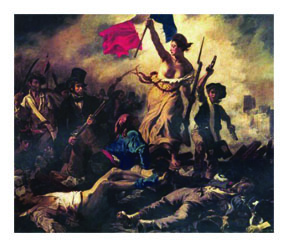
Image: Liberty Leading the People

A few years ago, soon after 9/11, when patriotism was high in America, and countries around the world, including France, were rallying to our support, I was asked by a non-profit organization to dance The Marseillaise – Isadora’s Marseillaise – at one of their events. The problem was that The Marseillaise is a lost choreography! There are no pictures or video from performance.

Isadora Duncan died suddenly in a tragic car accident in 1927, without filming a single one of her dances (even though the technology was available). Yet today, over 200 ‘authentic’ Duncan choreographies are still performed. How is that possible, when so little documentation exists?

The choreographies and technique that have been passed down from Isadora Duncan are actually the work of Isadora’s primary pupils. The “Isadorables” as they were dubbed by the French press, they performed and trained extensively with Isadora. While Isadora was alive, the Isadorables learned the group dances that Isadora set on them. But they also watched and studied Isadora’s own solos, mainly from the wings while performing with her.

The first performance of the Marseillaise was performed in New York without any of the Isadorables present, and it was improvised, so no one could even have watched a rehearsal. The dance vanished into the ether as she performed, and when she finished, it was gone. Isadora re-danced the Marseillaise at the Trocadero in Paris, and on tour in South America, but again, her troupe of dancers were not with her, and so did not have a chance to learn the piece. Resultantly, the Marseillaise was not passed down as the rest of the repertory that we have today.

I found myself in a difficult situation. I wanted to complete the commission, but how could I to stand in Isadora’s place and pretend to have actually recreated what has been called the tour de force of her career? I found courage in Isadora’s own urging that to perform her work all dancers must try to “breathe its life, to recreate it in one’s self, with personal inspiration.”

I began the process by researching all that had been written about Isadora’s improvisation, from her own account in her autobiography to articles written in newspapers after the event. What I learned there led me to study the sources of inspiration for Isadora. The bas relief images from the Arc D’Triomphe and the figure of Marianne from “Liberty Leading the People” were particularly inspirational for me. I knew from earlier research that Isadora studied the precondition and post-effect of images, and used that as a resource in her dance. I let myself consider her images in the same way.

An additional resource was my own experience with and knowledge of other known Isadora choreographies. I have danced her Schubert Symphony #9 Finale, Tchaikovsky Pathetique Symphony, Amazons, and March Militaire as passed through Duncan Dance Masters Lori Belilove, Julia Levien, Hortense Kooluris, Sima Leake, and later Jeanne Bresciani. From these dances and training, I came to understand how Isadora might have expressed this particular heroic, militaristic aesthetic in her choreography, and the musicality connecting those movements. From all of this research and training, I had confidence in my ability to imbue my version with authenticity and truly personal expression.
I began to become comfortable projecting an understanding of the type of movements and motivations Isadora may have employed in her choreography. My next challenge was locating a recording of the music that would be appropriate for the Duncan technique and musicality.

Isadora’s performance used the first four stanzas of Rouget de Lisle’s text, and a version of the music officially selected by the French government in 1887, which is a bit different from the version we hear today. I listened to multiple versions of the song, ranging from versions performed by child choirs to performances by military bands. I was fortunate to find a truly inspiring version of the Marseillaise, featuring the magical voice of Placido Domingo, conducted by Hector Berlioz. The only problem was that it was all six verses!

I decided to choreograph the entire six verses, over 11 minutes in length.

The resulting choreography told the story of an entire war. With an initial foray into battle, the rallying cry and scouting of the enemy troops, the actual engagement of fighting results in soldiers falling, until the solo dancer is the only one left standing. She calls to God, and raises her fallen comrades to charge again, this time victoriously defeating the enemy. Throughout the piece, the choreography incorporates gestures of a flag being held, carried and waved, which represents a rousing and patriotic image for the troops in the battle.
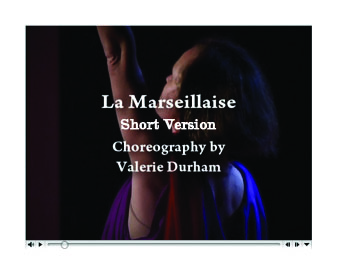
By utilizing the steps of 1) research, 2) knowledge of the technique, 3) proper music, 4) personal artistry, and 5) a hefty dose of audacity and humility, I have created a dance that honors the tradition of Isadora’s genius choreography. While I can never know what Isadora’s exact movements were that amazing night at the Met in 1915, I feel confident that I have created a dance that approaches the types of movements and the kinds of emotions Isadora would have pursued in that effort to inspire that New York audience.

For this year’s presentation at the Capital Fringe Festival in DC, I condensed the longer work that I created into a one-verse iteration. The shortened dance lacks the dramatic story of the longer one, but captures the enthusiastic call to action that initially inspired Isadora to improvise the French anthem.

I’d love to hear what you think.

Valerie Durham is a 4th generation Duncan Dancer, and the Artistic Director of The Duncan Dancers. She offers classes in the Duncan Technique at the DC Dance Collective. Visit www.duncandancers.com for more information.

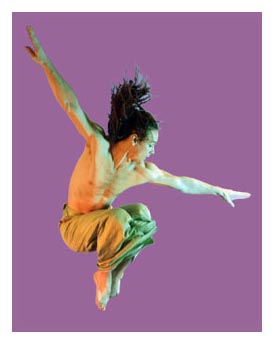
Local History: Jan Tievsky on Glen Echo Dance

When I arrived in Washington in 1975, the dance landscape looked radically different from today. There were very few modern dance studios or professional dance companies. There were even fewer performing venues available to the companies that existed. I decided to create a dance center to help fill the void. After pursuing a variety of location options, I settled on Glen Echo Park as the home of my imagined dance program.

To most people at that time, it was an unlikely choice; a decrepit amusement park with buildings dating from the turn of the century through the 1920’s, filled with a hippie-like group of artists and set outside the city. The Park Service warned me that other dancers before me had tried unsuccessfully to start a dance program at Glen Echo, including Jan Van Dyke, the grande dame of DC modern dance. I was undeterred – partially by my stubbornness, partially by my belief that what I was attempting to create was so unique it had to succeed. What I envisioned was a dance center that would have a professional modern dance repertory company that would provide opportunities for emerging choreographers, an apprentice dance program for developing a new generation of modern dancers, a studio that offered study in a variety of disciplines but focused on modern dance and a Summer Dance Festival that would provide exposure for local dance to the entire metropolitan area. Glen Echo, with its large facilities, artists’ community (which provided countless opportunities for multidisciplinary work), and potential support by the National Park Service, seemed to be the perfect location.

I offered my first classes at Glen Echo during the summer of 1976. The space I was given was the Spanish Ballroom, a magnificent space during the 1920’s, but at that time boarded up and filled with broken glass, fleas and raccoons (both dead and alive). With fellow dancer and good friend Stan Fowler, the beautiful maple floor was cleaned enough to hold a summer session of modern dance classes. However, as the weather turned cold, the space was no longer suitable and I brought my students to Mt. Vernon College, where I was teaching in the adult education program.

The following spring, I asked the Park Service to allow me to expand the summer program to include more classes, and performances by local dance companies. They agreed, allowing me to present the first Summer Dance Festival at Glen Echo. One of the more memorable performances of that inaugural summer was by the newly created Washington Ballet, featuring a young, unknown choreographer named Choo San Goh.

Unfortunately, I was for the most part, working alone. My only help came from Stan, who provided technical assistance for the performances. In addition, I taught all the classes. At the end of the summer, the dance program was the largest program at the Park, and I applied for a year-round facility and permission to expand the program further.

In August of 1977, I was given the use of a fairly large room beneath the Park offices. It had a terrible floor for dance, linoleum over concrete, but it was heated. I immediately held auditions for what was to be the first modern dance company at Glen Echo Park. The dancers I hired were selected not only for their talents as dancers and dance teachers, but because they also shared the vision I had of creating a very different kind of dance program. Those first dancers were Cheryl Koehler, who was also an accomplished choreographer and musician, Becky Westwood, Roberta Rubin, Steve Johnson, Stan Fowler and apprentice dancer Linda Hindley. Within a few months we added two other dancers, Sandy Asay and John Kramer, and Glen Echo Dance Theater was born. During the first year, we performed works that Cheryl and I choreographed and also had a new work created for us by Greg Reynolds, a former dancer with the Paul Taylor Dance Company. Greg was now looking to make a name for himself as a choreographer and was eager to have a company to choreograph on. Our first performance was held in the Adventure Theater at Glen Echo Park and we received a promising review from George Jackson.

The first year was primarily one of development: developing the company as a coherent group of dancers, developing choreography from within and outside the company, teaching classes and securing funding for the festival and a more permanent studio space. There was great progress made during that first year. In addition to the growth of the dancers and the repertory, our studio grew exponentially. We had so many students that we had clearly out grown the space we were using. At that time, one of the resident artists at the Park decided to move on, leaving her space, the old Hall of Mirrors, vacant. It could provide us a home with a nice sized studio on a suspended wood floor, dressing rooms and office space. I applied for residency status and was awarded that status in 1978. Now we had a permanent home for classes and rehearsals, plus the use of the Spanish Ballroom for performances.

However, both spaces were in need of major work. The studio needed to be converted from a one-room pottery studio into the divided spaces that we required. Most important was the need to cover the aging and splinted wood floor with a suitable dance floor. The Ballroom needed even more work. We had completely cleaned up the space, but its vast size, lack of audience seating or designated performing space and no theatrical lighting meant all performances had a very informal feel to them. What we really needed to do was to retrofit the building to create a real dance theater.

The studio transformation came first. Stan, who was an electrician, chemist and a bit of an engineer, in addition to being a dancer, designed a studio floor. Steve Carty, an apprentice to the company and Alex Rounds, who was one of my students in the very first contact improvisation classes taught in Washington, worked with Stan to build the studio. Both men continued to dance in Washington. Alex became a very accomplished and well-known dancer in the contact-improvisation world.

Then came the Ballroom. Stan, who was at that time hired by the National Park Service to provide technical assistance throughout the Park, managed to procure theatrical light fixtures from some of our ‘sister’ parks, including Wolftrap. He also picked up scrap metal parts such as old World War II bomb holders and metal pipe to create a grid that would be suspended from the Ballroom ceiling and support the lights. We requisitioned risers and chairs for audience seating, rolling space dividers to create wings and ultimately rented and purchased theatrical curtains, masking and an enormous custom made cyc for a backdrop. By the summer of 1978, the Spanish Ballroom had been converted into one of the nicest performing spaces available to the local dance community. In addition to the physical space, through state, county and private grants and donations, the Summer Dance Festival was able to provide paid performing opportunities to professional companies and free performing opportunities to emerging or student companies. These performances included performing space, all technical assistance, publicity, and often a much-needed review and/or video services. Dance companies were exposed to new audiences, as the festivals would draw generally 3,000 people over the course of a day. The festivals, which ran over the entire summer, from 1978 – 1990, had a variety of workshops, master classes, lecture-demonstrations and both formal and informal concerts on stages set up all over the Park. Not only was this of great benefit to the dance community, the greater Washington area benefited by having so many exciting dance opportunities offered throughout the summer at no virtually no cost! All of the events, with the exception of the evening concerts in the Ballroom theater, were offered for free. Artists who performed in the Festival included Liz Lerman/Dance Exchange, Tish Carter and Nancy Galeota’s New Moves, Sharon Wyrrick, Sally Nash, Debbie Kanter, Maryland Youth Ballet, Eric Hampton, and also companies from outside Washington, including the Jose Limon Company.

As the Festivals grew in size and stature, so did the studio and the company. Studio classes were offered by some of the best teachers in the metropolitan area, including advanced ballet for modern dancers with Ann Parsons and Mimi Legat and modern dance with Pola Nirenska. In addition to teaching classes, Pola came to Glen Echo to choreograph on both the resident company and also a series of guest dancers including Rima Faber and Collette Yglesias. The company had numerous critical successes and was featured in such prestigious venues as City Dance at the Warner Theater and a residency at ArtPark, in NY. Over the years, many outstanding dancers were members of Glen Echo Dance Theater including Nancy Galeota, Tish Carter, Ellie Denker, Katie Fowle, Jeff Moreland, Beth Davis, Bonnie Slawson, Betsy Eagan, Stephanie Simmons, Susan Hannan, Tom Truss, etc. In the late 80’s I expanded our residency to include Liz Lerman/Dance Exchange. The apprentice dance program, one of the few modern based apprentice programs in the country at the time, trained numerous young dancers who went on to dance in professional companies in NY including Leslie Ruley, (Nikolais), Debbie Cohen (Mark Dendy) and Beck Jung (Pilobolus) as well as other dancers who joined Washington based companies.

Many dancers and dance writers in Washington describe that time period, the late 1970’s through 1990, as the ‘heyday of Washington dance’. I like to think that Glen Echo Dance Theater had some part to play in that.

Choreographer’s Guide to Chicago by Jonathan Meyer

Dance Resources in Chicago

(August 2008)

by Jonathan Meyer, Artistic Director of Khecari Dance Theater

www.linkshall.org
This is a long-standing home for independent & experimental dance & movement
arts in chicago. Good to have on the radar for shows, rehearsal space
possibilities, etc. Really good people over there, also good residency
programs, etc. They have an e-weekly that has performance announcements &
the like; also they’ll list requests for temporary housing for out-of-town
artists, etc. I think jennifer thornton is the one to talk to about
e-weekly related stuff.

www.chicagoartistsresource.org
This is an on-line resource for artists of all types in chicago. There’s
listings for studio & performance spaces, show announcements, stories on
local artists, information about arts-related financial assistance
workshops, that kind of thing. Also a community bulletin type thing where
you can post stuff (like “hey, I’m looking for a place to stay for a year”).
I think you have to create an account, but it’s free.

Other good dance resources while in chicago (these are probably largely
self-evident but I’ll list some anyway):

  1. www.cityofchicago.org/Tourism/CulturalCenter (downtown; free music, dance, etc.
  2. www.hubbardstreetdance.com (sort of the main place for classes in chicago,though mainly jazz & ballet; chicago’s rather hurting for places for open-to-the-public dance classes)
  3. www.colum.edu/dancecenter (columbia college; main place for contemporary training in the city; some shows, good folks down there. Classes can be dropped in on; I’m not entirely sure how that works. Probably contact larry (at the front desk) to find out about this.)

There are also some dance festivals to be aware of.

  • There’s Dance Chicago in november (I think) at the athanaeum; pretty hairy over there -some decent stuff mixed in with hours of miss betty’s suburban dance academy for tots & teens (and the like).
  • The other dance festival (that’s actually the name, “the other dance festival”) happens at hamlin park fieldhouse, I think september or october. (www.chicagomovingcompany.org/otherfest.html)
  • And some big downtown stuff – looptopia, I think – I’m not very tuned into that stuff, but it can be found on the chicago artists resource I mentioned above.

Also for checking out companies & performances & festival:

www.seechicagodance.com.

CheersJonathan Meyer

Jonathan

Jonathan Meyer began dancing at Oberlin College in 1990 and graduated with a BA in dance from the University of North Carolina at Greensboro in 1996. In addition to modern and post-modern techniques, he has studied ballet, capoeira, butoh, and other movement forms. All find their way into an eclectic choreography unified by an understanding of chaos as the primal creative font, reflected by the name “khecari,” a Sanskrit word for creation that translates “moving in the void” or “dancing in the abyss.” Meyer has danced professionally in the United States, Canada, Europe, and South America. He founded Khecari Dance Theatre in January 2002 and serves as Artistic Director.

Note from the Editor: it’s worth checking out some of the work Jonathan has been making with Khecari. You can see some video clips here.

Caught in the Net: Blogging on Dance by Stephanie Yezek

As a writer, perhaps it is a crime not to have a full understanding of “blogs” and “blogging”; not to fully participate in its function as a disseminator of information both personal and informational. Blogs are a part of an ever-deepening pool of ‘new media’, and dance, like the rest of the world, is quickly diving in.

To learn about dance locally, one can look at the constantly expanding number of local dance blogs. By my last count there are at least 14 local dance blogs. A dance blog – by definition – is a blog that is dedicated to the discussion of dance. As with all blogs, the division between the human and the professional – the dancer and the dance – is frequently thin.

According to blogworldexpo.com, which claims to be the “first and only industry-wide tradeshow, conference, and media event dedicated to promoting the dynamic industry of blogging and new media”, more than 57 million Americans read blogs; 12 million American adults sustain a blog; nine percent of internet users claim to have created a blog; and over 120 thousand new blogs are created daily. The growth of dance blogging in DC is an expression of a national trend.

The first step of my virtual journey through DC dance took me to the aptly titled, “DCDanceBlog”, an amalgam of opinions, information on upcoming events and reviews of local dance companies. Created and maintained by local dance enthusiasts Amanda Abrams and Lotta Lundgren, the dc dance blog ideally functions as a “place in this city where more subtle, and maybe more experimental, ideas about dance could be aired”. Interestingly, and perhaps because the site is temporarily “in hibernation”, I found more insight into the larger dance world – both virtual and real – through posted links that transformed me into an audience member of “SMOKE”, choreographed by Mats Ek and performed by Sylvie Guillem and Niklas Ek (and yes I agree that modern dancers need ballet technique) and transported me out of DC into Minneapolis, Minnesota, specifically to Zenon Dance Company and Walker Art Center. The site does pose that ever-present question of all questions, “if you are trying to make it as some kind of artist, how do you do it?” Great question.

One answer came on another dance blog: the blog of Daniel Burkholder. A dancer, choreographer and improviser, Burkholder is co-director of Improv Arts, Inc. and director of The PlayGround, an improvisation-based dance ensemble. He is also in the business of commissions; his work has been supported and presented by The John. F. Kennedy Center for the Performing Arts, CrossCurrents Dance Company, Montgomery College and Dance Place. Burkholder’s blog reflects his experiences as both artist and teacher. It is informative, giving teachers ideas on how to build a class; inclusive, posting his dancers reflections on their performance experiences; and insightful, citing “doing one thing” as a potential improv exercise. He does exactly that in his blog: he cultivates a clear, unified picture of a successful DC dance artist and allows the blogger to participate in his unique world. The truth is, in this business – in DC and anywhere – dancers really must be multi-faceted.

It is always a treat to read good writing, and Lisa Traiger’s, danceviewtimes blog, “D.C. DanceWatcher” is the real thing. Traiger’s blog quenches the thirst for a good read and gives insight into the history of DC’s dance tradition. Traiger’s entries dive into the DC dance scene, including reviews of local groups and other potpourri, like “What’s Wrong with Modern Dance?” For the dance student, dance writer or dance history enthusiast, Traiger’s “D.C. DanceWatcher” blog exposes current dance trends in the Metropolitan dance community and far beyond. Her links are also good: a quick click connects you to other danceviewtimes blogs (George Jackson, Alexandra Tomalonis and Paul Parish, among others), and to online dance journals (ArtsJournal, Article 19, and the Village Voice dance page are especially worth checking out.)

Liz Lerman Dance Exchange Artistic Director Peter DiMuro’s blog sums up the initiatives of DC dance blogs, I think, when it states its mission:

“This blog is an experimental initiative to explore new and different ways to share, communicate and collaborate with audiences prior to, during and after performances…”

In some form or another, each of the blogs I explored aimed at communication. Whether through words or video, or by airing frustrations or sharing positive experiences, DC dance artists seem to be honing their voices for audiences prior to, during and after performances they participated in, attended or heard of.

I don’t think then it is really a question of how Washington, DC blogs compare to the rest of the nation’s – as it stands, the Metropolitan area’s blogs demonstrate their capability of reaching those national connections; rather, I think the import lies with the local connections. It becomes a mission of not only reaching those 57-million-plus Americans through dynamic, colorful words, but getting them in the seats. Perhaps that is the next step for these blogs – really going to the source. Communication is after all a two-way street.

Ms. Yezek received her MA in English Literature and Language from Oxford University in 2006, where she researched the figure of the music hall dancing girl in the short stories of fin-de-siècle author, George Egerton. She continues to explore the milieu between dance and language as a contributing writer for Dancer Magazine. While abroad, she worked with Argentine choreographer, Florencia Lopez-Boo and helped to found Oxford’s contemporary dance ensemble, Freefall, performing and presenting choreography with both in Oxford, Cambridge and London. Her own choreography has been commissioned and presented by Oxford University, Cambridge University, Bucknell University, BosmaDance, Dragonfly Dance Experiment, and Dance Place. She made her New York City debut July 2007 with obKNOXious dance and was happily surprised to be a 2008 “So You Think You Can Dance?” DC finalist. Ms. Yezek is certified in BASI Pilates and her teaching credits include American University, thewashingtonballet@THEARC, Liz Lerman Dance Exchange, Sitar Arts Center, and Trinity University.

State of the Art: Middle Eastern Dance by Lori Clark

The Middle Eastern Dance community has always held a unique position in the DC area. On one hand, Middle Eastern dance is one of the few commercially-viable forms of world dance: there are a substantial number of dancers who make their living from performing and/or teaching without subsidy. On the other hand, it has not been integrated into the mainstream modern dance and ballet community, although in recent times, there has been movement in that direction

There is a lot of popular interest in Middle Eastern dance, and the dance community has responded with the development of offshoots that fulfill the needs of its followers. Tribal, Gothic, various exercise systems based on Bellydance, in addition to the traditional forms of Oriental Dance based on Egyptian, Turkish, and Gypsy styles, are all represented by teachers and performers in the DC metro area. In the past, hobbyists formed clubs that organized shows within their communities, like the WAMEDA Hafla events, while professional dancers performed for Arab and mixed audiences in the numerous nightclubs and restaurants that form a network for this extensive sub-culture. Increased acceptance of the genre as a participatory event, which can be enjoyed by the whole family, has followed the increasing numbers of Arab Americans who have made their homes in the area. Along with this change, or perhaps because of it, there have been other developments within Middle Eastern Dance, both positive and negative.

(picture of the Bellydance Superstars from their website)

Middle Eastern dance has traditionally been a solo dance form performed in cabaret or folkloric styles. The trend in recent times is toward group choreography for the proscenium stage that can also be adapted for a less formal setting. This is partially the influence of Western dance idioms. Another trend that goes hand in hand with this development is the rise of Bellydance as a corporate entity. There was already a large circuit of workshops, newsletters, and the popular touring company Bellydance Superstars. In the DC area now, one finds the phenomenon of the large ‘Middle Eastern Dance’ school run on the business model established by private, for-profit ballet schools. Where the children’s ballet schools manage to extract the maximum number of dollars from parents through recitals, costumes, competitions, extraneous registration fees, and generally playing upon tutu-swan-princess fantasies, the new Middle Eastern dance schools play upon harem-mother-goddess fantasies of adult students.

One has to give credit for business savvy, but what is being sacrificed in terms of art and ethics? In a bid to take over the local market, unskilled student dancers have been sent out on behalf of the studio to perform for fees that are either shockingly below the going rate or, which is worse, free. More often than not, these students are not up to professional standards in technique or experience. In many cases, they have only studied for six months to a year. Often, these unqualified dancers are also teaching in the studio themselves. This encourages amateurism and undercuts the fees of professional performers, while it damages the artistic integrity of the dance form. The studio will often also attempt to make an exclusive agreement with a venue so that only its own selected dancers and students are presented. In return, the venue is promised that students of the school will attend as customers. The studio is fulfilling the desire for group presentations, but at the expense of the students, and with a concomitant loss of performance quality. The students are also obligated to perform strictly under the auspices of the studio. The school can afford to sell its performances cheaply because it is raking in the money with classes and is organized as a corporate entity. This might be a great business for the owners who are making a handsome profit, but what does it do to the dance form? It might be legal, but is it ethical?

A large studio presenting unskilled dancers and teachers as professionals does more damage than an individual artist who is unqualified. The individuals represent only themselves, while the studio has the look of legitimacy to the outsider because of advertising and name recognition. If the studio only presented competent and skilled performers and compensated them at professional rates, nobody would have the right to complain. Who judges skill and qualification among dancers is another question, but other dance forms seem to be more successful in policing themselves.

The problem of a standard fee has largely been overcome in the Flamenco and Ballet communities. In Ballet, unionization by the Washington Ballet and the Washington Opera has helped immensely. The Flamenco dancers are either proud enough or wise enough to realize that undercutting will eventually come back to haunt a performer, and will alienate the rest of the community. The Indian dance community has also, over the years, maintained a good standard of classical performance and professionalism. Every group has its disagreements and a certain amount of infighting. Certainly the compensation dancers are paid leaves a lot to be desired in every dance form, but the problem is particularly evident in the Middle Eastern Dance world.
Artistically speaking, there are a lot of competent and knowledgeable performers working in the area, but they are being over-run by the over-confident amateur who is anxious to perform in public. Middle Eastern Dance seems to attract more than its fair share of this, as does Flamenco to a lesser degree. The dance form will not be respected by audiences, the owners of venues who hire dancers, those who hand out grants, nor the wider dance world unless its level of professionalism – including unity in pricing, technique, and artistry – is elevated. Middle Eastern dance does not need to be trapped in a stagnant corporate mold. We must challenge practitioners to think ahead to the future, and beyond their own vanity.

Lori Clark performs Arabic dance in numerous venues in the Washington, DC area under the professional name Yasmina. She holds a Master’s Degree in Dance from American University. Lori also performs Flamenco dance for the WPAS Concerts in Schools program, and is frequently seen as a member of the corps de ballet of the Washington Opera.

originally published in Bourgeon Vol. 2 #3