Home Blog Page 172

A College Degree: What is it Good For? by Gesel Mason

Mark Morris caused quite a stir when, in a December 2005 New York Times article, he dismissed the necessity for a college level education for modern dancers pursuing a performing career. “Most of it in my opinion is just a big bag of wind,” he said, “I mostly think it ruins people.” He went on saying, “[As for] the .001 percent of people who graduate and become dance professionals, hurray for them. They are very lucky. I think most often it’s in spite of school.” While I don’t share Morris’s extreme pessimism, I think it is unrealistic to expect that the academic system alone can cultivate the passion, imagination, and skill necessary to pursue a dance career.

I do not believe that a university education is at odds with dancing professionally. Professional artists are finding homes in university settings and populating their companies with college level graduates. Five of Morris’ dancers are graduates of Julliard. As a graduate of the University of Utah modern dance department, I represent the small minority that went to college and onto a profesional performing career.

I received a well rounded education in dance and liberal arts that contributed to me becoming a viable professional in the field. My courses in pedagogy and kinesiology have served me well in my career. But it is the breadth of my training – including, prior, and subsequent to my university experience – that I credit for my accomplishments. And I would be remiss to overlook the role of luck, determination, and talent in my success.

I attended a workshop on integrating professional arts into a university environment at the Association of Performing Arts Presenters conference in New York this past January. One presenter described a study of engineers who were found to be less creative when they came out of school than when they went in. I don’t know which school or what methods were used to measure creativity, but I buy the possibility and would posit that the same could be true of a dance student’s college experience.

In college, you learn all the rules; how to do it “right”. Success is rewarded with an “A”. However, that “A” or the level you achieved in college can have little bearing in the “real” dance world. In the arts it is often the people who break the rules with aplomb who get the breaks. Unfortunately, in acquiring tools and techniques, I’ve seen students lose the part that makes them unique. So how do you teach the rules and how to break them? How is success measured in the dance departments? Who is doing the measuring and by what standards?

As an artist in residence, I have taught across the country at liberal arts colleges and universities, including University of Maryland – College Park, University of Maryland at Baltimore County, and Virginia Commonwealth University. I am currently in a visiting artist position at Columbia College in Chicago. Through these experiences I have found that each institution is different. Likewise, MFA, BFA and BA degree programs have different requirements for entry with the intent that they produce different outcomes. For my purposes here, I will address undergraduate programs in liberal arts colleges.

Dance departments are often in the business of selling their programs. Success is determined in part by reputation, location, money and politics. What kind of student do they serve and what kind of dancer do they want to produce? What kind of faculty do they want to attract? Sometimes the answers come from the top down. The culture of a department can be influenced by the passions, priorities, and personality of the head of the department, and whether or not they have the vision, leadership, and strength to forward their agenda and maneuver among the even higher ups. There may be unspoken rules and priorities about what equates success. Does the department value creativity or technical proficiency, generalization or specialization, rigor or nurture, theory or practice, classical repertory or avant-garde? While these concepts are not mutually exclusive, a department can’t be everything to everyone, and someone has to pay the bills.

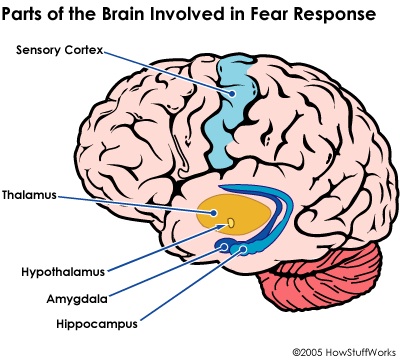
Students also have their measures for success and can have strong opinions about what they need to learn and how it should be taught to them. While many will say they are pursuing a degree because they LOVE to dance, I often see FEAR as a motivator, or rather, an inhibitor. Behind those blank stares is an inability or unwillingness to take risks, a sense of entitlement, judgment, resistance, and self-doubt. Perhaps fear is determining factor that limits creativity. Fear of judgment, fear of failure, and fear of being irrelevant seem to be part of the culture. I find this to be true of both the student population and the faculty (especially if you don’t have tenure!).
Locating Fear On The Inside

However, isn’t the same true for real life? Fear holds so many of us back. So maybe it’s not the college experience at all that makes us lose creativity, just the loss of innocence and the acquisition of experience. I went to college because I was “not ready to go to New York”. I was not ready to be a part of the professional dance community, which was, at least in my mind, unkind, and unforgiving. I didn’t think I was good enough. There were those that argued that point with me, but I wanted more training; to be better prepared. I expected my college experience to educate, not deflate. And it did. Magically, I thought I was “ready” after my sophomore year in college. It was more of a feeling than a logical reason that I can articulate. I’m sure the faculty had their own opinions. Maybe I wasn’t so much “ready” as I was “less afraid”.

I do think there is a generational difference between students now and students 10-15 years ago (MTV generation, what’s valued in the field, what’s valued in the entertainment industry, etc), but I know I was guilty of a few blank stares in my day. There were times when I got by with good enough. I can’t point to the moment in my dance training when I began to understand what the teacher meant when they said I needed to perform in class; when I stopped trying to be “right” and started to investigate intent; when I became more interested in the process rather than the product. Eventually the sum of my training made it click. I do remember one of my most rewarding class experiences was toward the end of my senior year, and I took my technique class pass/fail. I felt such freedom. There’s something to be said from taking class because you want to, and not because you’re supposed to.

Is it possible to create that sort of freedom in the academic setting? How do we encourage risk taking, curiosity, and investigation among students and faculty? How do we not train the passion and creativity out of the students? How do we create cutting edge performers with well versed bodies and intellects?

My approach is to put art first. I am committed to making, creating, and facilitating dance. I tell the students that they are responsible for their learning and that I am available to facilitate that as much as possible. I tell them, “If you’re bored, it’s not my fault”. Some think they used to be better dancers before they started training at the university. I ask them to take responsibility for that. Contrary to how this may sound, I care very much about my students. I make a sincere effort to provide them with the best training and the most opportunities possible.

Supporting the faculty in their art-making, risk-taking, and professional growth is equally important. Sabbaticals, professional development, research and performance opportunities, scholarships, and a solid infrastructure reflect that support. Guest artists, a culturally and stylistically diverse population, a flexible and relevant curriculum, small classes, etc. can all contribute to a very enriching, vibrant, and low stress dance department. Sure, that takes money, and every department has different needs and resources. But sometimes it’s not about money.

When the college, the dean, the head of the department, and the faculty reflect a commitment to put art first, the students will notice. But even then, the student has to want it and sometimes that still is not enough. How do we encourage them to pursue their love of dancing and prepare them for the big bad world of professional dance when less than 1% will make it? If that is the case, what are we preparing them for?

Dance has always been my metaphor for life. It is the one place where I can be unafraid. I had to learn that. My training ultimately gave me that confidence. The more confidence I had, the less fear I felt, the more possibility I found in my dancing – what a wonderful cause and effect. Ultimately, that is what I am preparing them for – life. My job is not to predict which student is going to become a professional dancer or a dance enthusiast. My goal is to teach toward possibility. If a student’s academic training can teach them how to suspend judgment and navigate fear, then that is a degree worth having, despite the odds.

crotchretouchGesel Mason is Co-founder and Artistic Director of Mason/Rhynes Productions (www.mason-rhynes.org) and Artistic Director for Gesel Mason Performance Projects. Ms. Mason has performed with Ririe-Woodbury Dance Company, Repertory Dance Theatre of Utah, and for four seasons with Liz Lerman Dance Exchange, where she continues to perform as a guest artist. Ms. Mason’s solo project, NO BOUNDARIES: Dancing the Visions of Contemporary Black Choreographers, includes the work of Donald McKayle, Bebe Miller, David Rousséve, Andrea Woods, and Jawole Willa Jo Zollar. She graduated from the University of Utah with a BFA in modern dance and Teacher’s Certification in Secondary Education. She has been an artist in residence at numerous schools and universities across the country. Ms. Mason received a 2007 Millennium Stage Local Dance Commissioning Project from the John F. Kennedy Center for the Performing Arts, and will premiere the work August 30 and 31, 2007
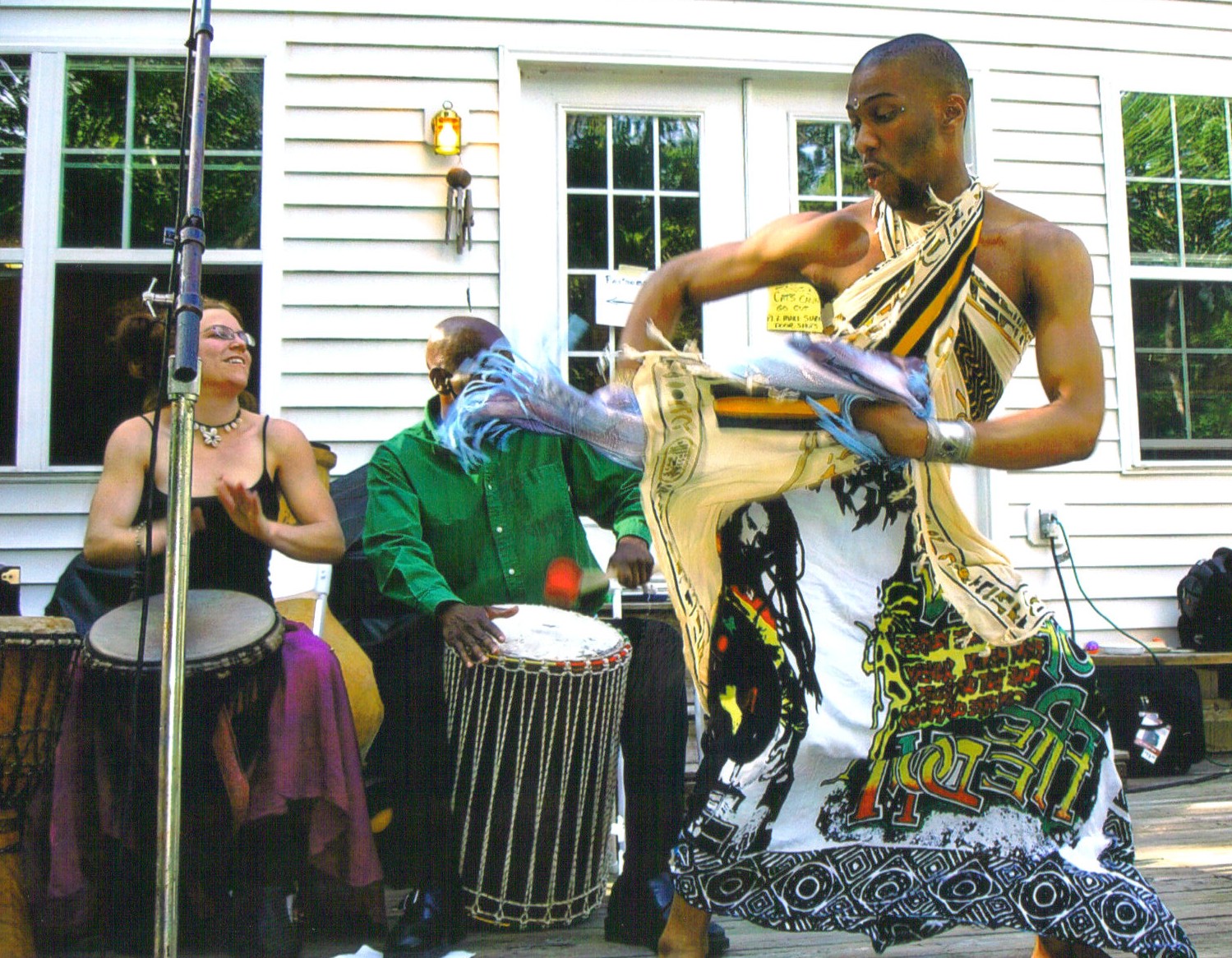
The Music/The Spirit/The Dance: Eggun Speak by Dane Figueroa Edidi

When asked to write about a work or the concept behind it, I often find myself at a loss for words. I do include writer amongst the many titles assigned to me, but normally that indicates poetry and fiction, not journalism. I believe this is why I choose cabaret: because in a cabaret I am myself. There is the dangerous expectation of success of a joke, a note, or a dance, and the reality that you are naked before the audience, and have given them the right to judge the inner most parts of your being.

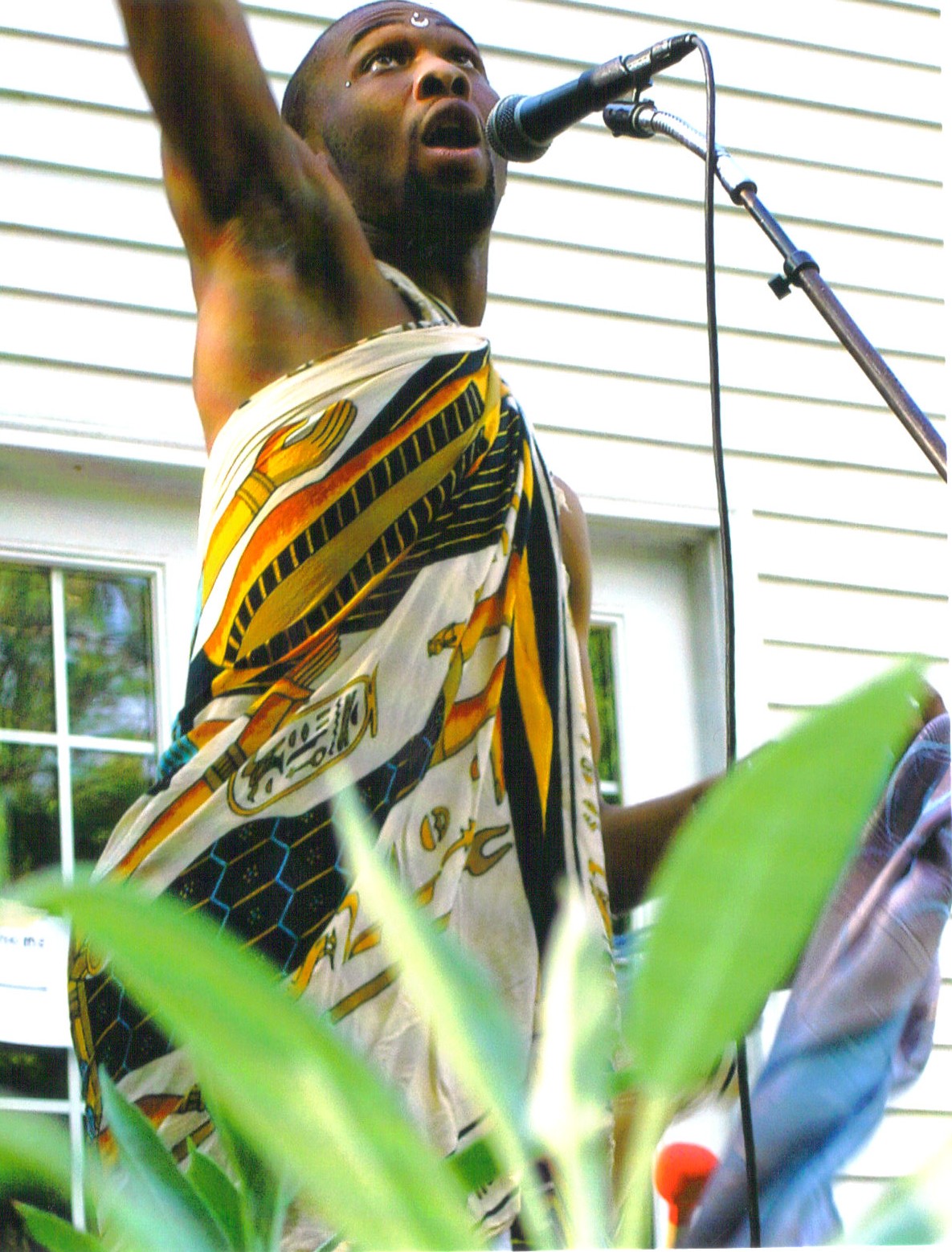
Let me start at the beginning I suppose…. I am Dane Figueroa Edidi, called by some: “The Ancient Jazz Priestess of Mother Africa”. I am doing a cabaret on December 9th at 4:00p.m in JPH in the Benjamin T Rome School of Music. The cabaret is entitled Eggun Speak. I am performing with my band, the Afro Blue Collective. The Afro Blue Collective is: Mark Cook on piano, Andrew Cox on bass, Kristin Arant on African drums, Bubbles Dean on drum set, and Rob Muncy on Saxophone. This is our first cabaret since we lost our dear friend Henry Moses – may he rest in piece.

Eggun Speak is a jazz cabaret that combines the musical expressions of jazz, Afro-Cuban and African music, with African, Belly and Afro Cuban dance and story telling. (Yes there is a difference between African and Afro Cuban.) In one section of the work I say, “the peace will take you from the deep glories of Mother Africa into the complexities, contradictions, beauty, and struggle of Afro, Cuban, and Native America”. I am all these things: Nigerian, Cuban, Cherokee, and born in America. I am a performance artist, singer, dancer, actor and writer.

Eggun Speak brings together all of the skills I have been blessed to work with, including my religious path. To me the arts are religion. They are able to touch the very depths of humanity and speak to parts of our being that even we are unaware of. Art is pure in its ability to touch the higher and lower selves. My body and soul come together during a performance to summon forth Spirit – whether to heal or to send messages. ‘Eggun’ in the Yoruba tongue means Ancestor (or Spirit). It is the word assigned to those Spirits that are close to us, whether it is an ancestor of Spirit or Blood. These are who we honor with this cabaret.

The piece normally begins with libations, first told through my body and then spoken into the Ethers so that my words may be prayers for those Ancestors who will hear them. The Band and I move through (in a musical sense) a series of songs that are picked for their relevance to a story, an ancestor or just because I can sing it well. The show ends with Afro Blue, The song which gave us our name and the piece which bonds us together. This song is almost like a hymn to me. Whenever I sing it I am filled with a presence I can not explain, and it instinctively invokes me to move.

My first time hearing the song was on a Dianne Reeves c.d. She combined a chant to Mother Yemonja (a Goddess of the Yoruba people) and the brilliant rhythms of Africa. I was so moved that I felt I needed to do the piece. My first rendering of it was years ago. I was a Senior in college and sang it with the jazz band at CUA. That first time singing Afro Blue I received a vision of dancing during the song as well. I did not turn that vision into reality until I performed in my first DC cabaret later that year, and when I did: let me tell you it felt right.

Mark “papa” Cook once said “You don’t listen to Dane, you experience Dane.” I couldn’t understand what he meant until I watched videos of myself and I realized that my body has become one of the instruments of the band: it can not help but to speak what my words can not fully express. In feeling the African rhythms and allowing my body to be moved by the Spirit of the music I learn its importance, and the role of the body as an instrument for change. I have been told that my dancing releases something in others, and that my singing, a tango of vocal chords, melody and body, has the power to invoke the unseen. I know none of it would be possible without the music. The Gift I have been given comes through me as the music summons it forth, as the instruments like priestly chants call to the Spirit, and even my singing moved by the Know commits to the expression of body in space.

My dance moves are unrehearsed. With their spontaneous expression I connect to my ancestors. When I watch old videos of my work, I am reminded of dances of the Yoruba, of the Congo, Belly dance; I see an amalgamation of cultures and Ancestors take place and I am truly humbled, because in that instant when you are outside of the experience and watch it, you realize the beautiful way in which the Creator works through the art. I feel like I have babbled on about a topic which needs more time to discuss. I will say: come and share in the experience with us! Perhaps, a tune will make you laugh or speak to your tears. Perhaps, a story will beguile you into revolution, or roar you into change. Perhaps, a dance will spiral concepts of ethereal truth into your soul adorning you so that you will never be the same. Perhaps, this Collective of Musicians with their external instruments and ones of the inner will stand naked before you, clothed only in their art and take you to a spirit place. One of my religious friends would probably say, “They gonna take you to Church!”

See the cabaret Eggun Speak on December 9th at 4:00p.m in JPH in the Benjamin T Rome School of music With a small reception to follow. 620 Michigan Avenue, Washington DC 20064. Donations of 10.00. Tickets will be available at the door. For more info you can email Figueroa11n1@aol.com or visit www.myspace.com/DaneFigueroaEdidi.

Bio: Dubbed “Lady Dane, The Ancient Jazz Priestess of Mother Africa,” Dane Figueroa Edidi was born in Baltimore MD, and began singing at the First Emmanuel Baptist Church at the age of 5. Nephew to Baltimore Jazz greats Liz Figueroa and Bill Byrd (who passed away in 2007), the art of jazz was always amongst the many musical influences in his life. Dane began studying under the likes of the late Ruby Glover and Mark Cook becoming an Artist in Residence at the Great Blacks In Wax museum in the late 90s and, after watching a concert featuring Fertile Ground, began combining the music of his Ancestry into his cabaret work. Dane made his Baltimore Cabaret Debut in 1998 alongside the Joel Holmes Trio. He graduated from the Baltimore School for the Arts in 2001. He has a BM from Catholic University (2005), and made his DC cabaret debut in 2005 with The Afro Blue Collective (consisting of himself, Mark “papa” Cook, Kristin Arant, Andrew Cox, Bubbles Dean, Rob Muncy, and the late Henry Moses). Dane, a Nigerian, Cherokee, Cuban performance artist is also a religious historian and has begun learning about the religions of his ancestry revering them in His cabaret work…he is a writer, local dc actor (working at Round House Theatre, the Kennedy Center, and Adventure Theatre.) dancer, and composer. He also specializes in holistic healing through guided meditation… In 2007 he had the great pleasure of joining the renowned Afro Cuban dance company called Alafia Dance and Drum stationed in Mt Rainer MD (lead by the dynamic Oscar Reseaux), and is currently working on a book of poetry called the Sacred profane; Hymns to the Mothers.

Jazz Dance by Doug Yeuell

To define Jazz dance is to hold Jazz in a static state. Jazz dance is dynamic and ever changing, as all art forms are. In many ways, we truly don’t want to define Jazz dance; we want to live it, to feel it, to move with it. Jazz is as diverse as the people who create it, and it is through this broad, melting pot concept of Jazz dance that we start to find the essence of this truly American art form.

Having taught Jazz dance to thousands of people throughout the years, one of the first techniques I use is to simply have people sway and swing to the music. The famous saying, “It don’t mean a thing if it ain’t got that swing,” really rings true. The quality of “swing,” and the releasing and retrieving of energy into the earth is what starts the dance for me. Students need to feel the sway of movement to the music. Initially it’s about going with the flow, allowing the body to relax and feel at ease. Students lose their inhibitions, laugh, enjoy and find themselves dropping into the sensation.

The lowered center of gravity that results from this is another key element of jazz dance. Jazz dance is about “getting down.” Jazz dance, to a certain degree, is the antithesis of ballet — the erect spine and lifted center of ballet creates a totally different aesthetic from that of jazz dance. The Jazz dancer uses the bended knees, or I could say “plie,” to drop their center and get into the movement. Jazz dance can be lifted, and the spine long, but for me Jazz starts in a released and grounded place. The dancer is into the weight of the body, muscles are relaxed, and the mind is free and easy.

Historically, Jazz dance evolved with Jazz music in the bars and honkytonks where people were simply feeling and moving to the music. Nineteenth century New Orleans, Prohibition Chicago speakeasys, blues clubs of the Mississippi Delta, and Harlem’s Cotton Club all have a place in the history of Jazz. The elements that we recognize easily today as Jazz grew from these people and places. The wave of spine and limbs, and the isolation of body parts. A hip here and arm there, a shoulder shrug and flick of the head. A torso inclined forward, a contracted pose. These isolations and articulations, originally inspired through acts of flirtation, titillation and the pain and joy of the everyday, ultimately evolved into what we call the “style” of Jazz dance.

By lacing the protocol of ballet over and under the elements of Jazz you get what we call Jazz dance technique. But to ultimately learn Jazz you have to allow yourself to feel and move to the music. This music is full of poly-rhythms and syncopations that bring the pulse of a country to the keys of a piano, the blow of a horn, and the beat of the drum. Jazz music is full of the dissonant sound of a society ever changing, in opposition and contradiction to itself

In Jazz music one hears the grind and clank of an industrial nation, the chant of a migrant worker and the glow of a Broadway beat. A Jazz dancer articulates, with sharp body lines of angle and opposition, as well as lines of softness and curve, the sounds of a country and a people in vibrant growth and development, some good, some bad. Jazz moves are further nuanced with the qualities of a percussive beat, a hit, a slap, a lick and, when it’s right, a sensual strut and a sexy thrust. As dancers move through the Jazz experience they are ultimately creating for themselves a style, a quality of movement that echoes a sense of attitude, presence and an “aesthetic of cool.” Jazz is hip, it’s here and now, its contemporary, and it’s cool.

What does it mean to be cool? Physically, a lowered brow, a dropped chin or a snap of the finger can show cool. But the aesthetic of cool starts on the inside. Words such as “vibe,” “hotness,” “sizzle,” and the phrase “Let it rock,” serve us well in the exploration of Jazz and the aesthetic of cool. The word “Jazz” alone can actually help people find the appropriate state of mind; having a room of people speak, if not shout, the word “Jazz” is a fun exercise. (The use of the tongue, sneer of the lips and final hissing sound of the “z” can resonate through the body, allowing the word, sound and essence of Jazz to exist together.) Cool is a state of mind.

Learning Jazz dance is an opportunity to find oneself in movement that is uniquely your own, yet connected to a defined culture and rhythm. Challenging to define due to its vast associations, Jazz is the rhythm of the individual heart and the beat of a collective soul. Jazz is an American folk dance, a state of mind, a culture and a way of life.

Doug Yeuell has worked as a dancer, dance educator and administrator in the Washington, DC area since 1982. Currently, Mr. Yeuell is the Executive/Artistic Director of Joy of Motion Dance Center (JOMDC), Washington, D.C.’s leading center for dance. JOMDC is dedicated to offering a broad spectrum of dance forms and learning opportunities for adults and children alike. In addition to his administrative duties, Mr. Yeuell has taught Jazz at JOMDC since 1982. Mr. Yeuell has studied with such jazz greats as Matt Mattox, Luigi, Billy Siegenfeld, Lynn Simonson and Joe Orlando. From these experiences, Mr. Yeuell has developed his own unique style of jazz focusing on the percussive, rhythmic energy of jazz, its passion, style and sensuality. Classes are taught with a strong emphasis on working from one’s center, the core, and allowing movement to flow from the inside out. Classes are a constant exploration of the beauty of pure movement. At a beginning level, emphasis is placed on building students natural ability to dance and feel movement from a jazz perspective. At more advanced levels, students are challenged through intricate combinations to express themselves through the inspiration of music and choreography to discover the true essence of jazz movement.In addition to teaching at Joy of Motion Dance Center, Mr. Yeuell has an active career as a teacher/artist at numerous institutions around the country and the world. Mr. Yeuell recently served as guest artist and instructor at ATIK Dance & Movement Arts Festival in Klagenfurt, Austria . He has taught jazz for James Madison University Department of Dance, George Mason University, Georgetown University, Gallaudet University and Catholic University, and has held faculty positions at The Washington Ballet, and The Kirov Academy Summer Programs.

As an artist, Mr. Yeuell has choreographed and performed professionally for numerous companies in the D.C. area. Mr. Yeuell also serves as the Artistic Director of his own performing company, Jazzdanz/dc, a professional dance company that explores the many facets of jazz dance, from classical jazz to blues, Broadway jazz, swing, funk and new age.

Dance Critics Panel Discussion

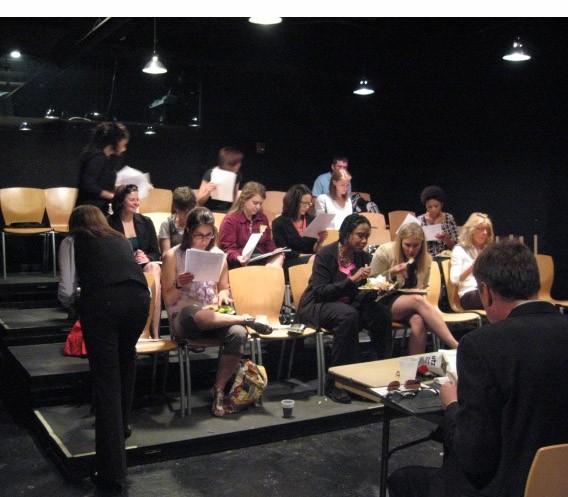
Dance Critics / Dance Community Panel Discussion 11/14/07

Held in Mead Theater Lab – Flashpoint

Jessica Hartz, Director, Metro/DC Dance
Sarah Coleman, Business Space coordinator, Flashpoint
Pamela Squires, Sarah Kaufman, Naima Prevots, Jean Lewis, George Jackson
Moderator: George Jackson

Notes taken by Rob Bettmann. Image in the post by Rob Bettmann.

GJ – I feel like Jules Perrot in the creation of the famous Pas De Quatre. Who should go first amongst the luminaries? First a little background on our panel:

JBL – Critic for Washington Times, did radio, writes for Magazine, was first wash post dance critic.
NP – Dance scholar, books, reviews online.
SK – principal critic of Washington Post for eleven years, was writing in upstate New York, Europe, earlier, wrote for years earlier.
PS – Wrote for Jerusalem Post, now writes for Washington Post.

GJ – How did you all become dance critics? Dancing? Writing?

NP – Started writing about dance when became a panelist for national endowment for the arts…. Started having to review companies to see who would fund. Was writing knowing that noone involved would see what I wrote. Was writing with funding in mind. Writing to give a representation of dance throughout the country. Had to keep in mind what I was seeing in context of where I was seeing it. Alaska is a different venue than New York.
Started reviewing in College (age 16) did review of Streetcar Named Desire for college paper. Writing now online. Started writing as a dancer. Teaching dance composition led more and more toward development of a vocabulary for critical analysis of dance.

SK – Simple answer is: I was born. We all probably share an analytical eye. I had danced as a child and into adulthood. I come to dance from the inside out. I studied a variety of forms, including ballet at a studio that no longer exists in Bethesda. Was a pre-professional release time student into college. Secondary path that became a stronger focus was writing, and so dance writing. Was able to weave together the two. Dance allows me an invigorating outlet for my writing.

PS – I started as a dancer: danced for New York City Ballet (for ten nights as a seven year old in the original nutcracker.) Went into academia from performing, UCLA, then Israel. Analytical approach is what defined my interests….. Ended up as music editor at Jerusalem Post. 17 years now writing for the Post. Have musicology background from Columbia.

JL – I like to dance. Doesn’t everybody? Had a teacher named Steffany _____ (Larson?) who was next door neighbor. Very inspiring dance teacher. Took me to see Harold Kreutzberg, others. Was introduced to dance as an art form. Wasn’t just: get on your toes. Always wanted to be a dancer. Didn’t have the sheer physical energy to be a dancer. Loved to analyze it dance. Lived in Westchester. From an early age what do you want to do: I wanted to be a dance critic.

George: When you write do you have more than one thing in mind – do you write to give historical record? Do you write to give consumer advice? Do you write to prolong the pleasure of the experience?

SK – Washington Post is a general interest paper, a general readership. I can’t and don’t write for the dance aficionado. Write primarily to recreate a performance with an analytical eye. It is a record, for history, of what happened. To teach a course a few years ago I turned back to old newspaper reviews, archives, that is wonderful treasury of history. I want recreate the experience, I want to have a point of view, and bolster that assessment. People don’t want to read something wish-washy. I endeavor not to. As a critic you have to put forth a judgment. A description, including the place, its world, and anything that you call into existence to live next to what lives in the imagination.

NP – Important to make sure the reader can almost see the event. I try a dialogue with the choreographer. I try and understand what the choreographer is doing, and try to find the good things, and also the things that aren’t working. I like to try and situate something historically. To find a context that’s appropriate for the work. Writing for different publications is different. With danceview it’s a more specialist audience. I try to create something illuminating for both readers and the choreographer. To give them something to think about.

JL – It’s a small community, we know some of the people…. I started writing in Japan. I knew one of the dancers socially. I was determined to be objective in reviewing her dancing. When I saw the review I realized I had spent twice as much space on her as the other people. And it made me realize that our main purpose is to be writing for the audience, for the public. We must not think that we are talking to the dancers. We only are given a little space in print. If the historical background is important, I try to include it for the readership, but I do have to make some assumptions of what the reader knows.

PS – I write for a major newspaper. So not just writing for the people in this city. Dance criticism is just one part of what the Post does to cover dance: we do previews, reviews, features, and listings. I cover dance for the paper. I don’t presume to do it to be part of the historical record. Your writing is to a certain extent dictated by the editors and the policy of the paper. There are rules I have to follow. I have to give an assessment, and I have to come down on one side or another. There are various approaches: more descriptive, more judgmental. I believe in giving as much background as possible to help them understand why one says what one says. We are always looking for more space. Very rarely do we get to have features. Mostly dance reviews. There’s all these things one would like to do, but there are certain rules and disciplines that one has to follow, and I am quite happy to follow them.

GJ — Do you choose what to review? Do you get given a certain amount of space? Do you get feedback from your editors?

SK – I am a full time staff writer. They turn to me about dance. I have a lot of freedom. The buck stops with me. I assign the reviews. If I can’t go, I call Pamela, and say would you like, etc. The math is a mathematical formula that I am not in control of, with more space given to more significant events… That judgment is generally in my hands. In the summer there is more give in the system, cause we’re looking for things to write about.

I generally determine what I will write, what will be critics picks, Sunday sources, etc. We have a new style and arts section, which I’m sure you have seen. Would love to know what you think. But nothing happens without a lot of focus. Style and Arts: they’re looking for things to fill it with. The drive is for us to get a good story. All of us are entrusted with going out and finding where the good stories are. That’s my concern and that’s why a vibrant and lively dance community helps us get stories in the paper. The more personal ties someone has to the work the more that drives the coverage.

GJ – How many write on dance?

SK – Barbara Allen, Sarah Halzak, Pamela Squires, and I are the writers.

Nothing is harder to write about than dance. Movies are easy. Dance reviews have to be short, with color, concise. An informed perspective, in a compact space. The people who write for Monday paper are basically creating haikus, works of art. It’s a strong distillation that’s hard to pull off.

GJ – What is the situation at the Washington Times?

JL – Similar to the Washington Post with Sarah – I usually decide what to cover. In thinking about this I think there’s a limited amount of space. The big companies have to be reviewed. I try to balance with coverage of local work, more than in the past.

GJ – Dance reviews, particularly daily reviews, don’t usually affect ticket sales directly. But reviews do affect the NEXT time they will perform… How aware are you of that impact?

SK – I think that factors into a mix of tone and sensitivity. I am aware of it. We don’t act as boosters… There have been critics who tried to boost dance, especially in early dance. Now my sense is: the works stand on their own. They need to be able to withstand the scrutiny we bring to them. Though I am aware of the impact, I can’t let that influence what I say. It may change how I say it. But nobody wants to read something wishy-washy.

NP – different experience on the internet: not so much a general audience. We don’t know exactly who is reading online, but it is how things are going. I am curious who reads all these things. But no, I don’t think I have any economic impact. Bad reviews, good reviews: choreographers keep going. There’s a lot of freedom, for me, in writing online. But there’s a lot of responsibility, too, cause the readership does tend to be more knowledgeable about the field, and I worry they might tear my review to pieces. Analysis can be deeper online. But I do question what impact reviewers have in general.

JL – Edwin Denby’s writing about Balanchine was one factor in Balanchine getting the audience he deserved….
Frost: A poem should lead us to the future: When?

GJ – Survey conducted by Lisa Traiger about dance critics nationwide…. Only nine make a living at it. Will post whole study online.

Open to audience

Emily Schmidt – What can we do to get more previews in the paper?

SK – We have a Sunday section we need to fill… If you’re asking what we can do, requires a little more thinking like a journalist… Have to think: What’s the story? What’s this gonna illustrate? How is this going to illuminate what happens beyond the stage? If there are personal stories, this is what the paper is all about. In July, when Fringe was happening I was told, you have to do a piece on this aerialist… I had never heard of her before. It was sorta interesting, didn’t know anything about her work. Piece was about Amelia Aerhart. As we talked more and more turns out she had had this overactive pituitary that had made brain surgery necessary. Came back to do this piece on Amelia, cause she felt so empowered having survived this tumor and this surgery. The piece became something totally different: I said “Thank you story gods!”

If you’re looking for more coverage, bring out the stories, not just the facts. Has to be a reason that people need to read about this.

And the more lead time you give us, the better.

JL – Does Washington Times do previews? Yes, it’s helpful to let readers know that something important is coming. With my limited frame of coverage I seldom do both review and preview, and favor doing the review.

SK – It’s good for us to know – what made you make the piece? What made you have to say something?

Suzanne Callahan – do you have a picture when you are writing for? A 40 yr old woman walking down the street, or someone like that?

SK – I want it to be something my mother could pick up and read. Something anyone could pick up and get something from. I think instinctively, I write for my mother. The editors filter what is between me and you. Their job is to make it understandable, readable by a lot of people. Not just dance experts.

GJ – The scope of what is covered seems to have changed. Reviewers used to go to New York, sometimes even foreign festivals. Now there are only reviews of local local work… is there any chance for getting more outside coverage?

SK – The style section always used to be different, used to be better. That’s what people always say. It’s always evolving, and goes in different ways depending on who is at the helm of the ship at a given point in time. But there’s also an economic crunch, so I don’t imagine we’ll go back to having more covered. There’s less money now for travel.

Shyree Mezick – How do you deal with deciding what to cover in terms of cultural diversity?

SK – do we have critics who know about different cultural styles? We have writers who know about dance… It’s either good or not good. Everything has to be viewed through the same lens. We have people who understand other fields. But concert dance is being reviewed as concert dance, regardless of its cultural origins. All dance has to stand up to the same standards.

PS – Reviews are for concert dance, and are not for things that are more or less than that.

Laurel Victoria Gray – We’d like to have a symposium to educate you on world dance forms. My company, Silk Roads, has experienced a lot of success. Why don’t we get covered?

PS – A lot of the world dance communities are insulated. But for instance in the Indian community, a lot of times the information stays in the community and doesn’t get to the paper… There are opera stars that come and perform from China, and we don’t hear about it, even if they are famous in that world. There is certainly no policy that says “we don’t like world dance and we’re not gonna cover it”. There is no intention to exclude. It’s a matter of getting information to the right place.

At this point I stopped taking notes…… Rob Bettmann

Gender in Dance Leadership by Heather Risley

A recent study found that 86 percent of the country’s 43 ballet companies with budgets of $2 million or more are run by men. The 2002 study, by DanceUSA, is part of that organization’s long-standing project to document trends in the field. The data shows that those holding positions at the highest levels in the largest companies are mostly men. Dance companies with smaller budgets are subject to the same influences that have created this trend in the field’s largest organizations. What is unclear is whether the trend in dance is simply an expression of the gender imbalance that occurs in the leadership of all corporations. According to a 2003 study by Catalyst, an international advocacy organization, just 8 of the 500 largest for-profit corporations are run by women.

Gender disparity in leadership is noticed by female artistic directors working in the D.C. area. Gesel Mason, Artistic Director of Gesel Mason Performance Projects, observed the intensity of male-female inequity in the dance world. Ms. Mason stated that in a female dominated industry the existence of a small minority having significant power over the majority resembles “a kind of apartheid.” Another female artistic director (who asked to remain anonymous) said she has regularly faced challenges because of her gender. She believes that men get preferential treatment when it comes to bookings, grants, and publicity. “I think female directors have to work much harder and be much better than a man to achieve the same respect and admiration,” she wrote.

Alexandra Nowakowski, Executive Director of CityDance Ensemble, has a more neutral outlook. She stated that she thinks the phenomenon of male-dominated leadership exists in all industries. Ms. Nowakowski said, “In terms of sexism, I do experience it every now and then…. it may take me a bit longer to earn their respect, but ultimately it is up to me to either gain or lose the respect I deserve.” Mason agrees with Nowakowski that the leadership disparities reflected in the dance field echo gender imbalances in society as a whole. While Mason did not speak to personal encounters of sexism, it is hard to ignore the data. Men may be more encouraged and have more opportunities to be in leadership positions. Ms. Mason stated that, “Women are seen first as dancers, not necessarily as running a company.” It is possible that programs to address the disparities would be a valuable asset to the field.

In a perhaps un-related issue, in 2002 The Kennedy Center created the “Capacity Building Project” for companies in music, theater and dance. The program allows “companies of color” to collectively – and with the Kennedy Center’s assistance – address challenges particular to the population. Several local companies benefit from participation in the Capacity Building Project, including Step Afrika! and The Dance Institute of Washington (both male run companies.)

Heather Risley graduated from Marquette University with a BA in History. She is currently the Editor of a website for international corporate ethics and anti-corruption. She has been involved in the dance community from a young age and continues to take classes in the Washington DC area.

originally published in Bourgeon Volume 3 #2