Home Blog Page 173

Not All Fantasy is Created Equal by Rob Bettmann

0

-A Reply to Judith Hanna’s defense of stripping-

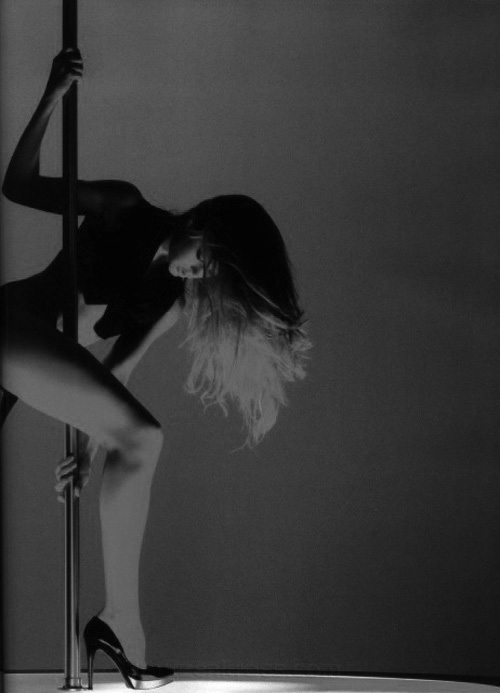
In “Fantasy: Adult Entertainment Exotic Dance”, Judith Hanna compares the impact of sex work to other professions (including professional dance.) Dr. Hanna tries to deny that sex work has its own particular impacts. However, every profession has a unique profile of risk, and benefit.

At some point in their lives, most people have to make choices based on money. Rather than over-defending stripping, or condemning it, it might make sense to consider if other choices could exist for those who now enter that trade.

As dancers some of us belong to unions. We have Career Transitions For Dancers helping us when we are too old to continue. And we have teachers, mentors, and coaches who hopefully help us make healthful professional decisions. Who is helping sex workers deal with the risks of their profession?

Capitalism creates economic stratification, but also delivers efficiency and innovation. The question in regards to those lowest to the ground — who are the same people that end up working in the sex business — is: does the safety net have to be set so low to the ground?

I’m not certain that strippers deserve special protections. But I believe that if a safety net made it easier for people to survive, and better their lot in life, fewer would choose work with such an exposed risk profile.

Rob Bettmann is the Editor of Bourgeon.

To see the Judith Hanna’s article on Stripping, click here.

Exotic Dance by Judith Hanna

5

originally published as: Fantasy: Adult Entertainment Exotic Dance by Judith Lynne Hanna, Ph.D. in Bourgeon Volume 3 #2

Since 1995, I have been studying the adult exotic dance industry nationwide. I have observed what happens in and around 133 clubs. I have interviewed dancers, patrons, managers, club owners, lawyers, prosecutors, legislators, judges, local government officials, police officers, community residents and business operators. And I have read the extensive news and literature on exotic dance. On this basis, I offer a few comments.

Exotic dance is a form of dance and art that is about fantasy. Dancers communicate not only erotic fantasy but also such messages as beauty of the natural human body, health and the pretense that clothing confers. Communication is through body movement and disclosure, high heels, closeness between a dancer and patrons, and admiration of patrons.

Performers say they are savvy entrepreneurs who are empowered, autonomous decision makers who control their bodies and performers with dignity. They want the freedom to manage their own exotic dance business without state interference, police harassment or male dominance. Subject of the gaze, dancers also gaze at patrons for clues as to how they might seduce them in fantasy. Looking and gazing are part of our normal stimulus-seeking behavior.

The exotic dancer placing her body within a financial transaction reduces herself to an object, or a commodity, no more than does a professional model, actor or athlete who earns a livelihood using his or her body.

Dancers with problems may not leave them at a club doorstep. As in any type of work, there are well-run clubs and dives, good bosses and bad, polite patrons and rude ones, stresses and pleasures. Creating a theatrical erotic fantasy is no more likely to affect a dancer’s interpersonal relationships than an actress onstage playing a killer. In fact, ex-dancers typically find their club experience applicable to other jobs and life pursuits.

Many misconceptions about exotic dance come from media portrayals, a misinformation campaign by religious moralists, generalizations from single cases, and lack of understanding of nonverbal communication. With applicable laws against crime, sexual harassment and business violations of health standards, exotic dancers and clubs do not need to be singled out for special regulations.

Judith Lynne Hanna (Ph.D., anthropology, Columbia University) is Senior Research Scholar in the Department of Dance, at the University of Maryland, College Park. Dr. Hanna has worked as a dance critic, and an expert witness on court cases related to exotic dance. She can be reached at jlhanna@hotmail.com. “Fantasy:Adult Entertainment Exotic Dance” Copyright 2007, Dr. Judiith Lynne Hanna

Flexaware by Steven Shafarman

FlexAware is a new type of exercise, inspired by the way young children learn and move. Young children are much more flexible than adults. They are also, for their size and weight, stronger than adults.

I created FlexAware after more than 20 years as a Feldenkrais Method practitioner. Though I was very successful, I was also frustrated. Many of my friends and students told me that exercising was painful. To help them exercise effectively, I studied anatomy, physiology, neuroscience, and child development.

Young children naturally tend to move efficiently. They align with gravity, rather than fighting against it. Their weight is supported by their bones — not muscles, tendons, ligaments, or other tissues. Muscles throughout their bodies have relatively even tone. Breathing is free, easy, and integrated with other movements.

Over time, children generally lose that innate skill. Adults teach them to sit still. Face forward. Stand up straight. Stop fidgeting. Stop squirming. Stop moving around. Through such injunctions, children learn to ignore discomfort. Spontaneous skipping and dancing yield to walking at a fixed pace. We adults sit for hours, moving minimally, breathing shallowly. Each of us has habits of straining, stiffening, and holding the breath. Such habits can cause chronic pain and other problems. Efficient movement is characterized by a sense of ease and comfort. As any muscle contracts, opposite muscles lengthen. That coordination is essential for mobility of the bones and joints. All skeletal muscles work that way. Every movement works that way. Breathing also works that way, involving many muscles throughout the trunk. The nervous system continuously coordinates all of the muscles in the body.

FlexAware exercises apply these facts; other exercises ignore them. Consider push-ups. The trunk is rigid, with muscles at the hip joints, pelvis, and along the spine contracting strongly. That rigidity makes it impossible to breathe freely. Those tight muscles squeeze nerves, blood vessels, cartilage, spinal discs, and other tissues, impairing circulation and nerve activity. Push-ups are inefficient by design, and condition people to strain and stiffen.

Sit-ups, crunches, and similar exercises are supposed to strengthen the abdominal muscles, the “abs” or “core.” By the logic of efficient movement, the abs coordinate with muscles in the back and hip joints. The abs attach to the ribs, which means they are vital for breathing. Yet people commonly do sit-ups while holding their breath. To really be strong, moreover, the abs, like other muscles, have to be able to relax and lengthen completely.

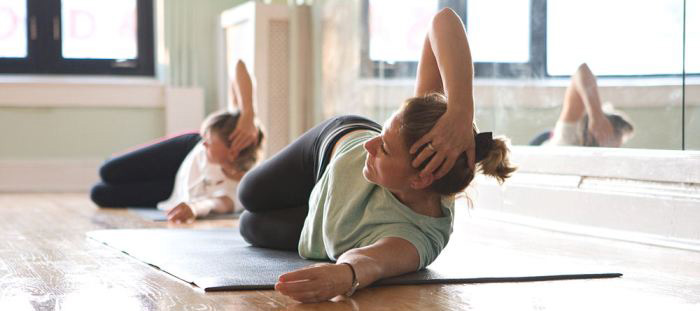
The next time you exercise, try this FlexAware alternative to sit-ups: Breathe out as you lift your arms, head, and shoulders. Breathe in as you return to the floor. Rest completely for a moment. Begin to exhale. Then lift as you continue to breathe out. Seek to make the movements smooth and easy. Notice how your contact with the floor changes as you lift your head, and as you lower it.

In FlexAware classes, everyone moves at his or her own pace. We use breathing to direct and coordinate each movement. We sense and think about gravity and the skeleton, and never focus on specific muscles, bones, joints, postures, or goals. We seek to make each movement easier, more comfortable, with less effort. Yet FlexAware can be quite vigorous and demanding, even aerobic.

Dancers and other athletes have special incentive to learn the ease, comfort, and efficiency that is taught in FlexAware classes. Moving efficiently can help us avoid or recover from injuries. It can prevent or relieve back pain, arthritis, headaches, repetitive strain injuries, and other problem conditions. The natural way of moving is also more graceful, more attractive, and more fun.

Steven Shafarman teaches FlexAware and educates new FlexAware teachers in Washington, DC. He is the author of Awareness Heals: The Feldenkrais Method for Dynamic Health. He can be contacted at 202-557-8384 or steve@FlexAware.com.

FlexAware is a trademark of FlexAware Learning Corporation.

originally published as: FlexAware™: A Revolution in Exercise, Fitness, and Healing
by Steven Shafarman in Bourgeon Vol. 3 #2

On Teaching by Helen Rea

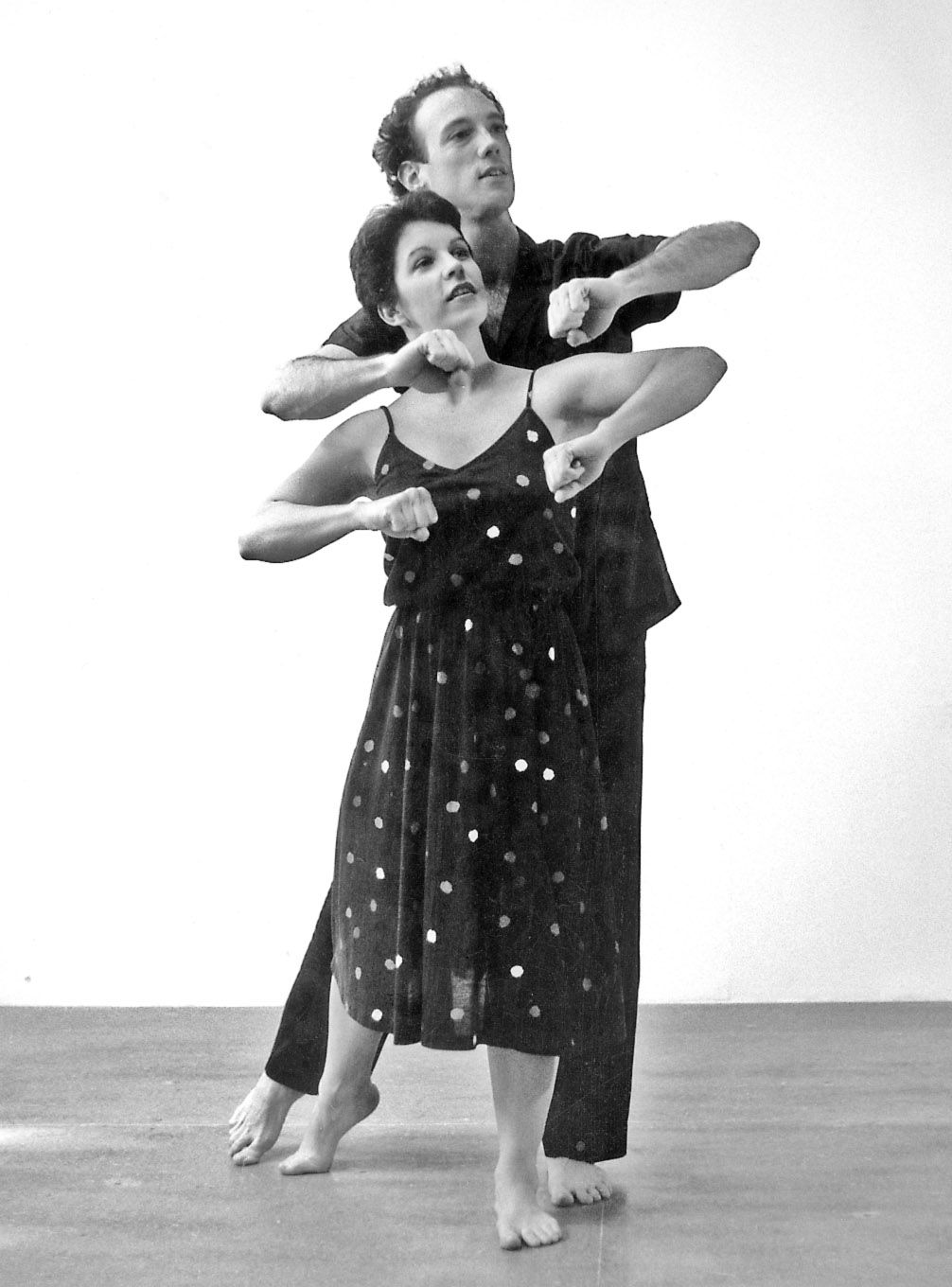
I have been a dancer all of my life – and have been a dance teacher for the past 30 of my 52 years. Over these years, my own body has changed and my needs and desires when I attend a dance class have changed. I have also found that my perspective as a teacher has changed, largely because of the range of experience I have had as a dance student. This has led me to explore different ideas in teaching. These explorations often generate more questions than answers – and propel me into new territory that keeps my life as a teacher very exciting. I have recently focused on encouraging students to pay attention to the sensation of the action that is a consequence of their intended movement.

The nervous system in our bodies has sensory and motor nerves. The sensory nerves bring information from our bodies to our brains – they let us know what is happening as it is happening. (I am not referring to the sensation of aches and pains that may come long after dancing. I am talking about the information that you have available DURING the movement process.) The motor nerves send signals to our bodies to take action – they tell a body part to move here or there. So often in my early dance training, the largest focus of my thinking was on these motor nerves. I would tell my body to do this and that – and for the most part, it would do what I asked. Luckily, I was young and I could do this with little negative consequences.

Over the years, however, my body started to complain. The sensory nerves started to pipe up and give me information about the consequences of my motor-focused approach. Initially, I would listen to by body long after the completion of the movement. It might be the following day that I would notice an ache or discomfort. Perhaps a few hours after cooling down I would sense that something was less than ideal. I came to see that I needed to reevaluate some of the ideas that I held to be true about how I danced. I needed to learn to pay more attention to this sensory information at the time I was moving so I could learn what needed to change and make new choices accordingly.

Now when I dance I try to leave both channels of communication open. I ask my body to perform a task, (for example: lift the right leg to the back) and I look to sense what my body does with that idea. How does the lifting of the leg affect the balance of my whole body? How does my torso want to shift to counterbalance the leg action? At what point has my leg gone high enough that I can stop lifting? How does the lift this time feel different from the previous time? Although it is taking lots of time to write about this process, the time it takes to gather the information – to sense and respond – is very quick! It’s a choice that can be made and an option that is always open.

As a teacher, I wondered how I could teach students the skills to do this for themselves. Teaching movement phrases is relatively simple; teaching students how to tune into their bodies, to sense and guide themselves while learning movement phrases – is a different thing. I needed students to focus on pleasing themselves – and not trying to please me. The focus of the class had to be student-centered, not teacher-driven. Primary importance had to be given to students following their own signals – even if it meant that they were not doing the same thing as the rest of the class.

One way I found to move in this direction was to teach phrases on the floor. When there is more contact between the body and the floor, there is more sensation. The sensory nerves are stimulated and provide lots of information about what the body is doing. The floor starts providing the feedback and teaching the student – even without the teacher’s watchful eye.

In creating classes that might be used to develop professional dancers, it seems two forces are at work. One the one hand, a student needs to develop coordination, master technique, and increase strength to offer prospective employers. On the other hand, to maintain a career as a dancer, it is important to learn great sensitivity to maintain physical health and achieve personal satisfaction in this extremely taxing profession.

Helen ReaHelen Rea was first influenced by her mother, who performed with Hanya Holm and Martha Graham. Ms. Rea performed for 8 years with Liz Lerman Dance Exchange and co-directed Duets, etc., a modern dance repertory company. She was greatly influenced by the Bartenieff Fundamentals, her training as a certified teacher of The Alexander Technique, and her 20+ years of study in Biodynamic Craniosacral Therapy. She currently teaches dance classes at CityDance Center at Strathmore Music Center. She offers her own “Movement Improvement: Stretch and Integrate” classes and maintains a private practice in her studio in downtown Silver Spring, Maryland.

The DC Cowboys by Kevin Platte

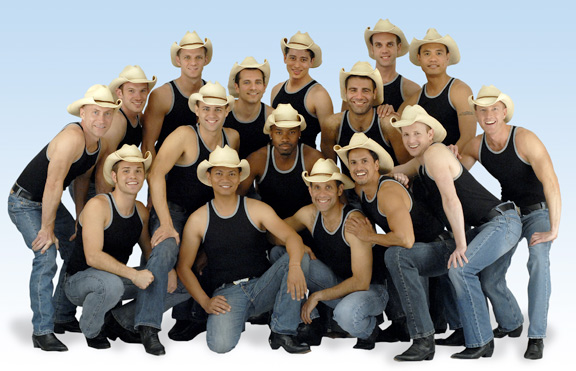
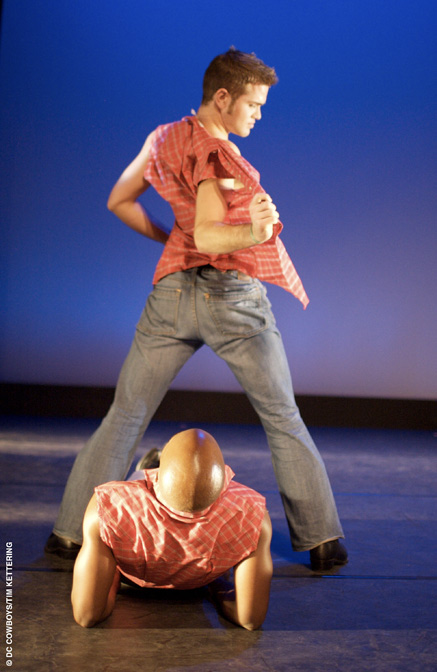
The DC Cowboys, a 20-member internationally acclaimed all-male gay dance company, has been setting trends in country-western dance entertainment since 1994. Our high-energy choreography thrills crowds around the Washington DC metropolitan area, across the US, and in Canada. As a grant recipient from the D.C. Commission on the Arts and Humanities and the National Endowment for the Arts, we have been honored for our “valued contribution to the Washington, DC arts community”. Our tag line of celebrating diversity through dance is so apropos.

We truly are a unique dance company in that we are gay men, dance in cowboy boots and volunteer our time while working full time day jobs. The dancers’ experience levels range from professional to some formal training to no training at all. The dancers, aged 24–44, rehearse once a week for two hours in the fellowship hall of a local church. We maintain a repertoire of about eight songs from the pop, country and Broadway genres.

This year we learned four new dance routines from three different choreographers. Our senior choreographer, Ernie Ritchey, created a jazzy, high-energy number to KT Tunstall’s “Black Horse and the Cherry Tree,” and also designed a 1940s-era military number to the swingin’ “Candyman” by Christina Aguilera. Craig Cipollini choreographed to Keith Urban’s “Days Go By,” which is an upbeat country song. Our newest choreographer, Carlos Barillo, a high school choral director, brought us a toe-tapping, highly physical routine to Sugarland’s “Down in Mississippi … And Up to No Good.” It typically requires three to four rehearsals to learn the new choreography followed by several weeks of cleaning before we debut a number in front of an audience. As new numbers are added, older song are retired, usually after two years.

PRESS_PERFORM_DR_HIOur audiences are from the gay community, specifically men. While we are not strippers, we recognize and capitalize on our sex appeal when marketing ourselves. In addition to our dancing, we’ve begun to brand ourselves as a product through an interactive website, extensive photo and video galleries and our merchandise (t-shirts, sexy pinup calendars and DVDs). We actively seek corporate sponsorships and patrons to keep the organization financially stable. We even brand our fans with temporary DC Cowboys logo. There is nothing like a fan walking with our logo prominently displayed on their body!
While marketing and sex appeal is important in creating a name, we pride ourselves in giving back to the community. Our organization’s mission is to provide high-quality, professional-level dance entertainment at no cost for benefits that raise money to provide services to people living with HIV/AIDS as well as for AIDS prevention programs.

Our season begins in January and goes through October or November, depending on our performance schedule. While many people think we line dance or two-step, we do neither in our performances. Our style is based in jazz and popularly described as “Cowboy Broadway.” We hold annual auditions and select the most qualified recruits and put them through a rigorous training camp before they join the veterans at the beginning of the calendar year.

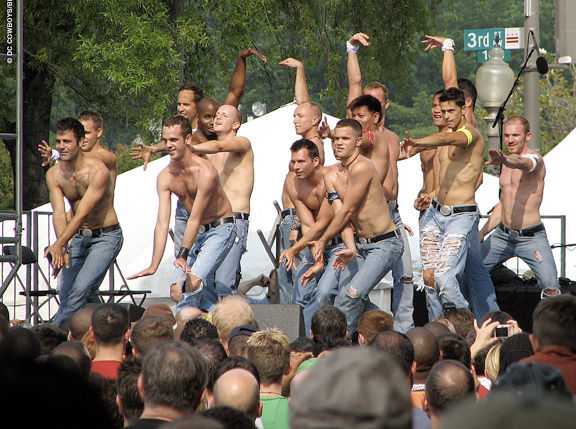
PRESS_PRIDE_SPEND2_HIHere are some highlights from the 2007 season. After being selected as one of the national headliners at the Gay Games VII at Chicago’s historic Wrigley Field in 2006, we were wondering how we could possibly top that this year. We didn’t have to wait long. In February, we performed on the RSVP Caribbean Fantasy Cruise for gay men as the opening acts for such recording artists as Grammy-winner Thelma Houston, Billie Myers and Kristine W on different nights. In April, we shared the stage at American University’s Goldberg Theater with DC-based Dakshina/Daniel Phoenix Singh & Company. Besides our annual events in the DC area like the Northern Virginia AIDS Ministries’ annual fundraiser, the Capitol Pride Festival, the Atlantic Stampede gay Rodeo and other local benefits, we traveled to pride festivals, benefits or gay rodeos in Philadelphia, PA; Jacksonville, FL; Catskills of New York, and Las Vegas.

What’s next?

We’re already working on a few new marketing and fundraising projects for late 2007 and early 2008. These include a special “behind the scenes” DVD entitled, DC Cowboys Dance Company Exposed – On stage and at play, showcasing live performances, photo shoot footage with some nudity (of course) and fun interviews with the dancers. In addition, we plan to release a 2009 pin-up calendar and “making of” DVD next summer featuring photos taken in the Caribbean during the RSVP cruise. Photographed on a nude beach in St. Maarten, this fourth edition of the calendar is sure to be even more risqué than ever before. We may call it the Cowboys of the Caribbean Calendar.

In any case, we hope to return to another gay cruise in addition to our regular travel across the U.S. and Canada. It’s never a dull moment, and as I always remind my dancers, “you can’t get this anywhere else”!

Kevin Platte is the Artistic Director of The D.C. Cowboys.