
Home Blog Page 176

Kelly Mayfield on “Perspective/Shift”

A year ago I realized I wasn’t doing what I set out to do. I wasn’t performing, choreographing, or teaching.  I was doing some of those things, some of the time, but none were fully realized.  I had entered on another path, and had learned far more about the ‘Business of Art’ and the ‘Art of Business’ than I ever expected.  I discovered personal strengths and weaknesses and saw them reflected as public successes and failures for that company.  Life lessons aside, it grew depressing.  The idealistic clarity of purpose I once knew was fading.

Life throws us a lot of lemons, and as Aysha Upchurch says, it was high time to make some lemonade.  Depressed and needing to change, I did……..     EVERYTHING.  Except fulfill my need to communicate through dance.  I decided to leave my artistic home of four years (CityDance Ensemble) and made the leap from Associate Director/Director of Education to Founder/Artistic Director of my own company. In August 2006, Contradiction Dance: An Exchange Between Life and Dance was born.  Contradiction Dance is dedicated to the fusion of modern, jazz, hip-hop, and tap dance fused by elements of Theatre and Story-telling.

Contradiction Dance is about reflecting society as I/we see it.   We are an eclectic mix of devoted specialists in our respective forms, yet we are all curious creatures diving into the aesthetic mix we’ve built.  As Artistic Director, I am, of course, interested in expanding our audience.  I often ask myself, “How can I reflect on and question the experiences of a large audience if I only interact with a small aspect of the population?”  Life has a way of meeting our needs, and I find that my desire to integrate the diversity of forms that we practice and enjoy encourages the conversations necessary to make the work.

Recently, I have been working on a piece called Casual Contact, which draws from the diversity of experiences I have had in making ends meet.  Though I perform, choreograph, and teach, I must do other things to supplement income. But those pesky “other things” do not define me or distract me from my artistic purpose.  In fact, they are great suppliers of “source material.” Take this excerpt from my blog on a part-time job:

“The purpose of a part-time job: For some, it’s to make extra cash. For others: to fill time, expand horizons, combat boredom, etc. For me, it was an experiment in being around people with jobs. The experiment is over now; I’m finishing my last days in this strange land full of protocol without purpose, goals set and met without an overall cohesive strategy, and complete ignorance of the actual skill sets within the worker pool that could, in-fact, further the stated mission of said company.

Casual Contact: There’s no such thing. We all make mistakes for $.  Mine was choosing to work in a cubicle.  Wow.  Talk about culture shock.  Voyeuristic life.  Where’s the roof?  I can hear EVERYONE’s conversation.  Can I fit under the desk?  Will anyone notice if I never come back from a smoke break?  If I stand up, I can see everyone.  This is weird.  Who thought of this anyway?”

These experiences and thoughts have now become movement. Casual Contact combines “business casual” conduct and attire with hip-hop, jazz and modern movement backed by the sounds of Mushroom Jazz and The Gotan Project.  The (in)appropriate gestures and “contact” in an office setting juxtaposed against “dance” partnering create fertile ground for choreography with a sympathetic human character.  Casual Contact premiered in December 2006 at the Joy of Motion Choreographer’s Showcase. The piece is one of a tapestry of seven pieces that make up Perspective/SHIFT, the company’s first evening length concert.

We recently performed Casual Contact at the opening of a corporate awards ceremony: they recognized themselves in us, and LOVED it!  We expanded our audience by asking them to look at themselves through our eyes and bodies; we were not judge, simply mirror.  The post-performance conversations took on a new meaning; we were discussing the lack of casual human contact in the typical corporate workplace versus the violent or sexual contact many do experience – the film “Crash”, and much more.  I remember thinking, “this is the exact purpose of my art.”  I’m grateful to know that purpose and humbled to be capable of living it.
As a company, we continue to hone Casual Contact and perfect our “statement”.  Rehearsal fuels my spirit: running and jumping on partners in heels with confidence, finding integrity in the gesture phrases, questioning how we are working with time, cleaning that damn unison material, and applauding happy accidents that lead to permanent changes.  Bry Boogiemind asks how to do that lift with Kyra again, Joseph fights his tie in his face during his solo, Kyra continues to ask about the song she’s singing, “Do I HAVE to?” and I pray that the table I’m standing on doesn’t break… it’s been through a lot!

In rehearsal this week are three pieces: Casual Contact, Mother/Daugther Tango, and Pride.  Mother/Daughter Tango is the bitter her-story between mother and daughter.  This duet between a modern dancer (myself) and a tap dancer (Jasmine Artis) is based on my turbulent relationship with my mother. Mother/Daughter Tango explores the cyclical relationship of conflict, silence, and support that we share. Now, as a mother to my own daughter, the need to examine and resolve the past as a pathway to better choices for the future looms large.  Set to Astor Piazzolla’s Milonga del Angel and to the percussive score of Jasmine’s feet, the raw passion and barely controlled rage in our volatile relationship is aptly supported by the music.  As we refine the movement and sound each rehearsal, I am tormented by the lack of resolution and peace in both life and art.

Pride is a solo, of sorts, for dear friend and former duet partner, Reggie Cole.  Reggie and I have been talking about creating this piece for two and half years; happily, we’re finally making it.  A man looking back at the pressures, sacrifices, and unbearably hard work of raising his family – Reggie gets younger as the piece progresses.  A celebration and realization of the joy and accomplishment his daily toil reaps for his loved ones, Pride celebrates one man’s relationship to himself, to his family, and to his God. Questioning who is family? And what do they look like? Several guests appear to set the stage and expand our notions.  Pride resides mostly in my head at this writing; however, the essence of the movement has been a sheer joy to explore with my old friend and dear partner, Reggie.  Our first rehearsal was spent giggling and hugging and reveling in the simple fact that we were in a studio together with the purpose of telling this story through our movement.

A new friend recently asked me why I dance the way I do.  My response, “When I dance I feel closest to my best version of myself… as you say, fully awake, full of promise – not always realized, but worth the continued pursuit.”  I spent two long years without poetry.  The decision to begin Contradiction Dance brought a flood of lines and poems reflective of the bittersweet years past, the delicious present, and many hopes for the future.  As these words pour onto the page, I am setting them in motion, weaving the fabric of Contradiction Dance’s first concert.

Perspective/SHIFT

Perspective shift – everything changes.
Define your family.
Repetition.  We repeat what we learn; it is all we know.  Unless – perspective shift.
The other side of this coin.

Where strategy and intuition co-mingle and spawn an original experience.  A bedtime song so year 5 does not have to be re-scheduled.  What is your element?  Elemental, elementary, elevate my circumstances via paradigm shifting constantly – found my constant.

Don’t spill this glass – I’m fragile these days.  So much beauty threatens to crumble the ugliness so carefully crafted here.  This is fine workmanship – I’d hate to waste it.

Like a massage to all the ethereal, yet necessary aspects of my humanity; my soul is resting.  Intellectual batteries driven by high-octane creative juices are charged and ready for … something.

Now.  The unmistakable, unexplored now.  The past is uninvited, the future unimaginable, and the now – with its curiosities and spiritual blessings, is most welcom(e)ing.  What should I wear for the occasion?

Nakedness seems most appropriate – as all has already been revealed, the secrets are not the intrigue, and well, it’s just sexier in the moonlight this way.

A project.  With artists and friends.  Welcome to the present.  My present to this reality.

Now.

Contradiction Dance is in concert June 23 & 24, 2007 at Joy of Motion’s Jack Guidone Theater.  Contact Kelly Mayfield at Contradictiondance@mac.com.
Tehreema Mitha on “The Scent of My Earth”

I believe in Aamad. Aamad can be translated as divine inspiration that results in creativity in a moment. When that vision descends on me, the excitement and urge to move almost takes my breath away. I still craft must craft my work, however. I work on dances in many different ways. There is no particular formula except that the story, the topic, the concept always comes to mind with movement.

When the inspiration arrives, I can barely wait for a chance to get into the studio and see how things will look in reality. I do not work in a systematic order, with a beginning then middle then an end. Instead I work on small sections that I connect later. Each piece is part of the story but I enjoy leaving those links until I know it is time. So far, I have never worked within a given time frame for the whole dance, choreographing till I feel it is done and I have nothing more to say, at that point, in that dance, on that topic. Some dance items may be twenty minutes or ten. I never know for sure till it is done. Sometimes my initial estimate is wildly off the mark!

I choreograph with concentration on a particular dance and then, almost mid-way, I will put it away to gain some distance before going back to complete it. I tend to work on more than one piece at the same time: usually one classical, the other contemporary; together yet separate; emerging from the same base but radically different in approach and movement. One thing always stays the same: in every new dance I challenge myself, either to be creative within boundaries I myself set up, or to explore unknown territory with abandon.

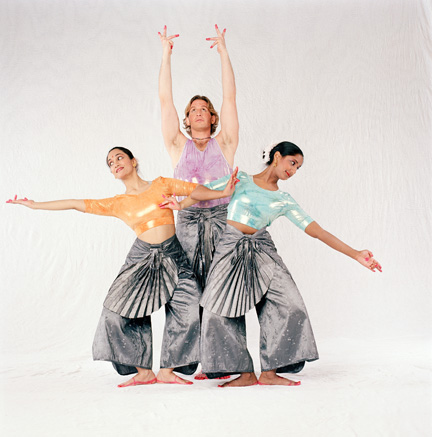
classicalgroup12forwebIn 2003 I began work on a quartet based on the four elements: water, air, fire and earth. In each dance I have experimented using pure Bharatanatyam technique to create an atmosphere, veering away from story telling or the normal exacting formats laid out for technical dances. Bharatanatyam is either a soloist’s style or a traditional dance drama form. Using an ensemble, and multi-layered choreography I move the classical technique into contemporary presentation.

The first dance was on water, titled Leher, which translates as “On The Tide”. It premiered in June 2003. In creation I felt swept away by the mysterious sea and I chose that time when the tide comes in, the sea’s growling, surging grey power, with the last glimmers of the fading sun shining and splintering the silver on the surface of the water into so many colors. I imagined this water touching on the beach in straight, oblique or staggered lines, little pools of water making round patterns in the sand. For Leher I chose the traditional 16 beat rhythm to start with, with gentle melodious tabla and sarod to go with it. The dance was set to Raag Shyam Kalyan. The dance progresses to the unusual 131/2 beat rhythm to evoke the unexpected depth of the movement of the water. Leher was premiered with seven dancers, and will always need an odd number of dancers, no less than five.

Baad-e-Sbah – The Fresh Morning Breeze – was the next in the cycle (premiering in August 2004.) Baad-e-Shah is based on the element of air. Performed by six dancers, the piece depicts that hour which is neither day nor night and the faintest glimmer of light comes through the dark veil of the sky. Those who wish to pray or meditate or feel one with nature wake up to start their day. This fresh breeze is playful, cool, moving through the garden. I used adavus (the units of dance that form the basis of the technique of the classical style of Bharatanatyam) in very untypical combinations to create circular movements that cover space, within a dance form that is not given to pirouettes or high jumps. I set the choreography to a 19 beat rhythm to give each strand of movement a long life. For the music I asked a male vocalist with a deep melodious voice to sing the dance syllables in Raag Bhairavain, accompanied by both tabla (a north Indian instrument) and mridangam, (a south Indian instrument typical to this dance style).

In December 2007 we premiered Aatiah Angaiz- Igniting (based on the element of Fire). Set to a 21 beat cycle, this is the fastest paced of all the dances, with fiery movement darting across space and quick fire adavu combinations that make your heart and lungs leap out of your body. It is passionate, for fire is all consuming, but in the tightly controlled style of classical Bharatanatyam. With mridangam, sitar and female vocal set to Raag Deepak, the divisions are extremely varied and intricate. This dance item involves four female dancers, including myself. In Igniting I have given each dancer a brief solo, and introduced a circular relay.

Maan Mitti – The Scent of My Earth – is in progress and due to be premiered this August at Dance Place. In this dance, I use dance syllables spoken by the dancers live on stage, intermingled and alternating with foot percussion and a recording of the specially composed music. I have pledged to use no traveling jumps (as in Baad-e-Sbah), no adavus that involve kicks (as in Igniting) or those linear body movements that I used in Leher. This dance will stay closer to the earth.

The dance begins on the ground, with humming and chanting, recreating the feel of rituals from so many different cultures that honor mother earth. It then moves to hand gestures and footwork done in sitting postures (unknown in typical Bharatanatym). It keeps long slow movements, sometimes at a faster pace, using full Mur mandi positions (movements done in a deep plie).

As a small part of the dance, I gave each of my three dancers, Radha Gholkar, Praneetha Akula and Deepa Poonapam (who have been with me for several years now), a twelve beat rhythm with the first five beats already set to a certain step combination, and asked each to make up their own adavu combination for the rest of the remaining seven beats. I use these individual twelve beat cycles as part of our on stage conversation between the ensemble, taking certain distinctive movements from each and creating four more cycles of variations to add on to each original set.

More often than not, (as in all the dances of this quartet) I will complete the whole choreography with every beat accounted for and then work with a set of musicians to lay down the melody so that it literally reflects every single half or quarter beat movement. There is no formal system of notation in South Asian classical music. While we have an informal way of writing down the basics, (each note or half beat is noted on the paper), in the end we depend upon understanding and memorizing the work.

We choose the Raag according to the sounds I have in my head, or the Raags known for similar qualities as the topic, or one that we all (the musicians and myself) feel sounds just right for the rhythmic patterns. For this upcoming dance I hope to have vocals and Pakhawaj (an ancient drum that the better known tabla originated from) and maybe a violinist. In traditional Bharatanatyam accompaniment a few basic phrases with a little variation are repeated over and over again. In the late fifties my Guru, Indu Mitha, began intricate tying of the music to the dance movement, and I have taken this work further. We are the only choreographers who use North Indian music to accompany this South Indian dance style, and who go beyond using themes from Hindu mythology.

The costumes are an integral part of the choreography and add another dimension, as do the lights, both of which I imagine as part of the choreography. All the dances in the quartet have costumes that are a dramatic twist on the traditional. It is important to me that the costumes should retain that glamorous and detailed element that is part of the traditional Bharatanatyam costume, while moving forward into the 21st century. When we dance onto stage we are not ourselves; we are transformed into the character required and costumes must reflect this. While the costumes for “The Scent of My Earth” are based on the traditional every day Shilwar Kameez (trousers and shirt) that a lot of dancers wear for practice, these will include colours connected to the earth, with long decorated hair and dangling earrings.

The title of this dance comes from the scent that rises from the earth when it has just rained a little in the summer (the rain will appear in the dance as well) bringing welcome relief from the heat. I have inhaled and cherished this scent in Pakistan, India, Africa, the United States…. It is a potent part of our connection to the Earth, part of our senses, our very being.

Tehreema Mitha grew up in Pakistan in a home full of music, dance, paintings, books and lively debate. Dancing under the tutelage of her mother, Indu Mitha, since the age of seven, she performed her first full two-hour program of Bharatanatyam in Lahore in 1986. Since then, despite political and cultural obstacles, Ms. Mitha has continued to give solo performances to audiences in Pakistan, Afghanistan (December 2005), Norway, China, India, Germany, England, Guatemala and the United States. Ms. Mitha was invited to the American Dance Festival’s International Choreographers Workshop in North Carolina in 1990. She is the subject of the documentary “And she dances on…” which premiered in 1996, and toured as part of the 1997 Asian Film Festival (Europe, Asia and North America.) Ms. Mitha holds a bachelor’s degree in Philosophy and English, and a MA in Fine Arts. After running the only dance company in Pakistan for five years, Ms. Mitha moved to the US nine years ago seeking more freedom to choreograph and at present is the only Muslim woman in the world, coming from Pakistan, to run a dance company. Ms. Mitha has reviewed dance performances for The Dance Insider Online, and for Dance View Times. She has choreographed, and produced the music for over sixty dances, both solo and ensemble, in both the Classical and Contemporary styles. To these she adds a repertoire of yet more items that have been passed down by tradition.

Meisha Bosma on ‘Shelter’

My way of moving and creating is unique to each day. There are qualities that are inherent to my being – like everyone – but as life unfolds I notice how my dancing and choreography evolves. My process is frustrating and blissful at the exact same time. During the months of creation everything I see, touch, hear, smell or feel is subject to investigation. I let my imagination go everywhere, even if it feels completely bizarre or for lack of a better word, stupid.

Lately I don’t go into the studio with any material or agenda. My work is better when I create on the spot, but the disadvantage is that I usually don’t remember the choreography after it’s been taught. This is sometimes frustrating for the dancers, but we work collaboratively, and I trust them to take responsibility for the material after it leaves my body. Music and visual image is also important to me, and I like diversity within one piece so I take time to experiment, throw away, and finally decide. I don’t ever want the audience to expect what will come next, so I don’t allow myself to expect what will come next in the process. I strive for spontaneity and honesty, always.

Currently, BosmaDance is a working towards the premier of the Shelter Project. I have gathered five dancers, a visual artist and costume designer to be part of this community-based project that explores the meaning of “shelter”. Designed in three stages, this project began with an initial dinner meeting with the five dancers to discuss and explore our personal ideas. A journal was given to each dancer with specific questions and tasks to consider. 
 Questions/tasks include:

1. Free-write for five minutes on the word shelter. Read it and circle two words that are significant. Give those two chosen words to another dancer. Do another free-write based on those two words given to you. Discuss.

2. Describe in five words the place you live in now.

3. Were you “sheltered” as a child? Describe your answer.

4. Why do you dance?

5. The perfect imaginary place looks like…describe shape, size, height, color, texture, smell.

6. How does nature provide shelter?

7. How do humans provide shelter?

8. Can you touch shelter? Discuss.

9. Write down five questions/fears you have about becoming a mother.

10. What does it feel like when you don’t have a “shelter”?

After writing and discussion, we had a plethora of ideas and meanings to translate into movement. My dancers are very creative and are integral to the shaping of the movement language in all my work. Together, we have found a few qualities/characteristics that reflect our ideas thus far; direct lines in space, floppy limbs, crouching low to the ground, symmetrical spatial design, movement that happens ‘underneath’ and ‘inside’, and the carrying of a baby inside the belly. This is where we are at now. It might be all thrown away tomorrow, but this is where we stand in the process. We now have movement themes to draw from, and will continue to create as the project moves forward.

The next step will be to visit two elementary schools and a women’s shelter in Northern Virginia. We will provide workshops for the participants at each location using dance as a way to explore the meaning of shelter. Brief writing exercises and various movement activities will stimulate new ideas among the participants and will ultimately inform the foundation from which we will build the performance piece. Once this material has been gathered, the artistic team will begin to thread the work together. Our goal is to create a 40-minute work based on the personal experiences and meanings derived from our investigation period. I have no idea what the piece will look like or feel like yet, but I am certain that we are on to something special already. As one child told me “a shelter is the place where all the ants go to keep from getting wet from the rain” and another reported that his shelter was “in the kitchen where my mom and dad eat breakfast together.” This is just the beginning, and where we go from here is a mystery yet to unfold.

meisha-watching-by-jason-motlagh-for-webThe Shelter Project will premier at Dance Place on May 12 & 13, 2007. Visit www.bosmadance.com for more information. BosmaDance is a contemporary dance company based in Northern Virginia. Founded and directed by award-winning artist Meisha Bosma, BosmaDance was featured in the January 2007 edition of Dance Magazine as one of 25 premier up-and-coming companies in the nation. For the past five years BosmaDance has presented an all-female lineup to reach both youth and adult audiences in the metro DC community through performances, movement workshops, and collaborative performance projects. Meisha Bosma has won five Metro DC Dance Awards for her artistic contributions to the community. Her choreography has been commissioned by the Kennedy Center for Performing Arts, Alexandria Performing Arts Association, Virginia Commission on the Arts, CityDance Ensemble, Arlington Arts Center, and universities throughout the country. As a performer, Bosma toured internationally with Kombina Dance Company based in Jerusalem, Israel from 2001-03. Named as one of the capital’s “most powerful women” by Washingtonian Magazine in June 2006, Bosma continues to challenge the public with her distinctive and daring style.

Letter to the Editor by Stephen Nachmanovitch

Dear Rob,

The Focus Section on Technique in the last issue touched a nerve. I’ve been talking & writing a lot about my mentor, the anthropologist and philosopher Gregory Bateson since his recent centennial.  Those musings have touched on a lot of topics – from the Buddhadharma to the practice of Improvisation. It turns out that some 55 years ago Bateson wrote a number of his pithy little Metalogues for a contemporary dance journal, Impulse. Since you asked me to write a comment on the last issue, I have a feeling of stepping into someone’s shoes – dancing in the master’s shoes – with a certain feeling of inevitability, a form of karma.

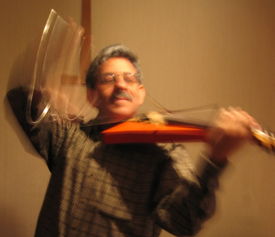
But this is what happens every time I pick up a violin and do improv: it is a matter of jumping into the unknown and the practice of being comfortable there. Nothing given, decided or agreed beforehand, yet as the improv progresses there is a feeling of inevitability, of completing circles that were begun long ago. Moving spontaneously, yet within a pattern or archetype that connects this moment and place to the whole flow of organic evolution.

Improvisation makes explicit the truths of daily life which we always experience but do not always think about: That we live in a world of pattern, relationship, context, interconnectedness. That we can navigate our way through complex systems in the simple act and art of listening and responding. That creativity is the property of everyone and not just of a chosen few. That ordinary, everyday mind embodies all we need to know in order to be expressive and creative.

All perception and action vibrate in a network of relationship. Gregory Bateson said, “it takes two to know one.” The reality of the pattern-which-connects is often unconscious, but when we do improv it becomes available to us through the simplest of means.

Warmly,

Stephen

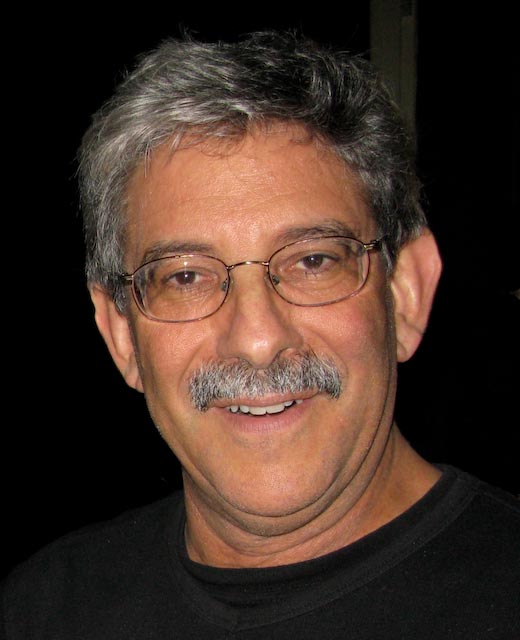
StephenNachmanovitch_275x237Stephen Nachmanovitch is a musician, author, computer artist, and educator. Born in 1950, he studied at Harvard and the University of California, where he earned a Ph.D. in the History of Consciousness for an exploration of William Blake. His mentor was the anthropologist and philosopher Gregory Bateson. He has taught and lectured widely in the United States and abroad on creativity and the spiritual underpinnings of art. He has published articles in a variety of fields since 1966, and is the author of Free Play: Improvisation in Life and Art (Penguin-Putnam, 1990). He is currently working on a new book on creativity, and new musical projects. He lives with his wife and two sons in Virginia.

Originally published as “Letter To the Editor: From Stephen Nachmanovitch” in Bourgeon Vol. 2 #2

The State of the Art: World Dance by Christel Stevens

In late September, I traveled to southern Italy for a conference on dance in Europe. I attended as a guest of the organizers, to deliver a paper on my methodology for producing performances of world dance, and to contribute to the evening showcases by performing Manipuri dance from India. It was interesting to me that there were no other performances of non-Western dance during the course of the three-day conference, and no papers on the topic of world dance beside my own. This experience gave me a greater appreciation of our dance scene here in the metro DC area, and in the United States as a whole. As compared to the more insular, almost mono-ethnic nations of Europe, we have a wonderful variety of dance communities here. Beginning with the powerful influence of the great African dance organizations, like Melvin Deal’s African Heritage Dancers and Drummers, and Assane Konte’s Kankouran, the equally long-lived Spanish Dance Society and other Flamenco troupes, moving through the panoply of Asian Indian dancers and dance companies, and recognizing a fantastic array of dance companies whose members are employed primarily by the World Bank and IMF, the Washington, DC-Baltimore metropolis is the greatest world dance center on the Right Coast.

In the past these dance groups have been supported for the most part by the ethnic immigrant communities who haled from the same part of the world as the dance form they practiced. As these companies reach out for a bigger slice of the pie, they are encountering a kind of spandex ceiling that separates dancers who perform in leotards from those who don’t. There seems to be an unspoken rule that dance critics are only going to review two non-leotard shows in any calendar year. Grant-makers seem automatically to relegate applications from non-leotard dance companies to the category of Folk and Traditional Arts, which might be appropriate, but not in all cases. And as far as the Metro DC Dance Awards are concerned, it appears that, so far at least, non-leotard troupes are only eligible for costuming awards.

It is my opinion that the blame for this situation is to be assigned to almost everyone. The world dance performers themselves have often not been eager to exchange their amateur status for the more stringent professional requirements. Presenters have been lazy about working with world dance performers to improve production standards. Critics have been loath to step out of their comfort zones, in order to experience unfamiliar forms and attempt to write intelligently about them. And last but not least, the performers in leotards have been unwilling to open their hearts to the “others,” to share the stages, to accord respect, or even to show an interest. There are a few companies who have attempted to cross the boundary: Tehreema Mitha and Daniel Phoenix Singh have notably brought the worlds of modern dance and Bharata Natyam together, while Shizumi Manale has done the same for Japanese traditional dance. Lesole Maine is working in the realms of traditional African dance and modern dance simultaneously. These dancers should be lauded and encouraged. But the dance community needs to open their eyes even wider to recognize the artists who do not work in the world of modern dance at all, but steadfastly practice and perform their traditional styles.

The fact of the matter is, many audiences actually enjoy traditional dances, world dances, much more than modern dance, once they allow themselves to get past the perception that they don’t understand what they are seeing. I myself seldom understand what I am seeing when I attend a modern dance performance, but I still attend and try my best to “get it.” It would be wonderful if people could attend world dance concerts and allow themselves to enjoy the sheer beauty of the presentation, because in the end, that is what it is all about. The Silk Road Dance Company, one of Washington’s most active world dance companies, recently adopted a new slogan, “Cultural understanding through beauty and delight.” I think this could be a catchphrase for a new era of appreciation for world dance styles in the Washington, DC metropolitan area.

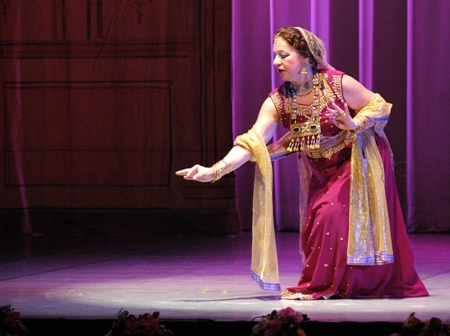
christelrasleelaChristel Stevens is currently employed by M-NCPPC, Arts and Cultural Heritage Division, as Performing Arts Specialist in Prince George’s County, Maryland. She supervises and produces the annual Choreographers’ Showcase in partnership with the Clarice Smith Performing Arts Center at Maryland and the annual World Dance Showcase at the Publick Playhouse as well as two summer teen theater touring programs. She organizes the annual Asian Pacific American Heritage Month observances and is editor of Arts Opportunities newsletter. Christel is a member of World Dance Alliance-Americas, the international dance association sponsored by UNESCO; her paper entitled “Presenting World Dance on the Main Stage” was included at their conference “E’ Solo Danza – Is It Only Dance?” in Taranto, Italy in 2006. The paper was subsequently published in the journal Pravaah – The Flow by Jayamangala School of Music and Dance in March, 2007. She has presented and performed at numerous conferences internationally, resulting in a broad spectrum of publications. She is past Chairperson of the Indian Dance Educators Association of metropolitan DC/Baltimore. Christel is a member of the Selection Committee of Dance Metro DC, the organization responsible for the annual Metro DC Dance Awards.

originally published in Bourgeon Vol. 2 #3