Home Blog Page 175

The State of American Dance by Nejla Yatkin

I have been thinking about this question for a while now, and realize it is hard to sum it up in a book, let alone a short article. Essentially, I see the answer as twofold. The first concerns a rather mundane, practical matter – what is the effect of economic factors on dance? The second concerns two more broadly philosophical issues – what is the role of dance in our society and what should it be? I believe this two connect, uncomfortably.

As artists attempting to practice our craft, we are all aware of the financial situation: federal money for dance is being cut – especially for individual artists. Dance creators must therefore spend more time looking for funding – running businesses rather than thinking, experimenting and creating. Yet large companies (e.g., Ailey, Cunningham, Taylor, Graham, Limon) continue to be supported – extracting ever-larger sections of a smaller pie. The rest of us hustle – seeking not-for-profit status with pro-bono lawyers who have little pro in their bono; seeking patrons and rich friends to donate or commission with shoestrings that we can live with; writing grants, writing memos, writing letters, writing more grants, writing letters of inquiry about grants, writing budgets for grants, writing memos about budgets for grants, and so on.

Of course, I do not mean to suggest that this is new. Artists of all generations have been subject to similar deprivations. I do suggest that our current troubles are caught within the matrix of decreasing budgetary allocations for social functions, increasing privatization that excludes a great many communities, as well as dramatic declines in all activities that take place outside of the home. This is all problematic because it decreases experimentation and innovation – art itself.

If we accept the old adage that if it ain’t broke, don’t fix it, then investing in already established dance companies is likely to lead to greater stagnation. Stagnation in art does not help art grow, thrive, evolve; indeed, it kills it. While this should be creating a panic throughout the society – a national emergency as “our” dance is dying – this has not been the case. The graveness of the situation and lack of attention to it leads to my second point.

Is the way of the American future in the European past? In January, I attended a very informative panel discussion, hosted by Dance/USA, where they asked: “how is American dance perceived overseas?” Although a great many issues were raised, the comment that stuck with me the most was the view that American Dance seemed dated, low in production value and that there was not much support from the US government to send companies overseas. At present, all Europe and the rest of the world sees are the traditional style companies (the usual suspects identified above). Where are the emerging artists and smaller companies – the more creative, the more risk taking? Generally, these are the companies that are not able to go and thus what is performed in Europe really is dated. I receive many invitations to perform in other countries but have nowhere to go to get help with touring. I am an individual artist but I cannot tour with a staff because most of the organizations don’t have the money to pay for multiple airline tickets. So when I tour I cannot tour pieces that require a demanding production. This problem is not unique to me – it reflects a systemic issue.

The Dance/USA event struck another chord for it sent me into something of a time warp. In the 1980’s, when I was a student in Germany, everything was about American Dance. Europe (and most of the non-European world for that matter) looked to America for Dance. Everybody wanted to learn to dance like Americans, everybody wanted to bring in American Dance in some way. Back then, Pina Bausch was disliked in Germany and was thought of as dated. Today, even Pina Bausch is more “cutting edge” then American Dance and she is brought to the United States, receiving rave reviews. What happened? Why is Bausch now in and Americans are looking to European dance? Two things explain this.

First, I think one of the factors is that the NEA’s fellowships for individual choreographers got diminished, leaving many creative people stranded – risk taking and conservatism lead to a decrease in funding and so innovation in the United States. At the same time, European Dance was largely supported by their governments (federal, state as well as local with a chance for regional through the European Union). As a result, the companies can there take bigger risks, and the production values are higher. This should lead us to ask: why do European governments value dance more than the American government? Is there something about the public good served by movement art that is deemed worthy of support abroad that is not seen here? If so, what is it? This is where we need to move the discussion.

Second, we have to focus on overcoming the gap between commercial and concert dance. Currently, it seems that when you don’t use dance vocabulary in your performance, you are making an artistic statement, but if you do use dance vocabulary, then you are condemned by the artistic community for doing so. Directly related to the issue discu$$ed above, the paradox is simple: the ticket-buying audience likes performances that it can recognize (i.e., which it has been exposed to before), but funders and dance venues for emerging artists say that artists need to take risks and create something new. In this situation, one ends up getting a couple of dollars to take a risk that nobody wants to see because the rest of the world doesn’t care about risk taking and personal recovery/discovery. To survive, dance will need to create bridges to the different sides. We must support the full range of modern dance but we must also educate audiences about what we are doing. While I am pessimistic about our collective ability to overcome the challenges identified above, it is clear to me that the time for such an effort could not be more opportune.

After a long drought, dance seems again popular in American culture. Every other commercial has dance in it – from The Gap, to I-Pod, to Verizon. There are multiple dance shows on – “You think you can Dance”, “Dancing with the Stars”, and even American Idol has people taking a few steps. Music videos are essentially short dance-music movies. Feature films like “Take the Lead,” “Center Stage”. “Bring it On,” “You Got Served.” “Chicago”, “Stomp the Yard,” appeal to massive audiences. If we were ever able to develop an audience, this is the time.

My proposal is thus a simple one: we need a national conversation on the state of dance. Not a conversation of dancers, choreographers, companies and funders that have “national” stature but a truly national conversation of these people but also those below the high-profile radar screen: local and regional dancers, choreographers, companies and funders, ticket-buyers, movie and video watchers as well as the non-ticket-buyers. We need an assessment of where we have been, where we are and where we want to go. We also need an assessment of who is joining us on this trek and who has never come, is never going to come and (in certain circumstances) will actively work to block us. Truly I believe data collection by social scientists on these issues would be worthwhile, as well. With this type of information, we would have more informed conversation, more informed reforms, as well as more informed advocacy. There is no progress without struggle but there is no struggle without information and conversation.
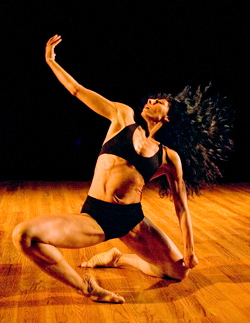
Nejla_250Nejla Y. Yatkin graduated with her masters in Dance and Choreography from Die Etage – a Professional Performing Arts Conservatory in Berlin, Germany. Ms. Yatkin is currently based in Washington, DC pursuing her solo career: dancing, choreographing and giving workshops at international and national festivals. Since the fall of 2001, she is a Professor of Dance at the University of Maryland-College Park. Ms Yatkin has performed all over the US, Brazil, England, Canada, Colombia, Germany, Hungary, Italy,Mexico, Russia, Taiwan, Ukraine and Yugoslavia. She has been awarded numerous grants to create and perform from Arts International, the National Performance Network, the National Endowment for the Arts, the National Foundation for the Advancement in the Arts, the Kennedy Center, the D.C. Commission of the Arts and Humanities and the University of Maryland. Her work has been commissioned by Dallas Black Dance Theatre, Cleo Parker Robinson Dance Ensemble among many others and presented at Dance Place (D.C.), Lincoln Center Out-of-doors, the Kennedy Center (D.C.) among other places. To date, Ms. Yatkin has received six awards from the Metro D.C. Dance Awards, including two “Outstanding Individual Performance,” “Best Scenic Design”, “Best Multi-Media Performance” as well as “Outstanding Overall Production in a small Venue. In 2005 she was named by Dance Magazine as one of “Top 25 to watch” and “Outstanding Emerging Artist” by the D.C. Mayor’s Arts Award Committee. Her professional dance experience includes dancing as a principal with numerous companies: Fountainhead Tanz Theater, Dance Butter Tokyo, Pyro Space Ballet in Germany and Cleo Parker Robinson, Dayton Contemporary Dance Company in the United States. She has worked with such leading choreographers as Donald McKayle, Eleo Pomare, Anzu Furukawa, Dianne McIntyre, Katherine Dunham, Ron Brown, among many others. For more information please visit www.ny2dance.com.

originally published in Bourgeon Vol. 3 #1
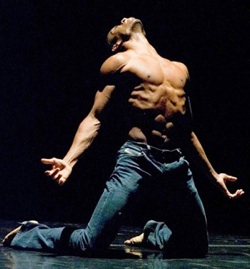
Sex and Sexuality in and out of Dance by Robert Bettmann

A friend recently turned and said to me, ‘Oh, you’re a dancer. That’s so great that you’re in touch with your feminine side!’ I replied: “dance is masculine, woman!” It reminded me that aspects of our life today are embedded with expectations of gender and sexuality. Dance is inherently neither masculine, nor feminine. Dance is also neither straight nor gay.

In performance practice there are issues of character creation that legitimately come into play, as they do in the theater world. Classical and narrative dance of course relies on the creation of character, and so of necessity, stereotypes are used. In the use of character within abstract work, however, it seems frequently as though our community relies on the same ‘character’ types that much of the work is seeking to both acknowledge and dissolve.

Artists are the visionaries who create the new world. At least that’s what it says in our press packet. And so while we are representatives of communities, we are also leaders, responsible for helping others find the new light, the new way, the truth, and the way away from ‘The Guiding Light.’ When we pay homage too deeply to existing stereotypes of humanity we lose our ability to express a more complex, holistic humanity.

Art – dance inclusive – has always been a home for the alternative. Artists are ‘different.’ Today as all members of the society jockey for full participation, artists are unfortunately making our own acceptance more difficult by producing work that fetishizes notions of masculine, feminine, straight, and gay. I can count on two hands the number of pieces that I have seen in the last year that offer overt celebration of stereotypes. To the degree that we as artists prepare the audience to see the world in stereotypes, we perpetuate a society that only knows how to know through separation. Whose identity is it anyway – ours or the audiences? Whose character is it anyway?

The situation is complicated by the need to simplify things to engage an audience. We can not tell our real stories if everything looks muddy. Nevertheless – are there essential character traits to being a man? Are there central character traits to being a gay man? It is fine to answer glibly that, yes, being a Man (capital ‘M’) means liking beer, sports, and Jessica Simpson, and that being a gay man means liking fashion, wine-coolers and Jake Gylenhall. But that is not only bullshit, it hurts all of us. The fetishization of ‘gay’ characteristics, the fetishization of ‘female’ characteristics, pigeon-holes not just the artists but the audience into roles that have nothing to do with their character.

Being a dancer does not imbue one with a character. Being gay does not give one a certain character. Being a woman does not give one a certain character. We still live in a world where smart people – for example Lawrence Summers, recent past president of Harvard University – still actually debate whether men and women have the same intellectual possibility. As long as we – the visionaries of society – project the stereotypes of masculine/feminine/gay/straight we give validity to the limits placed on any of those groups. Perpetuation of stereotypes in gender, sexuality, race, ethnicity, and age may be a part of our past, but they do not have to a part of our present.

Robert Bettmann is the founder of Day Eight, the organization that sponsors Bourgeon: Journal of Dance. He is a dancer, and writer. Some of his writing can be seen on the Day Eight website: www.dayeight.org. He has a BA in Environmental Studies from Oberlin College, and an MA in Dance from American University.

originally published in Bourgeon Vol. 2 #3 as “Sex and Sexuality in District Dance”.

Finding Space for the Metropolitan Areas Youth by Helen Hayes

The Youth Dance Ensemble (YDE) is Joy of Motion Dance Center’s elite program for the developing young dancer, consisting of Senior and Junior level companies and preparatory levels for 1st through 8th graders. This pre-collegiate program, includes core classes in ballet, jazz and modern dance, plus additional dance forms, dance history, improvisation and composition, artist residencies and numerous performance opportunities. The curriculum is guided by the National Dance Education Organization’s Standards for Learning and Teaching. I consider our program to be a benchmark for excellence in teaching dance to youth. Yet we still face considerable difficulties, many of which are similar to the difficulties faced by all youth dance programs, and teachers.

This past year has been stellar for the Youth Dance Ensemble. In September of 2006 the young dancers were honored at the Metro DC Dance Awards with the Most Outstanding Youth Performance of 2006 for their May concert at the Jack Guidone Theater. In April, the Youth Dance Ensemble will take the Kennedy Center’s Millennium Stage, and in May they will perform at The ARC in Dance Place’s annual Youth Dance Festival. Their performances calendar concludes with a full concert at Joy of Motion’s Jack Guidone Theater in May. Directing this program has brought me tremendous joy over the last several years. It has also brought challenges and frustrations.

Dealing with limited workable studio space is a never-ending issue that dance educators continuously face. In December of 2005 Joy of Motion Dance Center’s Bethesda location closed its doors on Woodmont Avenue, as the building had been sold (to make room for high-end condominiums and higher-end retail.) The Maryland Youth Ballet was housed in the same building and was left with no home, as well. JOMDC’s new location was not yet ready for occupancy, and the YDE program was displaced. Our temporary home was JOM- Friendship Heights, but due to time and space restrictions at that location, classes were combined. The Senior Company was combined with the Junior Company for a portion of the day. Then the Senior Company students left and the Junior Company was joined by the preparatory levels for the second class. On Wednesdays, all levels of students were combined, giving us an hour and a half class with 26 students, ranging in age from 7-18. Youth Dance Ensemble educators were all present and participated in ‘team teaching.’ Nevertheless, the very real question arose: “What in the world am I going to do with 26 kids who are all different ages and different levels in the same class?”

This is the question that kept me awake at night as we moved towards the date that this schedule would be in effect. The problem of mixed age/ability classrooms is one that many dance teachers have experienced, and there is no easy solution. Some of the faculty had a great deal of experience working with younger children, but no experience with teenagers. Others, including myself, were used to working with teens and adults but had rarely taught students in grade school. Additionally, JOMDC borrowed space from Chevy Chase Ballroom during this time to help accommodate our need for more space. The surface of a ballroom dance floor is similar to being on an ice skating rink. Teaching technique classes became almost impossible and we were forced to work in a more improvisationally-based manner.

It was during this time that I created the dance, “Joyful Motion” for the entire Youth Dance Ensemble. Douglas Yeuell, Executive/Artistic Director at Joy of Motion Dance Center, composed a beautiful piece of music for this project and I began to work. Base phrase material was created and taught to the older students. Younger students were paired with older students and created their own duets and trios from the ‘base phrase material.’ The faculty learned different sections and were responsible for helping the students retain the choreography. Young dancers experienced being lifted for the first time and older students learned the true meaning of being a ‘role model.’ This was such a wonderful learning experience for me and the other teachers, as well, as few of us had any experience working with multiple teachers at the same time. What we discovered is that people learn from example, rather than by instruction. The students watched their educators come together and be a part of creating something special. In turn, the students worked together, helped each other and truly created something magical…..a dance that was so much greater than the sum of its parts. One of the lessons learned was that with conscious and creative action a hardship (lack of studio space, combined classes) can become an inspiration.

“Joyful Motion” has become the signature piece for Joy of Motion’s Dance Center’s Youth Dance Ensemble. In the end, the experience was one of the most enriching and satisfying things I have ever done. When I watch the students’ rehearse/perform the work, I am deeply touched, as each of the dancers brings their genuine self to every step. I believe that the difficulties we endured brought out the best in each one of us. I also believe that we will be asked to address the issue of studio space in the future. The DC Metro area continues to be developed, pushing out lower-earning businesses – including dance/art programming. As a dance community, we must strive to find creative solutions.

HelenHayesPicWebHelen Hayes graduated from the University of MD with a degree in Dance. She has danced professionally with the Maryland Dance Theater, Perlo/Bloom and Co., Cathy Paine and Friends and Dupont Alley Dance Co. Touring internationally, she has been featured on Good Morning, Hong Kong. She has also performed at the Kennedy Center, including the Honors Gala in tribute to Chita Rivera and in New York City. In 1996, she co-founded CrossCurrents Dance Company (in residence at JOMDC) and has served as co- Artistic director for the past decade. Ms. Hayes is an instructor of both modern and jazz dance and has taught extensively throughout the metropolitan area. In 2005, she was a Metro DC Dance Award finalist for Excellence in Dance Education. Currently, she is the Director of the Metro DC Dance Award winning Youth Dance Ensemble at Joy of Motion Dance Center. She spent the summer of 2002 teaching jazz and modern in Varna, Bulgaria at the International Ballet Competition. She is also on the faculty at the University of Maryland.

D.C.’s Dance Scene: Are the Questions the Same? by Helanius Wilkins

I often say that dance chose me and that I didn’t choose it. From as early as I can remember I knew that dance was going to occupy a big space in my life. In fact, I knew that it was going to be the center of my life. By the time I began the college phase of my education, in upstate New York, I was well on my way to finding the path that would allow me to fulfill that commitment.

While at SUNY/Brockport I found myself seeking information on how to start a company, and considering what city might be its home. What I knew for sure was that I wanted to be close to New York City, Philadelphia, and Boston. I also wanted to be somewhere that was urban – lively and filled with art, but with room for grass roots organizations to emerge. This is how I landed in Washington D. C.

I arrived in 1995, excited and ready to explore. My final decision to move to the District was extremely spontaneous. I arrived in the area with no job, a temporary place to stay, a ten-foot U-haul full of stuff, $500, and a dream. Some basic knowledge about the dance scene as a result of doing research and making connections with artists and culturally connected folks gave me a small sense of security. DC seemed to be the perfect place for me, if there is a location that can be considered a perfect place.

From the start it was clear to me that I had made a wise decision in choosing to move to DC. I walked away from many conversations feeling that this was indeed a place where one could take chances, go out on a limb to try something new and different — a place where new ideas could be developed and nurtured without overpowering competition and judgment. I feel that this thought may very well be one of the city’s greatest attractions to both emerging and established artists. For many years, DC has been a fertile ground for dance artists to put ideas to the test, to train, to discover their voices, to create, and to perform—all the ingredients necessary to building a lively dance community.

Yet, within a short period of time of living in DC, I found myself questioning whether or not I wanted to stay in the area. Should I pack my things back into a U-Haul before getting too settled and go to New York City? What is strange about this question is that I remember it not entirely feeling foreign. I recall a couple of conversations prior to my move, one with an artist who had lived and worked in the area for over ten years, where it was said that many local dance artists find themselves easily enticed by the possibilities, growth, and success that may come from relocating out of the area. And, in some cases, they are encouraged to do just that—leave.

Not feeling like I knew enough about the area and its dance scene yet, I didn’t dwell long on why I was beginning to experience perhaps a change of heart. After all, I had just found my way into Dance Place, where I began meeting people, taking classes, and attending performances. (I think it’s the place that every dancer lands first when moving to DC.) I had also followed the lead of Kista Tucker, a friend and talented dance artist who I met while attending SUNY/Brockport, and made an in person connection with Naima Prevots, then the Chair of American University’s Dance Department. I wanted to learn more about the artists and companies based here. I wanted to discover and take classes at more of the dance centers. I wanted to get a sense of the kinds of works being created in DC. I was on a mission.

Twelve years later, I am still based in DC—fulfilling my life’s work as the Founder and Artistic Director of EDGEWORKS Dance Theater, a company I formed six years ago. On many levels I feel that DC has been good to me. I have gone through many stages of change and growth leading to some feelings of success. This, I believe, is also the case for the DC dance scene. What I find interesting, however, is that some of the questions that came to light when I first moved to the area remain the same — some exactly the same and some with a slight twist. Why are many dance artists still entertaining the idea of leaving the area? Why are others being faced with the question ‘why aren’t you in New York?’ Could this have something to do with the resources available to professional artists for the continuation of their training? Could it be because the area has a plethora of wonderfully talented dancers and performers but fewer choreographers? Could it be because DC simply does not have enough work available for all its artists?

At its best, our nation’s capital is a melting pot for high quality dance productions and artistry. The District is a major city for touring companies and projects. In addition, some local choreographers and companies have emerged who are creating elaborate and polished multimedia productions. In spite of this, the local dance scene seems to be fighting a “reputation” that we have embraced lower standards than other noted cities for dance such as New York City, Chicago, and San Francisco. This analysis concludes that our attitudes lead to end results with more artistic misses than hits, and perhaps downright mediocrity. Is there really a lower standard here? Could it be that this community is very forgiving, and so a lower standard exists? Or, could it be that audiences are being misinformed about the quality of work being created and presented by local artists and companies? Could it be about resources, including the central issue of funding?

It is obvious that many dance artists are finding creative ways to both live and work in Washington DC. Perhaps an indication of this is that one can generally find some kind of dance performance or event listed in area local papers on a weekly basis. It is also not uncommon to hear more frequently that a new dancer is moving into the area. Shifting that viewpoint however, the consensus seems to be that members of the community are in the midst of a tough and often continuous uphill battle of creating and producing work and not having enough opportunities to keep dancers working in the area. Through various conversations a conclusion could be drawn that many area companies, artistic directors, and choreographers are caught in an endless cycle of modifying, re-configuring, and almost being at the mercy of resources that never quite seem to be enough. But, then again, could there ever be enough resources available at a time when funding for the arts are being cut, and where it is becoming increasingly more challenging for artists to get their works produced?

A sign reflecting the evolution of DC’s dance scene is that organizations are forming and growing that are dedicated to nurturing local artists through offering resources, or support with accessing resources, and to bridging gaps by creating opportunities for mingling, networking, and honoring all that is taking place within the community. Some of these organizations include, but are not limited to Dance/Metro DC, American Dance Institute’s Arts Incubator Program in nearby Rockville MD, the Cultural Alliance of Greater Washington, and the Metro DC Dance Awards. Even more, through locally-based foundations (numbering few), the DC Commission on the Arts & Humanities, and new initiatives, funding resources have been uncovered to support the building of venues for dance training and presentations, and to support the development of organizations’ boards and administrations. Could these things become a solution to canceling out and changing the face of the DC dance scene’s “reputation”? Or, has this “reputation” been earned due to the belief that professional artists are not training here? Could this “reputation” affect the area’s gifted choreographers due to association?

Lacking no clear solutions, DC’s dance scene is nevertheless changing. It has become home to some really talented, gifted, and determined artists who are proving the long-lived reputation wrong. They are thinking outside of the box. They are following instincts that have led them to challenge what has been perceived the norm. They are creating new standards, and pushing the bar of expectations. In this same vain, although slowly, it appears that some members of the dance community are figuring out how to join forces to develop supportive infrastructures, and to raise the awareness of the art form, therefore building larger, more diverse, and more educated audiences.

While I have personally been faced with the question, more than once, why am I not in New York City, I remain convinced that DC can be a viable place for dance artists to live and work. It is not easy, and it can become incredibly frustrating at times, but changes are currently taking place. These changes are creating room to ask new questions and investigate perhaps what were once hidden possibilities.

It is almost hard to have any doubts regarding dance not thriving and growing in the DC-metropolitan area. Make no mistake—the dance scene is being redefined by the artists presently doing work in the area. However this is not to say that there are no bumps in the road. There are many. Dance in our nation’s capital is cycling through one of its more exciting periods.

80-helanius-soloHelanius J. Wilkins, a native of Lafayette LA, is an award winning choreographer, performance artist, and instructor based in Washington DC. He is the founder and artistic director of EDGEWORKS Dance Theater, DC’s first-ever all male contemporary dance company of predominately African-American men. He is the first artist to be a two time recipient of the prestigious John F. Kennedy Center for the Performing Arts Local Dance Commissioning Project award, an award he received in 2006 and 2002. He also received the 2001 Metro DC Dance “Emerging Choreographer” award. In addition to performing the works of several choreographers, he has enjoyed creating, presenting, and receiving commissions for choreography throughout the United States. His choreography has been commissioned and included in the repertories of the Instruments of Movement (Chicago), Slippery Rock University (Pennsylvania), Dance Institute of Washington (District of Columbia), Oakland Dance Theatre Repertory Company (Michigan), and Stephens College (Missouri), where he was selected as the Emerging Choreographer for Summer Festival 2001. Foundations and organizations including The Meredith Foundation, Regional Arts Commission, DC Commission on the Arts and Humanities, and the National Endowment for the Arts have supported Wilkins’ work. Wilkins is a much sought-after instructor who teaches professional and pre-professional dancers, as well as students of various ages and levels of skill. He has served as an adjudicator and master teacher at American College Dance Festivals in 2004, 2005, and 2007. He is currently on faculty at Joy of Motion Dance Center. He most recently completed an artist residency at the University of Maryland Baltimore County (UMBC).

Distinctive Voices Moving Together by Elizabeth Johnson

I type from 6922 miles away and 7,500 feet over the pacific. We left Japan about just over an hour ago, where some of the Dance Exchange Company has been working for the past five weeks. I joined for the last 2 week stint in Kyoto – a project working with 40 community dancers spanning 6 decades. The week before I left I was in Arizona developing a teen dance project focused around the issues of genetics. Before that it was New Jersey, and the week before that I was in North Carolina. Or was it the week before that?

Who am I to speak about the D.C. dance community when I spend 32 weeks of the year in other communities? When I discussed this with Rob he encouraged me that as a member of one of the most prominent modern dance companies in the area, I am in fact a DC dance community member. I write not as any voice of authority, but from my personal perspective of being both inside and outside D.C. Dance for the past 8 years.

Several years ago DanceUSA did a study on Dance in D.C. I was interviewed in a focus group. What I said at the time, and what the study concluded, was that there was a lot of dance in D.C., but that the community was fractured; the various communities tended toward isolation. Modern and ballet dancers stuck to their styles. Individual forms of cultural dance were strong, but separated from other cultural forms and from the Modern/Ballet scene. Dancers pretty much stuck to their studio or their company, and watched the performances their friends were in.

It is seems there has been a dance boom in D.C. since the publication of that study, but have the conditions really changed? Certainly there has been great growth in our studios, as Sarah Kauffman noted in her article in the Washington Post some months ago. But it is not just buildings. There are more programs – out reach and in reach, school residencies and long term school partnerships, early release programs, expanded class series….. the list continues. With so much dance in one city (not to mention opportunities with other arts or physical practices) one might think the market would be saturated. The different companies and dance centers are now competing for dancers, resources, and attention. But I have not found this to be true. D.C. dancers and their companies/studios seem generally to want to give and receive respect and support.

I have found that the spirit of Dance in D.C. has become much more co-operative and connected. A few years ago Dance/Metro DC and Johanna Seltzer hit our inbox and changed the dance scene by connecting us in cyberspace. We can now receive weekly e-mails to know more of what’s going on (even if we are reading it from across the country.) Annually, we get to celebrate each other with the Metro D.C. Dance Awards. In addition to the actual awards, there is a community feeling to the event. We are backstage warming up together and can say, “I read your e-news and it sounds like your new project is really taking off. I know someone you might want to contact…) Last year I thoroughly enjoyed sun saluting with BosmaDance backstage at this event, and I know this year Dance Exchange’s Artistic Director Peter DiMuro had a blast co-hosting with Doug Yuell (Director of Joy of Motion.) Although the awards are a competition, the spirit is warm and brings our community together. Dance Place’s Youth Dance Festival gives the younger dancers of our community a similar experience, allowing them to share classes and a stage together, honoring the important work being done by young people in all styles.

I believe these trends have started to bridge some of the divides that used to exist. Speaking from my own experience at the Dance Exchange, I see how rewarding our collaborations with organizations (The Field and Bowen/McCauley Dance amongst others) and individual artists (Kelly Mayfield, Vincent Thomas and Gesel Mason, amongst others) has been. Whether through teaching or performing, working together brings people together. It is exceptional that these amazing artists and arts organizations can share their time and talents with the Dance Exchange, and rewarding to see that it does not cost them their individual standing in our community. There is generosity amongst us. But there is still work to be done.

While overall the “State of Dance” in D.C. seems to be getting more connected we can do more. I know I for one need to get out to see more shows, and of more types of dance. We need to fill the seats and show our support, even if we are not close friends with the choreographers. And we need to fill the seats not just with us, but with our beautician friends, our lawyer friends, our landlords – the non artsy among us in D.C. One of the greatest challenges we face is the need to build and consolidate diverse audiences for all types of dance.

The D.C. Dance community is building a co-operative spirit and the next step may be to move from co-operation to collaboration. And while this is already happening in many ways all over the city, collaborative projects take time and money. While there is good intention, it is easier in thought than action. It is more straightforward to have you do your thing, while I do my thing and then we can put them next to each other and appreciate the good work. True collaboration requires mixing skills, pushing patterns, and sharing vision. It is tough, yet rich work.

We are a motley crew at Dance Exchange, and each day is a collaborative process as we blend our really different skills to create performance works and workshop experiences. With our company we seek to bring out the nature of each individual member. We believe the more Thomas is Thomas, the more Elizabeth can be Elizabeth. I believe this is true for organizations as well. The more Joy of Motion is Joy of Motion, the more Dance Place can be Dance Place. The more CityDance is CityDance, the more Dance Exchange can be Dance Exchange. We can see there is room for both and all.

But do we want to move to collaboration? Collaboration requires distinction and a respect for the unique skills each brings to the work. It requires collaborating partners to be specific about what they want to gain from the collaboration, and what the pay off is for the individuals, the collaborating organizations, and the artistic community in the District.

In a city known for it’s politics, I realize that I have my own politics to overcome if I want to work be more connected to other artists, and arts organizations. And yet, with a growing positive spirit among us, we are in a good space to rise above our historical barriers and move to a new place in a way only the dance community can do: by literally moving. We can be a vibrant example for the rest of the world. I am glad that I have the opportunity to be a part of the next chapter in the “State of Dance” in this city without statehood. As far as the dance goes, it is a good state to be in.

elizabethjohnsonElizabeth Johnson is a choreographer, dancer and the director of the Liz Lerman Dance Exchange’s Teen Exchange program. As a company member, Elizabeth has collaboratively created dances in communities from Eastport, Maine to Los Angeles – with Vietnam vets; senior citizens; religious leaders of many faiths; high school teachers and professional dancers. Her work with teens has been featured across the country as well as at home in the metro-DC area. Her choreographic work is driven by athleticism, physiology, and the desire to push boundaries. She graduated from Connecticut College with a B.A. in Dance and a minor in Theatre, and has studied at London Contemporary Dance School.

originally published in Bourgeon Vol. 3 #1