
Home Blog Page 152

Black Swan

0
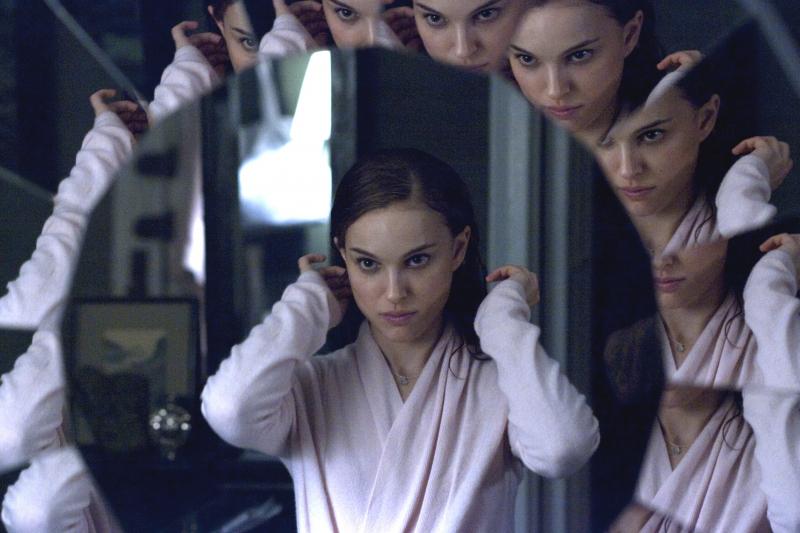
Photo credit: Niko Tavernise

Director – Darren Aronofsky
Writers – Mark Heyman, Andres Heinz & John McLaughlin
Choreographer – Benjamin Millepied

Most mainstream dance films are part of the romantic dramedy genre, but “Black Swan” is anything but typical.  This haunting dance movie chronicles the cycle of obsession through three phases: normalization, realization and confrontation.  We meet Nina (beautifully interpreted by Natalie Portman), a stunning, talented yet troubled ballerina – she is the new star; an up and comer, slated to dance the coveted role of Odette/Odile.  Moving up the ranks from soloist to principal is an exercise in duality itself; excitement and accomplishment coupled with anxiety and nervousness.  Most dancers find a way to navigate this new territory, but for Nina, a fragile individual already teetering on the brink of sanity, the consequences of her promotion are disastrously fatal.  Though set in the world of ballet, “Black Swan” really focuses on the psychology of delusion.

One of the first things you notice about Nina is how her compulsive ritualistic behaviors have normalized in her life, almost to the point that the bizarreness has anesthetized into regularity.  Despite being rooted in self-hatred and her desperate need for perfection, these patterns have de-emphasized and re-interpreted into normalcy and comfort for her.  When these demons are habitualized, they become hard to identify and define and thus, impossible to escape.  One particular manifestation for Nina is in the picking and pulling of her skin.  Again, the underlying issue here is perfection (or the appearance of perfection), so when faced with a blemish, cut or scratch, Nina is unable to let it heal on its own.  Every mark on her body was far more than just a physical abnormality.  For her, it spoke of a flawed existence and thus, she sadistically and methodically peeled it all away.  But this process of normalization can only last so long.  The facade will eventually crumble when you are forced to admit, confront and feel that which you have buried.  Nina’s casting as the fractured Swan Queen was the catalyst that released her own fractured personality.  She was not taking the role into her life, the role was embodying what was already happening in her mind.  Living it out inwardly and now outwardly (in the studio and on the stage) ultimately took her over the edge and brought the shattered pieces of her subconscious to the surface in a way that she had been able to control in the past.  She had moved away from normalization and onto the processes of realization and confrontation.  For some, this emotional journey provides healing and understanding, but for Nina, the pain could not be conquered.

“Black Swan” is another movie that purposely utilizes shaky camera work.  I was actually a little surprised that there wasn’t a note on the theater door warning that people with motion sickness might experience some dizziness throughout the film.  No matter how jarring it felt in the audience, what an appropriate choice for Portman’s Nina.  An unsteady frame for a neurotic psyche.

My Hometown by Sarah D. Lawson

0

My hometown rocks bombs made of paper and steel
It is equal parts pomegranate and salt water
Rummages through ashes of hopes and history
and tourists lined up for a view

My hometown weeps for steady soil and handshakes
Unbroken promises or steel embedded dreams
It is the dream of antiquated generations and
adolescents and, sometimes, even me.

My hometown’s rockets speak Russian
and whiz through Diaspora
It is a fingernail in the much larger
ocean of the universe
But it sticks on my lungs like the
labored breath of its shade
The smoke of Yafo or the
symphony of sirens as the sun sets
on another week

Here, echoes are the only thing we can all agree on
The neutral nature of sound when it drips off tongues

Like the notes spoken when you ask if I’m Jewish
Upon my yes, “It’s pretty fucked up what’s happening in Israel”
Word.

But I am not the Gaza Strip.
Not the walls of women wailing as their houses are leveled
Not the dismantled boy whose healthcare
is on the other side of a checkpoint.

I am more Rachel Corrie than the bulldozer
I am never the bulldozer
Or the soldier whose only Arabic is “stop or I’ll shoot.”
I do not hold a PhD in conflict resolution.

But I do know this
When my eyes roll back for sleep
there is a firework of a Tel Aviv sunset
burned on my resting corneas
Wholeness exists for me only in the
desert of the south
or the Shuk on a bustling Friday

Scents of roasted chick peas and spiced teabags
Real and comfortable
like home

My hometown taught me how to coexist over
Arak in Ashkelon bars
Wake to Shakshuka with Sabras in hotel rooms
And worship stars for peace from bomb shelters
my students used as a library in the Golan

So when I wake up at night, sweaty with nightmare,
It is my hometown anthem pumping in my eardrums
Like the soundtrack of my own funeral
My hometown, I am tethered to you
So please, for my sake,
Could you learn how to behave?

Sarah D. Lawson is a .org girl raised in the suburbs of D.C. She is the co-founder and Slam Master of the Beltway Poetry Slam and sits on the board of mothertongue, DC’s premier women’s spoken word organization. You can find her on stages from Spit Dat to Sparkle, organizing events through her co-op housing in Adams Morgan or attempting to squeeze 27 hours out of every day. She sat on the steering committee for the 2010 Capturing Fire slam in conjunction with the Split this Rock Poetry Festival and was a member of the Jenny McKean Moore Poetry Workshop at The George Washington University.

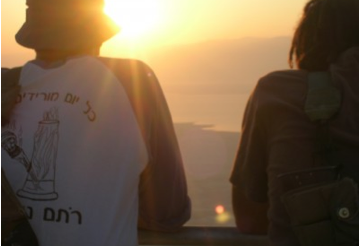
My Hometown by Sarah D. Lawson (c) Copyright Sarah D. Lawson; printed by permission of the author. Photo courtesy of Sarah D. Lawson.

Nick Leitzke on Plenty

In this Murmur DC post, Nick Leitzke discusses the idea of “plenty” in America, and what it means for him as a music collector. Here is an excerpt:

“We take many things in life for granted. An endless supply of essentials seems to surround us. We will never deplete the resources that are necessary for our survival, and we can live our lives knowing that everything is in the black. My car is always on a full tank of gas. My bank account is always ready to accommodate my rent. Starbucks will never run out of freshly brewed coffee. These are a given. The very notion that any of these resources will run out is absurd, because we sit on an endless reserve of everything. This is America where plenty is an entitlement. Don’t ask me about emergency plans because people who speak American don’t have ’emergency’ in their vocabulary.

But the necessary things never last. I will eventually have to break down and fill my tank. I will have to check my online statement to make sure my balance is roughly where it was last month. There will be that one busy day where the line is out the door and I might have to wait four minutes for a fresh cup. Exhaustion of any or all three of these things will derail a good day. Lack of plenty – that is the one thing Americans refuse to accept. The day a lack of plenty hits America is the day the Earth stops spinning on its axis. (But isn’t there a recession going on? Shhh-shut up!)

Then there are the things I know I can’t live without. Recently I made a discovery that turned my world upside down. I am the kind of music collector who treats his collection like a collection. Any real comic book connoisseur will house his collection in plastic sleeves with proper cardboard backing to preserve the newsprint and the spine. The same is true of a music collector. Stick those records in plastic sleeves if you have a shred of decency inside you. Is that CD in a cardboard digipack rather than a plastic case? Get yourself some CD-size sleeves and protect that thing, you unruly savage. Preserving the collection ought to be priority one for the collector. Before that album goes on the shelf, make sure you have it taped shut and safe from the elements.

Crisis struck when I ran out of record sleeves. Every time I bought a new record I took another sleeve from the pack, well aware they would run out one day. I had no need to worry, though. This is America where nothing runs out. Records stack easily, as long as you stack them upright to maintain their integrity. The day arrived when I pulled the last sleeve from the pack, and I didn’t worry too much. Just stack them next to the player so they’re already in grabbing distance. The stack is growing larger? We’ll get more sleeves eventually. Don’t worry.

Denial is the real American virtue. The scope of the crisis didn’t fully hit me until two weeks ago when I made the most shocking discovery of all. My CD sleeves ran out. Not only did my CD sleeves run out, but I had multiple Amazon orders en route. This can’t be! My world is…I don’t even know. What am I going to do with all of my new children? It’s going to mean going online to the place I purchased all my sleeves to begin with, but what will I do in the meantime? Think man. Think.

If there is one thing that times like these call for it’s cleaning house. Take a good long look through that collection and find the pieces you haven’t touched since the day you bought them. Ask yourself if you really need them and then make that difficult but necessary decision. The choice is hard, but there are any number of sleeves in this collection that could be used for new acquisitions.”

Click here to read the complete post.

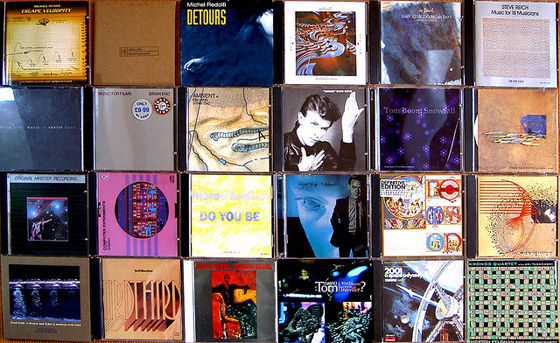
Image in the post is of various album covers, from Leitzke’s post.

The Interrogation (the dream chorus) by Andrew Bucket

0

Make yourself known to me.

I take fruit on the verge
of turning, just before the bugs come to taste. I come to see
the fish tanks bubble and glow, and filter in the window,
when the streetlamp is a metallic peach.

You were sleeping. Where were you?

I stand and
the headlights get closer, but I still watch, and
always too close before I run.

You try too hard. Say again your dream.

Finally, there is no more praying for a federal black boot
to explode the doorway. The song is a breech baby.
I am drawing a taut snake across her middle cello.

So, amidst it, when did the song play?

Her arm disappeared into a closet,
it reappeared with a record, she spun the groove along her fingernail.

Say a waking thing.

Like a globetrotter. Like a skeleton piloting a plane. I heard that
once. In a lecture hall. It was a laureate speaking.

Describe the song flood.

I remember boiled throat water, a new ocean
says Nevermind.
I was the famous babe with atlantis eyes, staring out
from the album cover. She was the peach skin bottom
where all the weight goes. A black mass waits too
for every part of us to sink. It eats there, by biding
at the bottom with her.

What then when you woke?

I read about sociopaths on the wiki. I phoned a friend
who said he got stood up. I wrote a letter to someone
sarcastically signed “Antoine.”

Did then you go back to her?

I built parking around my room, I got a skylight and a spotlight.
I hit the roof, and she came.

Was there a wanting dream?

I begged her to light the fuse, and wait it out—
to watch the color die in the air. Suspended there.
It was a bomb that could not land.

Where do you go in the light?

The Meridian. The trees of axis wag their bones—
they say Not Here, You Misheard Perdition for Permission.

What is there for you?

There are empty fountain beds, frozen this month,
There is a hollowed hooker bush. I visit Dante there,
to his statue, I come

To Say?

“My dream is done, my dream endures,
the memory flames, and I am the same”

More waking.

If without the bus, without a friend,
I will always choose to walk.

What yet cannot you forget of the dark?

Spun dead wax, on and on;
No opening bands, no ‘brands of tedium,’
just my set of songs.

Why have you come to me?

For an interrogation.

Can not you ask an expert?

I can trick them. I need a detective. An agent. A lawyer.

Then what am I to you?

A memory of someone to whom I confessed. For you I will again.

Then that I will be for you.

Or else I am sick.

What will you do with her in the light?

I cannot say. “till night,
we watch the divining dance of the fuse.”

Andrew Bucket lived as a student in the Jiminez Porter Writers House at UMD, was a Lannan Fellow of the Folger Shakespeare Library, and co-founded a popular weekly reading series that you’ve never heard of. He has been published in WYWS Magazine, Mad Alley Magazine, Stylus, That Far Down, and stinted as the advice columnist: Uncle Bucket. He started a viral-celebrity-death-rumor, and is currently launching a D.C. literary journal called The Folly.

The Interrogation (the dream chorus) by Andrew Bucket (c) Copyright Andrew Bucket; printed by permission of the author.

Artwork courtesy of Haley Dolan.

Tim Tate on the Washington Glass School

3

In June 2011, we will celebrate the 10th anniversary of the Washington Glass School, and this year we reached the milestone of 4000 students since we opened. It seems almost impossible that so much time has gone by so quickly.

When I started out in the late 1980’s, the art world presented a hugely different terrain than it does today. In those days, there was one primary path. An emerging artist would try to be noticed by a local gallery, which, if the artist were lucky, would represent him/her in that geographic region. Ideally, one would find several different galleries in different regions, striving for a New York gallery one day. If a gallery had contacts with a museum curator, perhaps it could get them to notice your work. The art world was full of gate-keepers – gallerists, curators, writers –all dominated by a small number of very knowledgeable people who had their own stable of familiar and talented artists. It was very tough to be noticed from the outside.

In the 2000’s, things began to change radically, precipitated by the rising popularity of large art fairs such as ArtBasel, SOFA Chicago, Scope, and Frieze. At the fairs, galleries pay for booths and present their best artists’ best work. The biggest collectors attend, bringing all the right players to the same place at the same time. Instead of just geographic exclusivity, now artists have to concern themselves with show exclusivity as well. (If a gallery is bringing you to Frieze, they don’t want another gallery bringing you to Frieze as well.) Throw in the internet, and the business terrain for artists is pretty complex.

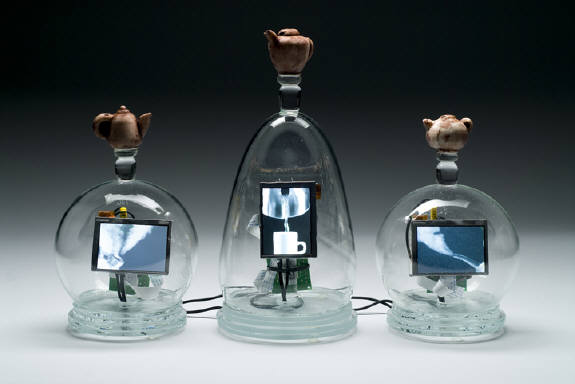
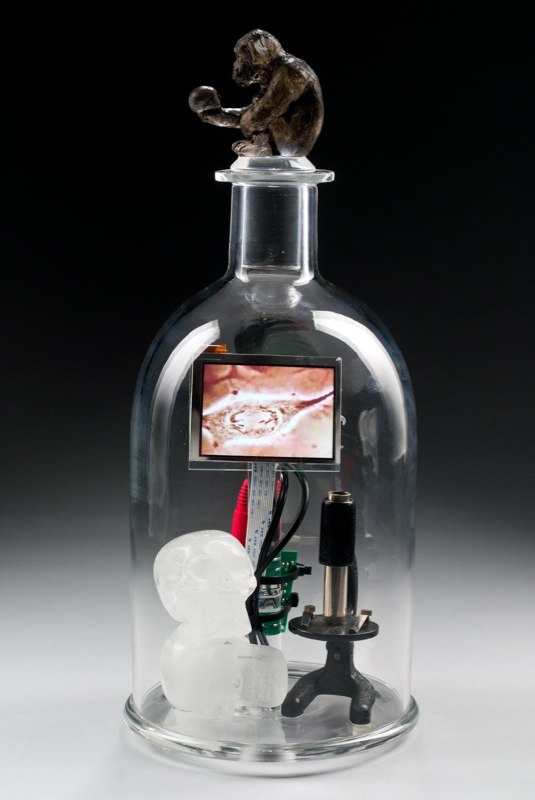
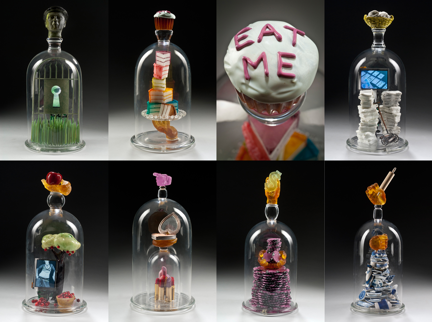
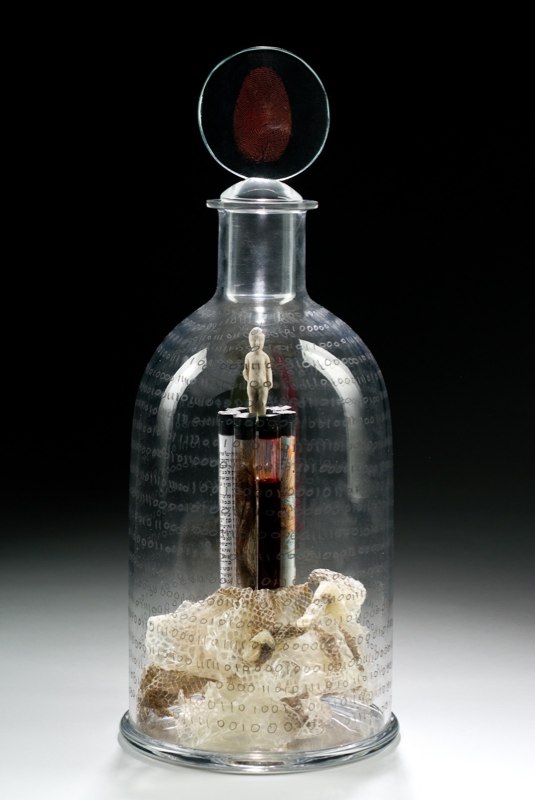
When I first combined video and sculpture 4 years ago, it was mostly because an art critic had casually said that he believed my future would be in that direction, which actually made me focus on it. My first two very low-tech video pieces were immediately bought by museum collections (one is currently on display at the Renwick Museum here in town) and as I continued developing and re-developing the work, I was suddenly courted by galleries I’d only dreamed of. This year, I started doing collaborative work with other artists, and I have also begun to make series of works as a single piece. (Like the Seven Deadly Sins, pictured below.) Making a series as a single piece has expanded my scale, and the interest of museums. My pieces by themselves are quite small – almost too small for a large gallery space. The series are much larger, and engage viewers for a greater amount of time.

Utilizing Facebook has been a big change, and a big ally, in my work. It started, as all good Facebook stories begin, with a video of a cat playing the piano. (I posted the video to my profile – I’m not proud. I thought it was cute.) After several comments, someone popped up and said, “How cute, I should get them here at my museum.” “Museum??!!”, I said, “What museum? You should have my work there!” 24 hours later, I was in a show at the Museum Of Art and Design in NYC called “Dead or Alive” with Damien Hirst and Nick Cave. The man who commented was the Chief Curator and Director of MAD. I pitched an idea, he ran it by the curatorial staff, and I was in. The show runs till October 15th, 2010.

It was then that I fully understood the biggest difference between today’s art world and the one I entered: access to gate-keepers. Gallerists, curators, collectors, universities, all were open to me without an intermediary. I started really putting myself out there on Facebook and quickly had over 1000 friends. When I posted the image of the 7 Deadly Sins, the gallery that was taking me to SOFA/Chicago more that doubled my wall space to 50 feet, which is a huge investment in my work on their part. I have used Facebook to sell work, get west coast galleries, entice museums and get speaking engagements.

I met a man at a party who said I should apply to be a Fulbright Fellow. It seems that artists are exempt from the PhD requirement. One of my partners at the Glass School, Michael Janis, and I both applied. We just learned that we have both been granted Fellow status. Next, we find a university overseas to invite us to teach a workshop; three have already expressed interest.

A few months ago I got another surprise: I was offered my first museum solo — and it is for video alone. This year I will focus heavily on videos with no glass structure at all. I will also be working with Rob Bettmann and his new dance company in a performance called Quis Custodiet, which will use some of my video projections.

As I look back, what I am proudest of is not my individual achievement, but my work with the Washington Glass School. We are currently the second largest warm glass school in the country, and next June the Longview Gallery will host a retrospective featuring over twenty of the artists who began with us that have gone on to national and international renown. The influence of the Washington Glass School Movement has become international, as narrative sculptural glass artists around the world recognize the Washington Glass School as a major creative hub. I encourage artists in all media to come to the school and see the variety of medium we teach there. It might surprise a few to see how we can help. And if any artist reading this can think of a way we can help, give us a buzz. It would be our pleasure.

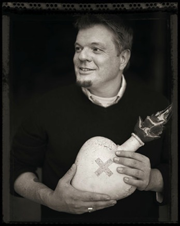
Tim Tate is co-founder of the Washington Glass School located in Mt. Ranier MD. He has shown extensively in this area and beyond since the 1990’s, including the Museum of Art and Design in New York, SOFA New York and Chicago, Art Basel, the Red Dot at Art Basel-Miami, the Luce Foundation Center for American Art at the Smithsonian, the Renwick Gallery and commercial galleries from Washington, DC to London and Berlin. His awards include “Rising Star of the 21st Century” from the Museum of American Glass, the Virginia Groot Foundation Award for Sculpture, three Artists Fellowship awards from the DC Commission on the Arts and Humanities and the Mayor’s Art Award. His work is in the permanent collections of the Smithsonian American Art Museum, Renwick Gallery, the Mint Museum, the Katzen Art Center of American University, the University of Virginia Art Museum and Vanderbilt University. For more information, see www.washingtonglassschool.com.

Edited by Ellyn Weiss